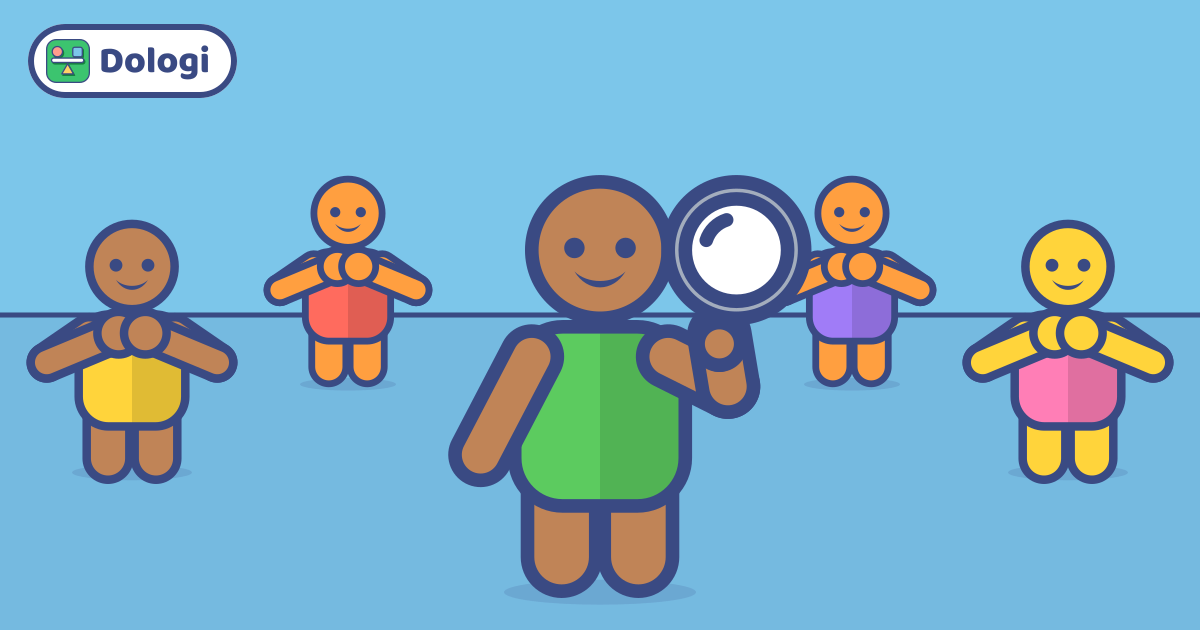
Some games need no equipment at all, just a group of kids and some floor space. This is one of them: everyone in a circle claps, pats their knees and rolls their arms, copying a secret leader, while one player stands in the middle as the detective and tries to work out who that leader is.
From the outside it is a lively movement game, great for birthday parties, scout meetings, a classroom break or a crowd of cousins at a holiday get-together. Underneath, the detective is doing exactly what good reasoners do: collecting clues, ruling people out, and explaining a guess instead of picking at random. It suits kids from about 6 to 12.
How to play
- Sit or stand in a circle, roughly 5 to 12 players. A family of four or five can play too.
- Pick a detective, who leaves the room or turns around with eyes closed and ears covered.
- Choose the leader in silence. An adult points to one player; nobody says a word.
- The detective steps into the middle. The leader starts a move and everyone copies right away: clapping, patting knees, rolling forearms, tapping shoulders, nodding.
- The leader switches moves whenever the detective isn't looking their way. Everyone follows as fast as they can.
- The detective guesses, up to three times, and has to give a reason each time: "I think it's Maya, because when I turned around she was already patting her knees before anyone else."
- Swap roles. Whether the guess is right or the guesses run out, the leader becomes the next detective. Try to give everyone a turn at both roles.
A time limit of about two minutes per round keeps anyone from standing in the middle too long.
What should the detective watch?
Three random guesses go by fast. A good detective looks for clues:
- Who switches half a beat early. The leader always changes a moment before everyone else, however quick they are.
- Where everyone's eyes go. To copy the leader, players have to look at them. Lots of glances heading to the same spot is a big clue.
- Who can be ruled out. Anyone who switches later than others can't be the leader. Cross them off in your head and the list of suspects shrinks.
- Where to stand. Stand where you can see half the circle, then turn suddenly to check the other half.
After a round, ask one question: "Which clue helped you figure it out?" Or, after a wrong guess: "What did you notice that made you think it was them?" Your child's answer shows you how they were watching and thinking, and it is worth hearing either way.
Leaders and copiers need a strategy too
The game gets better when the leader and the group think about what the detective will notice:
- The leader switches when the detective's back is turned, and picks moves that are easy to copy, not big and showy.
- The group doesn't stare at the leader. Look at someone across the circle or take in the whole group, with only quick glances at the leader.
- No pointing, no giggling in the leader's direction.
This is a chance for kids to see things from someone else's side: "If I were the detective, what would I look for?"
Versions by age
| Rough age | Ideas |
|---|---|
| 6–7 | Slow, clear moves; the leader only switches when an adult gives a clap signal; three guesses |
| 8–9 | Faster switches and small moves such as snapping fingers or touching an ear; no guess without a reason |
| 10–12 | Two detectives who must talk it over and agree before each guess; or two leaders who take turns starting moves |
Every group is different. If younger kids love going fast, speed it up; if older kids are new to it, start slowly.
Keeping it fun for everyone
- The detective is a volunteer. Some kids feel shy standing in the middle with everyone watching; they can be the leader first and watch a few rounds before trying detective.
- Never tease a wrong guess. Praise good reasoning instead: "That was a smart reason. They just hid it really well."
- Play the first round with them to show how it works, especially how a detective explains a guess.
- Keep rounds short and swap often, so nobody sits waiting for long.
In Dologi, the Focus topic has "Spot the difference" puzzles, where children compare two nearly identical pictures and tap each place that is different. It is the same habit of looking closely to catch what has changed; the detective game adds one more step, explaining why you think so.
In short
- The circle copies a secret leader, and the detective in the middle has three guesses to find them.
- Clues: who switches first, where everyone's eyes go, and who can be ruled out for switching late.
- Every guess comes with a reason; after the round, ask which clue helped.
- Detectives volunteer, rounds stay short, and everyone gets a turn as detective and as leader.
Read more: Little detectives at home: reasoning from clues, My child just guesses: teaching children to stop and check