When parents want to grow their child's vocabulary, they often reach for books, flashcards or an extra class. Those can help, but most of the words children know come from somewhere much closer: everyday conversation at home. A trip to the grocery store, making dinner, folding laundry: every small job comes with its own set of words your child can hear and use.
Here's how to make the most of those moments: name things precisely, say a little more, bring new words back again, and play a few word games you can start right in the kitchen.
New words come from conversation, not lists
Children understand a word by hearing it many times, in real situations, attached to something they can see, hold or taste. The word "bruised" sticks best when your child is holding a bruised peach, not when it's on a list.
And conversation goes both ways. Talking a lot to your child isn't enough on its own; ask, wait for an answer, then follow up on what they said. An open question like "Why do you think these apples cost more?" makes your child hunt for words to explain, and that's when vocabulary grows.
The store, the kitchen, the laundry: words already waiting
Instead of "this one" and "that thing," name it and describe it. Each part of the day has its own words:
| Where | Everyday words | Words to add |
|---|---|---|
| Grocery store | apples, pears, meat, milk | produce, zucchini, cantaloupe; ripe, bruised, crisp; weigh, aisle, receipt |
| Kitchen | cook, cut, yummy | boil, simmer, roast, scramble; chop, slice, peel; crunchy, chewy, tangy |
| Laundry | wash, put away | sort, fold, hang; damp, wrinkled, faded; hanger, lint |
| A walk outside | tree, bird, truck | bark, roots, acorn; dump truck, crane; drizzle, muggy, breezy |
You don't need to teach the whole table. One or two new words at a time is plenty, said naturally in a sentence: "I'm going to slice the banana really thin, watch." If your child asks "What's slice?", explain with what you're doing: "Slice means cut it into thin, flat pieces, like this."
Now and then, narrate what you're doing, like the host of a cooking show: "Now I'm putting the eggs in the pan, hear them sizzle? I'll wait till the edges are crispy before I flip them." Your child doesn't have to answer. Just listening, they've heard a handful of new words.
Stretch your child's sentences
When your child says something short, repeat it and add a little:
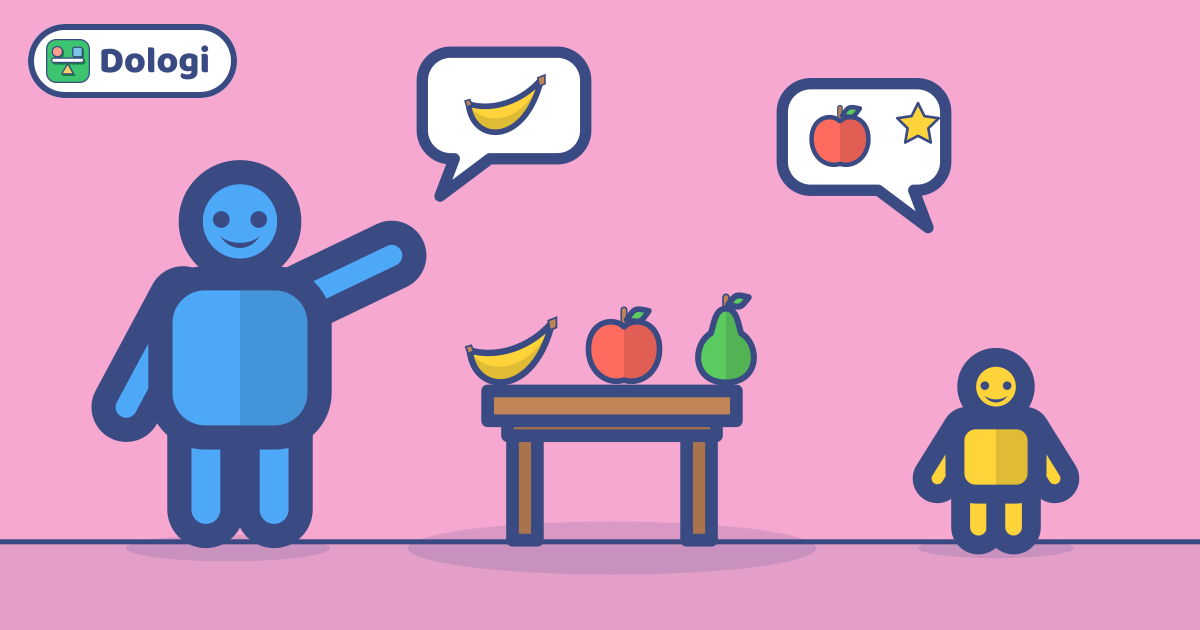
- Child: "Big apple."
- You: "Yes, that's a big, shiny apple. It's so heavy you need both hands."
No correcting, no asking them to repeat after you. Your child hears their own idea come back with new words in it ("shiny," "heavy," "both hands") and can use them next time. With 4- and 5-year-olds, this is one of the simplest things you can do. With older kids, add words for reasons and comparisons: "This one's heavier because it's juicier."
Bring new words back again
Hear a word once and it's gone. A word has to show up many times, in different places, before your child really owns it.
- Today's word. This morning at the store your child learned "ripe." At dinner, point to the bananas: "Are these ripe yet, or still green?"
- Let your child teach it. Have them explain the new word to a grandparent or a younger sibling. To explain it, they have to understand it.
- Slip it into stories. At bedtime, work the new word into the story: "The bear waited until the berries were perfectly ripe."
Play with opposites and categories
These games work while you're doing dishes or waiting at a red light, with no setup:
- Say the opposite. You say a word, your child says its opposite: hot and cold, full and empty, sink and float, raw and cooked. Then switch roles and let them quiz you.
- Name the whole group. "Name five vegetables," "Name three ways to cook an egg" (boiled, scrambled, fried...). If someone gets stuck, the other gives the first sound as a hint.
- Guess the kitchen tool. One person describes, the other guesses: "It's metal, it has a long handle and you use it to flip pancakes."
If your child is older and loves word play, try lining words up by strength or practicing definitions (see the links at the end).
To use a word, your child first has to hear it clearly. In Dologi, the Listening topic has a puzzle called "Odd note out": your child listens to a set of cards and finds the one that sounds different from the rest. That habit of listening closely for small differences also helps children notice the new words in what adults say.
In short
- Children learn most of their words through everyday, back-and-forth conversation, tied to things they can see, hold and taste.
- At the store, in the kitchen and on laundry day, name things precisely and add just one or two new words at a time.
- Repeat your child's short sentences and stretch them a little, without correcting or asking them to repeat.
- Bring new words back several times in the day, and play opposites and name-the-group games when your hands are busy.
Read more: Warm, hot or boiling? Word ladders that help children say exactly what they mean, What is a chair? Teaching children to define a word clearly: which group it belongs to and how it differs