Your child knows how every piece moves, understands check and has even pulled off a checkmate or two. But watch a game and it's mostly grab-what-you-can: if a piece is hanging, they take it, and if not, they move something and hope.
The next step is tactics: single moves that do two jobs at once, so the other side can't deal with both. The first three worth learning are the fork, the pin and the skewer. Below you'll find each one explained with an everyday picture and a diagram, then a game for spotting tactics on a real board and three puzzles to try.
A tactic is a pattern
Experienced players don't work out a fork from scratch every time. They see it: "That knight can land there and hit both." It's a lot like reading, where your eyes recognize a whole word instead of sounding out every letter.
Recognizing patterns is a general thinking skill: noticing what's the same in things that look different. Kids learn chess patterns the same way they learn any pattern, by meeting it again and again in different settings until it jumps out at them. So learning tactics doesn't take long lessons. It takes frequent short encounters: a few positions per tactic, a few minutes at a time.
In the diagrams below, the white pieces are your child's, the purple pieces are Black's, and White plays up the board.
The fork: one piece attacks two
Think of tag. If whoever is "it" stands right between two players, one of them can get away, but not both. A fork works the same way: one piece attacks two enemy pieces at once, and the other side can only save one.
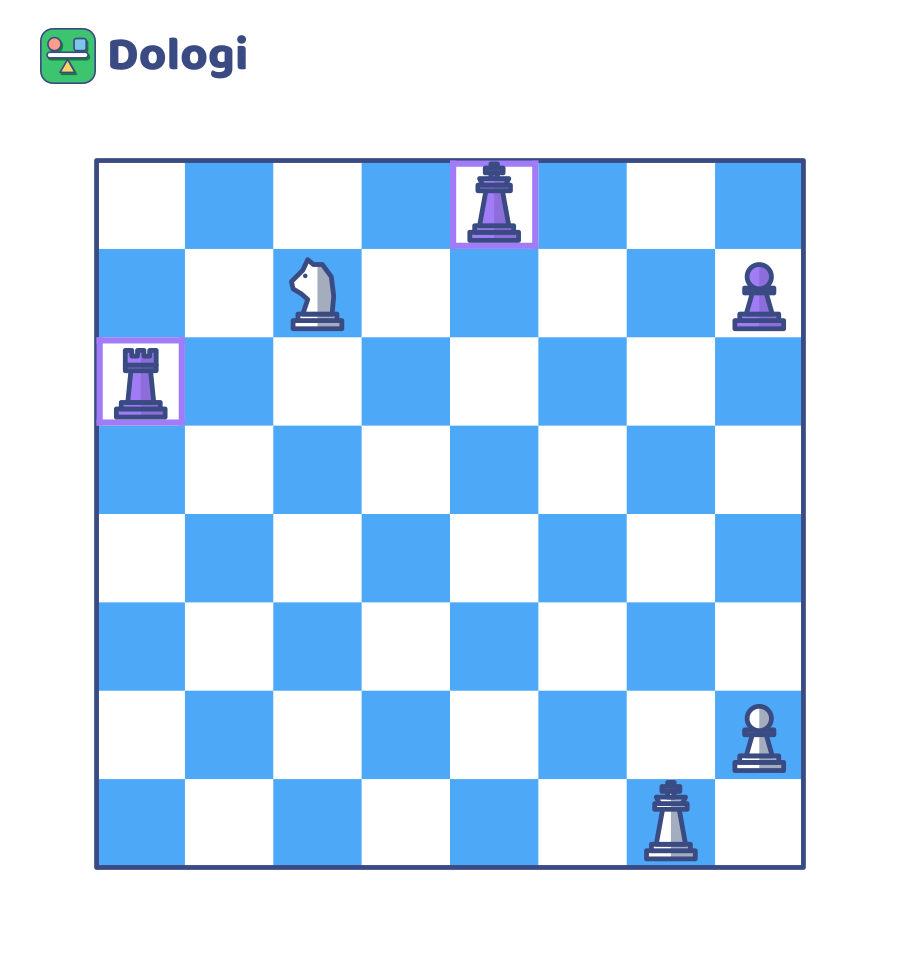
The white knight has just jumped from d5 to c7. From there it checks the black king on e8 and attacks the black rook on a6 at the same time. Black has to get the king out of check first, so on the next move the knight takes the rook.
- Knights are the champion forkers. Their L-shaped jump attacks in a way kids (and adults) often don't see coming. Pawns, queens and even kings can fork too.
- A fork with check is usually the strongest kind, because the king has to be dealt with first.
- A question to build the habit: "Of the squares your knight can reach, does any of them touch two of Black's pieces?"
The pin: a piece that doesn't dare move
Picture someone standing in a doorway, blocking the view of whoever is behind them. If they step aside, the person behind is exposed. So they stay put, even when trouble is coming.
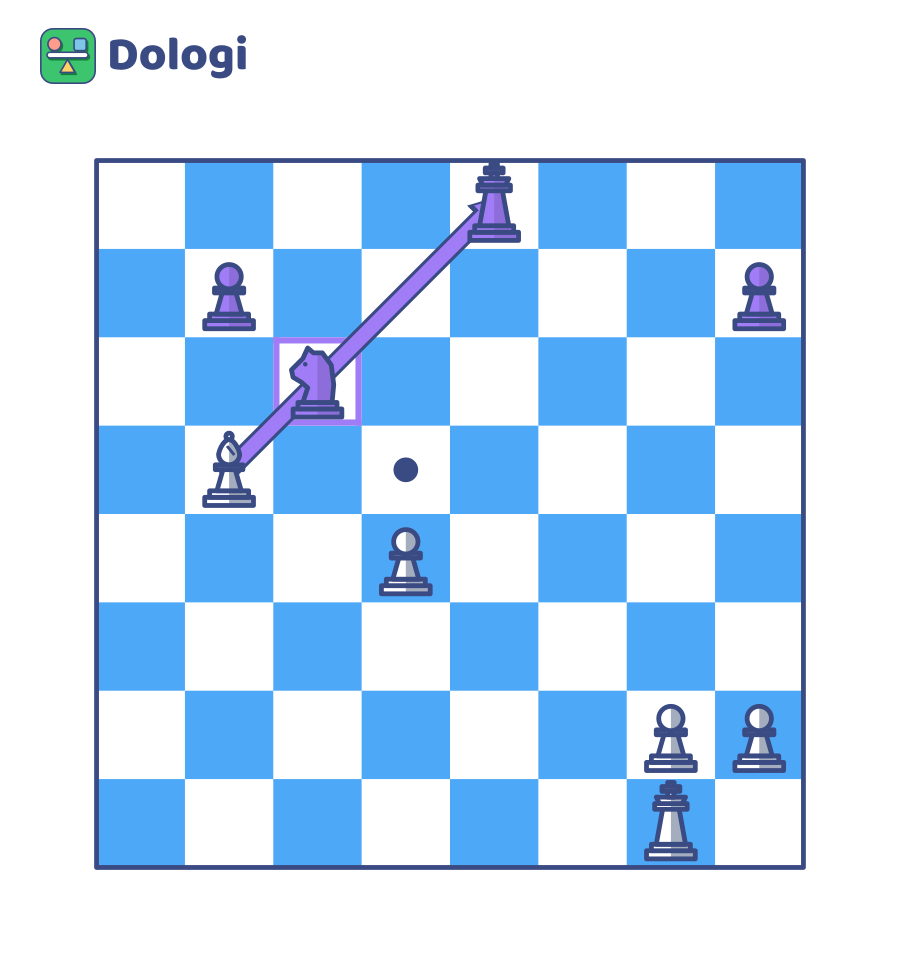
The white bishop on b5 looks diagonally through the black knight on c6, and behind the knight is the black king. If the knight moved, its own king would be in check, which the rules don't allow, so the knight is stuck. Now White pushes the pawn from d4 to d5 (the dotted square). The pawn attacks the knight, the knight can't run, and White wins it.
- A pinned piece is a weak piece. When you spot one, think: can I attack it again, ideally with something small?
- Pinned to the king, the piece isn't allowed to move at all. Pinned to a queen or rook, it can move, but then the more valuable piece behind it is lost.
- Only rooks, bishops and queens can pin, because they move along long straight lines or diagonals.
The skewer: the big piece steps aside, the one behind falls
A skewer is a pin turned around. Think of a kebab skewer: it goes through the first piece of food and right into the next. Here the more valuable piece is in front. It's attacked, it has to move, and that exposes the piece behind it.
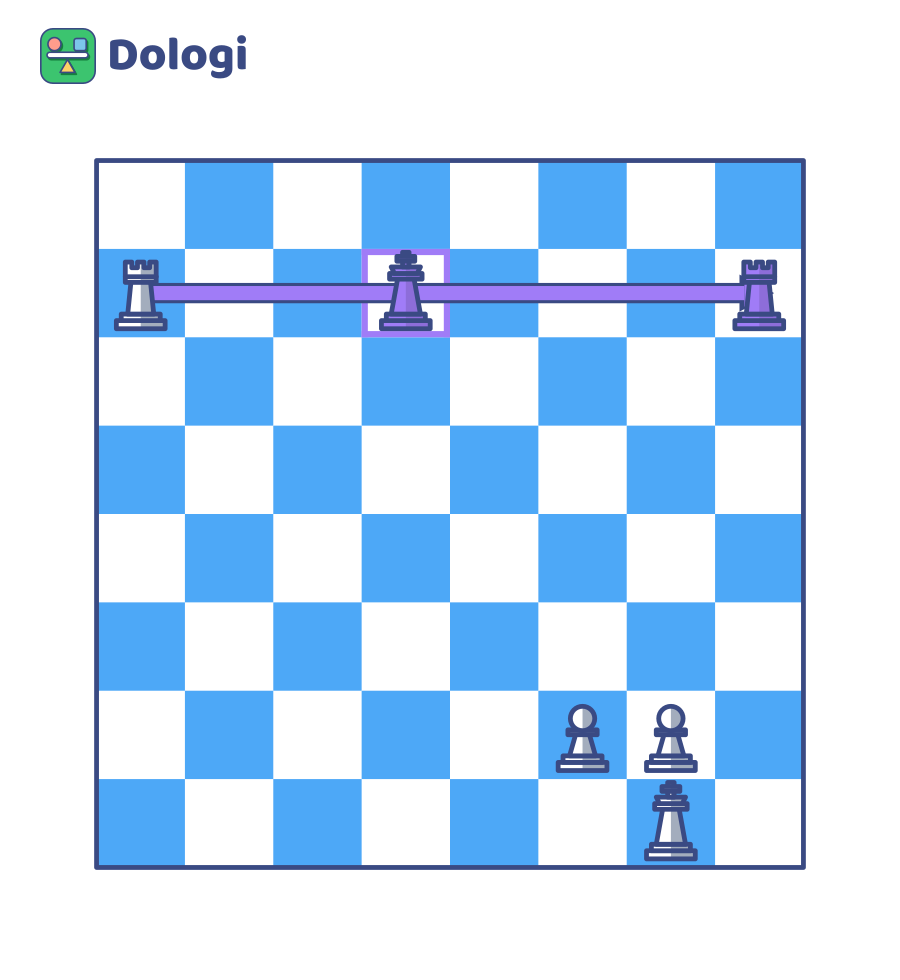
The white rook has just moved from a1 up to a7, checking the black king on d7. The king has to leave that row, and the white rook takes the black rook on h7.
| Tactic | Picture it as | What to look for on the board |
|---|---|---|
| Fork | Whoever is "it" standing between two players | Two enemy pieces on squares one of your pieces can reach |
| Pin | Someone stuck in a doorway | An enemy piece in front of its king or a bigger piece, on one line |
| Skewer | A kebab skewer going through two pieces | A king or big piece in front, another piece behind, on one line |
The "spot the tactic" game
Tactics explained in a lecture fade fast. Tactics found in a game stick. A few ways to play with the set you have at home:
- You set up, your child finds. Set up a position with only a few pieces (from the diagrams here or your own) and say up front, "There's a fork here." Knowing the name tells your child what to look for.
- Drop the name. Once that's easy, just say, "White has a tactic," and let your child figure out which one.
- Switch roles: your child builds one for you. This is the most fun step. If your child can build a pin from scratch, they've understood what a pin needs: a piece that pins, a piece that's pinned, a bigger piece behind and all three on one line.
- Tactic hunting in real games. While you play, whoever spots a tactic (for either side) taps the table twice and points. Nobody has to play it. Seeing it is the win.
Five or ten minutes is plenty. If your child picks the wrong move, ask "Which squares does this piece attack?" instead of giving the answer. Don't tell them the move has more questions for when your child is stuck.
Three puzzles: which tactic is it?
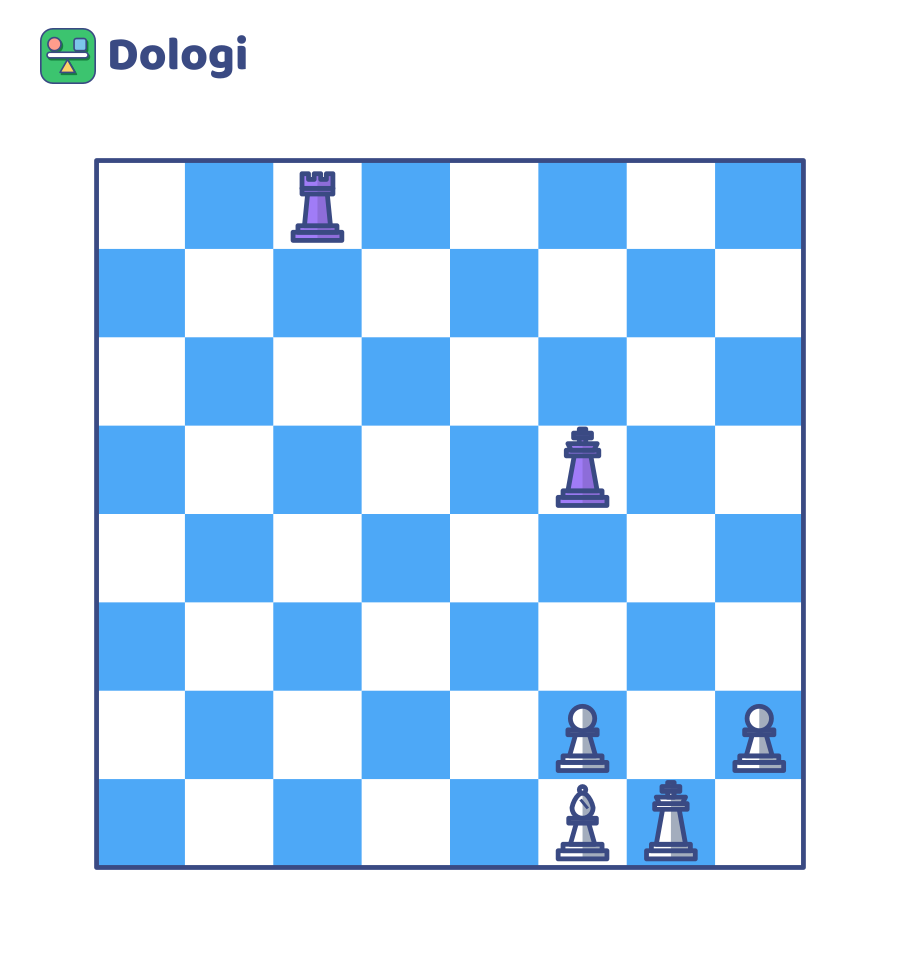
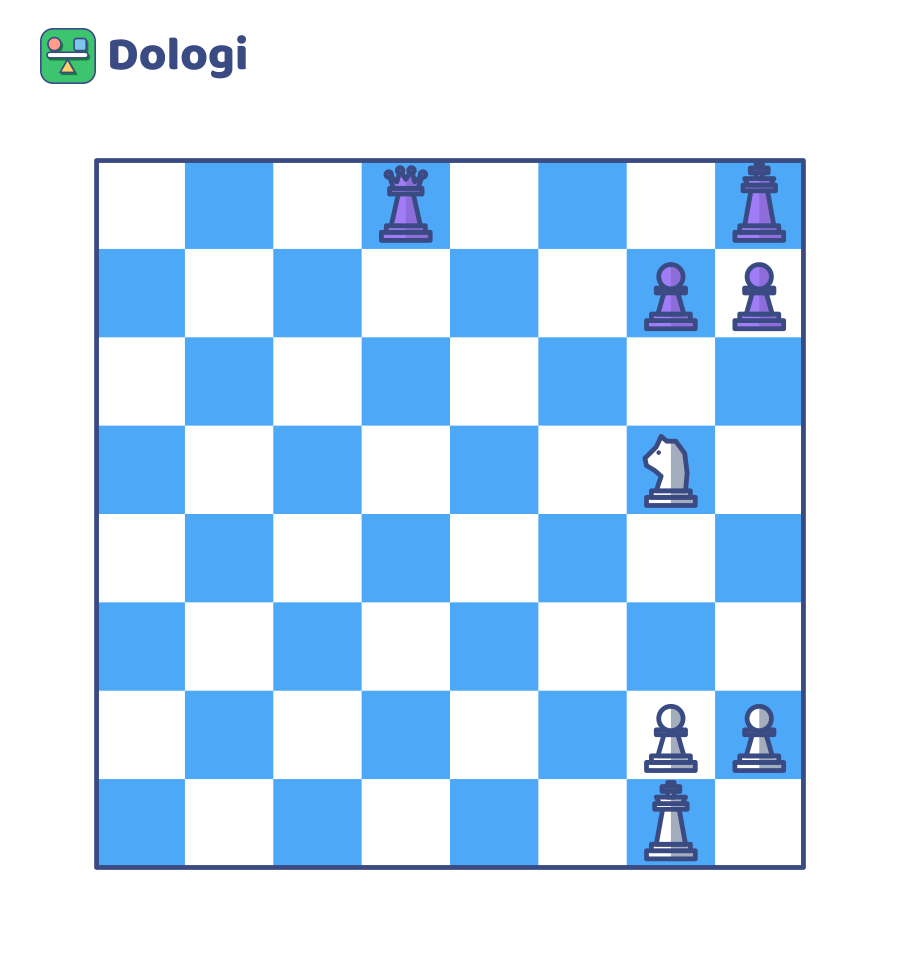
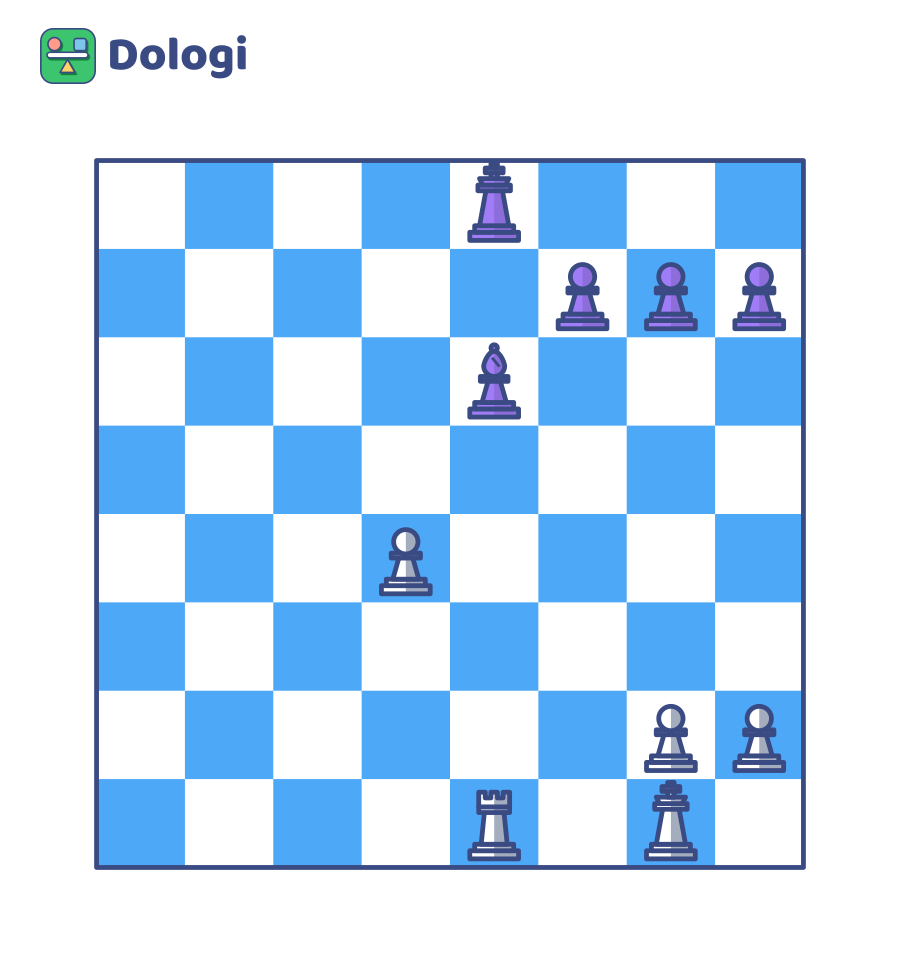
In each one it's White's move, and there's exactly one of the three tactics hiding. Have your child name the tactic first, then find the move.
Puzzle 1
Puzzle 2
Puzzle 3
Answers
- Puzzle 1, skewer: the bishop goes from f1 to h3, checking the black king along the diagonal. Once the king steps away, the bishop takes the rook on c8, which was standing right behind the king on the same diagonal.
- Puzzle 2, fork: the knight jumps to f7, checking the king on h8 and attacking the queen on d8. The king's only move is to g8, and then the knight takes the queen.
- Puzzle 3, pin: the black bishop is pinned to its king by the white rook. Taking it right away with the rook doesn't pay, because the f7 pawn takes back and White has traded a rook for a bishop. The strong move is pawn from d4 to d5: the pawn attacks the bishop, the bishop can't escape, and White wins it for just a pawn.
Keep practicing in the Chess room
In the Chess room in Dologi's Creative corner, Learn chess has a topic lesson on the Double attack (the app's name for a fork) and one on The pin, each with four steps: watch, try, practice and play. To meet the pattern again and again, the Double attack chapter in Challenges has 8 positions to solve. Finished lessons get a ✓, so you can see how far your child has come.
In short
- A tactic is one move that does two jobs. The fork, the pin and the skewer are the three to learn first.
- Fork: one piece attacks two. Pin: a piece can't move because something more valuable is behind it. Skewer: the valuable piece in front has to move, and the one behind is lost.
- Learning tactics means learning to recognize patterns: short, frequent practice beats long explanations.
- The "spot the tactic" game, and letting your child build tactics for you, shows what each tactic needs.
Read more: 10 easy chess puzzles for kids who are just starting, with hints and answers, Chess for children: what age to start, and what they really learn