Your child has been playing chess for a while now. When they're working out a move, they pick a piece up, hover it over one square, then another, and only then decide. Ask them to look two or three moves ahead and things get fuzzy: where will Black's pieces be after the second move? Is that square still attacked?
There's a game that targets exactly this, and it doesn't need a board: playing chess in your head. You say the moves out loud, your child keeps the board in their imagination and answers your questions. It suits kids around 9 to 12 who already know the rules, and it works in the car, in a waiting room or at bedtime. Below are four levels, from very easy to genuinely hard, each with a puzzle and an answer.
Why practice "seeing" the board in your head
Thinking ahead means picturing the board after a move or two without touching anything. In a real game that skill gets tangled up with everything else: worrying about losing a piece, wanting to win, an opponent waiting across the table. Playing in your head pulls the "seeing" part out on its own, so your child can practice it with nothing at stake.
Holding a picture in mind and updating it step by step is a job for working memory, which What is working memory? explains. This game doesn't promise a better memory for everything. It practices what chess actually asks for: knowing where the pieces will stand before you move them.
Getting ready: naming the squares
Every square has a name made of its column letter and row number. To start, use a small four-by-four board: columns a, b, c and d from left to right, rows 1 to 4 from bottom to top (row 1 is on your child's side). Square a1 is the bottom left corner.
A few warm-up questions, out loud:
- "Which corner is d4?" (top right)
- "Are b3 and c2 the same color?" (yes: squares that touch diagonally are always the same color)
- "Starting on a1, which square is three squares straight up?" (a4)
If naming squares is still slow, sketch the little board on paper once, let your child look at it, then put it away.
Level 1: one piece on a four-square board
Start with a rook. It moves in straight lines, so it's the easiest to picture.
"The rook is on a1. It moves up to a4. Then across to d4. Then down to d2. Where is it now?"
If your child says d2, that's one puzzle done. Once the rook feels easy, switch to the knight. The L-shaped jump makes it much harder.
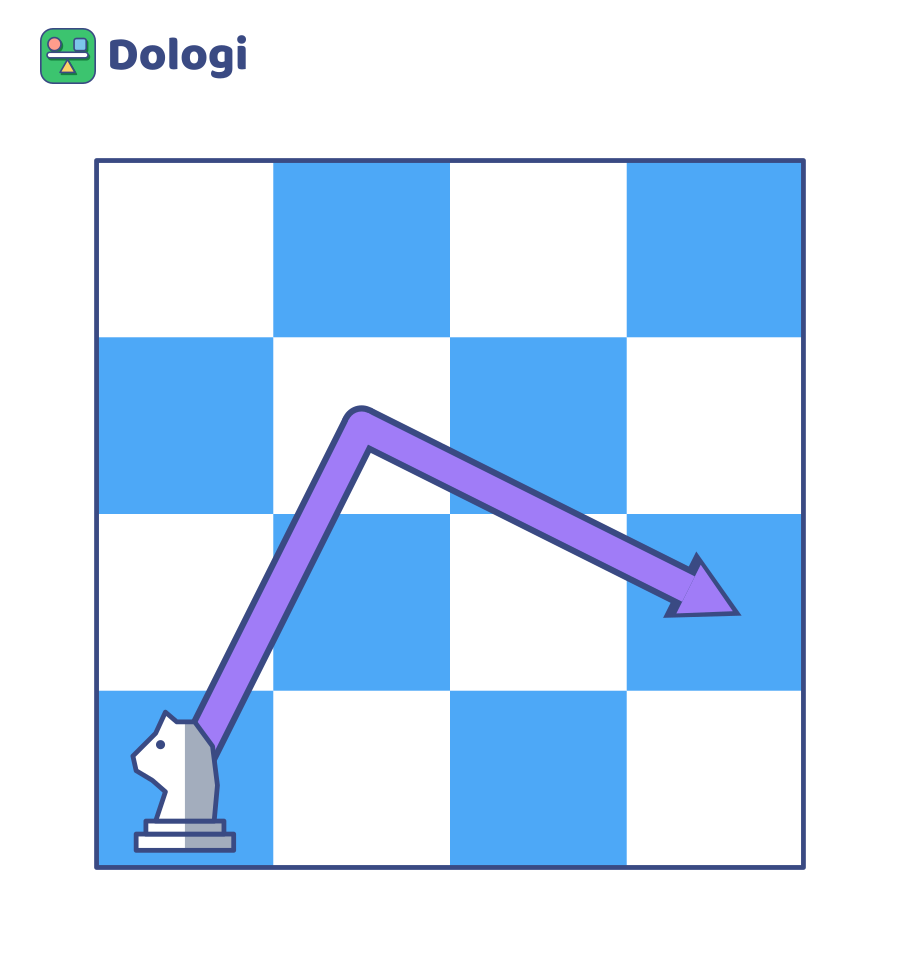
"The knight is on a1. It jumps to b3. Then it jumps to d2. From d2, which squares can it jump to?"
Answer: b1, b3 and c4. Kids often forget b3, the square the knight just came from: jumping back counts too.
Level 2: two pieces
Add one piece for the other side, and now there's something to figure out:
"A white rook is on a1, and the black king is on c3. Where can the rook go to give check without the king being able to take it?"
Give your child time before hinting. There are two answers; the diagram at the end of this section shows them.
Once that's comfortable, take turns: you move the rook, your child moves the king, and both of you call your moves by square name. Each of you has to keep track of the board after every move. If you disagree about where something is, sketch it on paper and check. Nobody "loses" for remembering it differently.
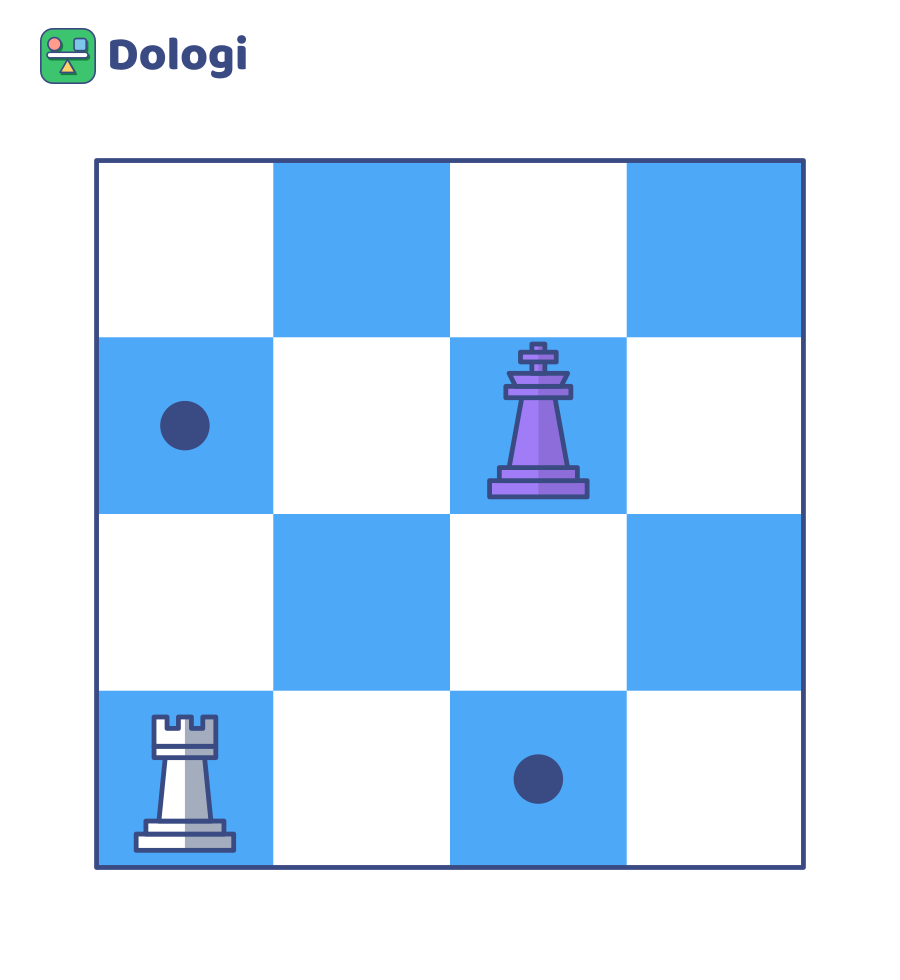
Answer: the rook goes up to a3 (check along row 3) or across to c1 (check along the c column). On both squares the rook is more than one square from the king, so the king can't capture it.
Level 3: look for five seconds, then play on in your head
Now use a real eight-by-eight board with just a few pieces. Set up the position below (or show this picture on your phone), let your child look for about five seconds, then cover the board with a dish towel or turn the phone face down.
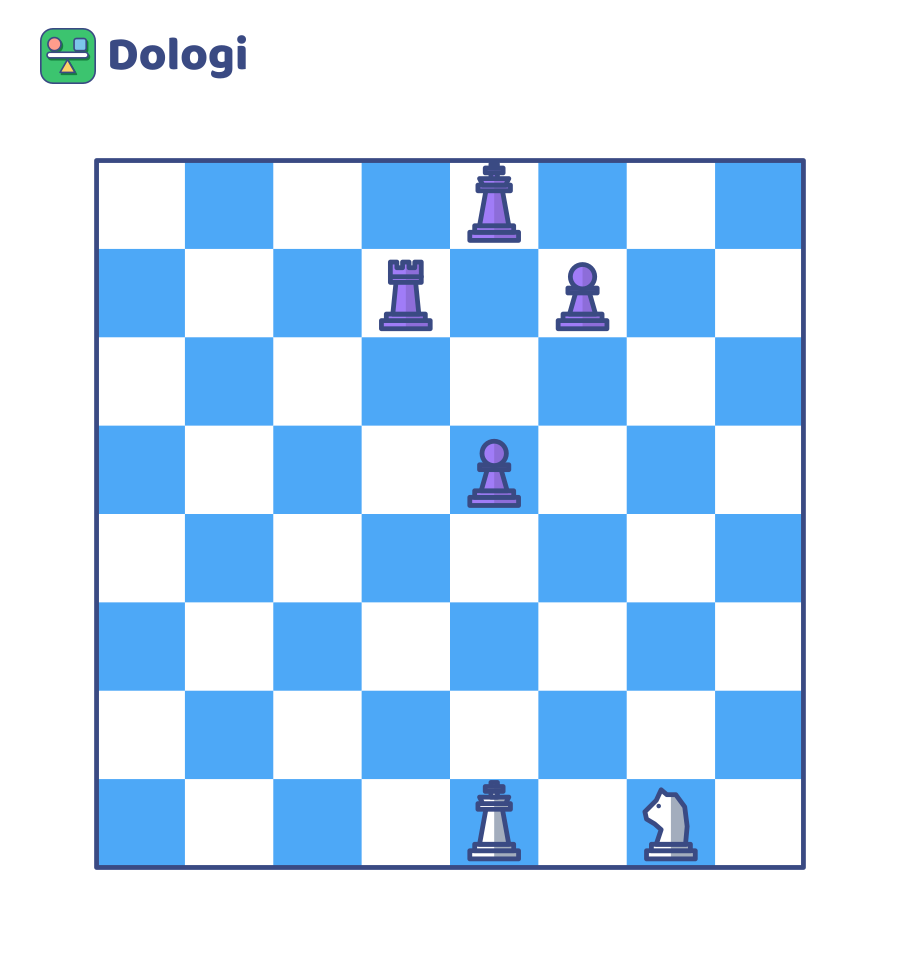
"The white knight jumps to f3, then takes the pawn on e5. Pretend Black doesn't move. Which black pieces does the knight attack now?"
Answer: the rook on d7 and the pawn on f7. Uncover the board and play the two moves by hand together to check. Getting both means your child held the board for two moves without looking.
Level 4: following a game from the start
When your child is solid, read out the first few moves of a game while they build the full board in their head:
"White pawn to e4, Black pawn to e5. White knight to f3, Black knight to c6. White bishop to c4. Which square next to the black king is the bishop aiming at? Which piece is the white knight attacking?"
Answer: the bishop aims at f7, which only the black king defends. The knight on f3 attacks the pawn on e5, but the knight on c6 already protects it.
| Level | Board | Sample question | Move up when |
|---|---|---|---|
| 1 | Four by four, one piece | Where is the piece now? | Your child tracks the knight for three or four jumps in a row |
| 2 | Four by four, two pieces | Is it check? Can it be captured? | Your child takes turns for five or six moves without getting lost |
| 3 | Eight by eight, a few pieces | Look five seconds, play two moves, what does the piece attack? | Your child gets it right without uncovering the board |
| 4 | Full board | After a few opening moves, what's aiming at what? | There's no top level; just add moves gradually |
Where to play, and keeping it fun
- In the car or a waiting room: a few level 1 or 2 questions fill a short drive nicely.
- At bedtime: pick easy ones and keep your voice low. The goal is fun, not a quiz.
- A few questions at a time: three or four is plenty. Stop while your child still wants more.
- Let your child quiz you. Getting one wrong now and then is good for them to see: everyone has to practice.
- Wrong answer? Step down a level. No need to say "wrong," just "let's try the smaller board."
Pictures in the mind has more games for "seeing" objects and paths with eyes closed, for the whole family.
Practicing with real games in the Chess room
In the Chess room in Dologi's Creative corner, the games your child plays save automatically to Your chess games. Open an old game to Watch the game again, stepping through it with One move back and One move forward. That's an easy level 3 game: stop partway through, let your child look at the board for five seconds, turn the device face down, have them say where the pieces will stand after the next move, then flip it back and tap One move forward to check.
In short
- Playing chess in your head is a talking game: you call out moves, your child keeps the board in their imagination and answers.
- Go from easy to hard: one piece on a four-square board, two pieces, a five-second look and then playing on, following a game from the start.
- It practices what chess asks for, seeing where pieces will be before moving them, and doesn't promise more than that.
- Keep it short and light, in the car or at bedtime, and step down to a smaller board when it gets hard.
Read more: What is working memory? When your child forgets what they were doing halfway through, and how to help, Does chess improve a child's memory? What kind of memory kids really practice at the board