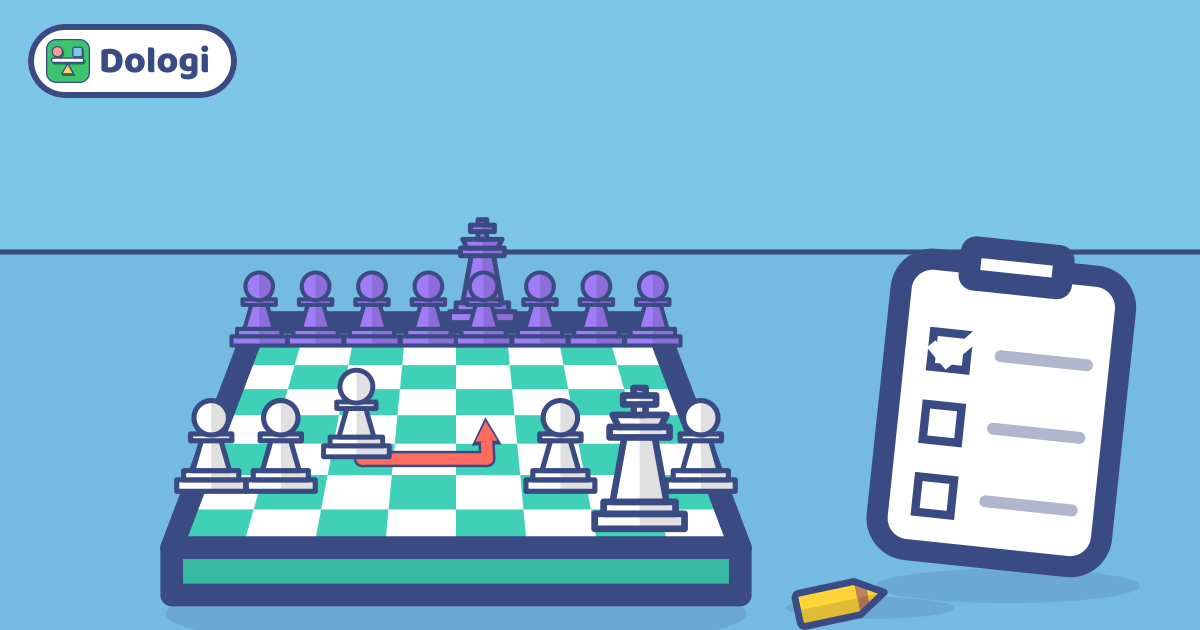
Chess has strict rules, and that's part of what makes it great. But at home, nobody says your family can't play it a little differently. Change one small rule and the game suddenly gets shorter, more manageable for your child, or a lot sillier. And when you and your child talk about "Is this rule fair?", your child is practicing a really useful kind of thinking: thinking about the rules themselves.
Here are five variants that only need a regular board and pieces, plus a simple way to invent a new rule together. Variants don't replace regular chess. They're a change of pace, a way to give a beginner a fair game, and a good excuse for some laughs.
The five variants at a glance
| Variant | What changes | Good for |
|---|---|---|
| Kings and pawns only | Each side has just a king and eight pawns | New players, around ages 6–8 |
| Capture everything | No check; the king is an ordinary piece | Kids who know how the pieces move but not checkmate yet |
| Change of role, once | Once per game, one piece moves like a different piece | Kids who know the game and love surprises |
| Small board | Only five columns and six rows | Busy evenings when a game has to be short |
| Two moves in a row | The less experienced player gets to move twice | Parent vs. child, older vs. younger sibling |
The ages are rough guides. If your child likes a variant, it's the right one.
1. Kings and pawns only
Each side has only its king and eight pawns, on their usual starting squares. The first player to get a pawn to the last row wins. Everything else follows normal chess rules: your king can't move into check, you have to get out of check, and if it's your turn, you have no legal move and your king isn't in check, the game is a draw.
It's short but not easy. Your child will discover that pawns can't move backward, that pawns blocking each other just get stuck, and that the king has to come out and help instead of hiding in a corner. It's also a great way to see why experienced players care so much about every pawn.
2. Capture everything
Set up all the pieces as usual, but there's no check and no checkmate, and the king is an ordinary piece that can be captured. Whoever captures all of the other side's pieces wins. A pawn that reaches the last row becomes a queen, rook, bishop or knight. Agree on one more rule before you start: if it's your turn and you can't make any move, you lose.
This one works well for kids who know how each piece moves but don't understand checkmate yet. It practices exactly the right skill: looking at the board and asking which of my pieces is under attack, and which of their pieces has nobody protecting it.
3. Change of role, once
Play regular chess, but each player gets one "change of role" per game: pick one of your pieces and let it make one move as if it were a different piece. A pawn jumps in an L like a knight, a bishop slides straight like a rook, a knight glides diagonally like a bishop. Draw a paper "role card" for each player and hand it over once it's used.
Settle this before you start: a role move still can't leave your own king in check. Whether a role move may deliver checkmate is up to your family. Many families say no, so the game doesn't end with a sudden surprise. This variant shows your child that each piece's move is simply a rule, and it gets them thinking: "Right now, which piece moving which way would help most?"
4. Small board
Use only part of the board: five columns and six rows, with the edge marked by painter's tape or strips of paper. Each side's back row is rook, knight, bishop, queen, king, with five pawns in front. Pawns move only one square at a time (no two-square first move, so no en passant), and there's no castling.
With everything so close together, threats show up fast, and a game usually takes about ten minutes. It's perfect for a weeknight when there isn't much time but your child still wants "a real game."
5. Two moves in a row
Play regular chess, but the less experienced player gets to make two moves in a row a few times per game, say three times, whenever they choose. If the gap is big, let them move twice every turn. One rule keeps it fair: if the first of the two moves puts the other king in check, the turn ends there.
This is one way to even out a game between parent and child or older and younger siblings. There are other ways too, like starting with fewer pieces on the stronger side or allowing one take-back.
Inventing a new rule together
These five are just a starting point. The most fun part comes when your child makes up a rule. A few steps keep rule-making from turning into an argument:
- Change only one thing at a time. If you change several things at once, you can't tell which one made the game better or worse.
- Write the rule down and keep it next to the board. Younger kids can draw pictures instead of words. Read it out loud before the game.
- Play two test games, with each player taking each side once.
- Ask questions afterward: "Did this rule make the game easier or harder? Who did it help? Is there a way to win right away without thinking?"
- Change one thing and play again.
If your child's rule turns out to be unfair, that's a discovery, not a failure. They've just figured out for themselves why chess rules are set up the way they are.
In the Chess room in Dologi's Creative corner, Little games has six short games with their own rules, such as Pawn race (get one pawn to the last row, or capture all the other side's pawns) and Capture all (capture every piece on the other side; this game has no king). And in the Piece workshop, your child can invent a brand-new chess piece, choosing how it moves, how it looks and its name, then place it on the board in Set up a board to try it out.
In short
- With a regular board and pieces, your family can play lots of new kinds of chess: kings and pawns only, capture everything, a one-time change of role, a small board, two moves in a row.
- Always agree on the rules and write them down before the game starts.
- When inventing a rule, change one thing at a time, test it, and ask together: "Easier or harder? Who does it help?"
- Variants are a change of pace and a way to think about rules, not a replacement for regular chess.
Read more: Playing chess with your child: should you let them win or play for real?, Chess for children: what age to start, and what they really learn, Design a board game with your child: from idea and rules to playtesting and fixing what doesn't work