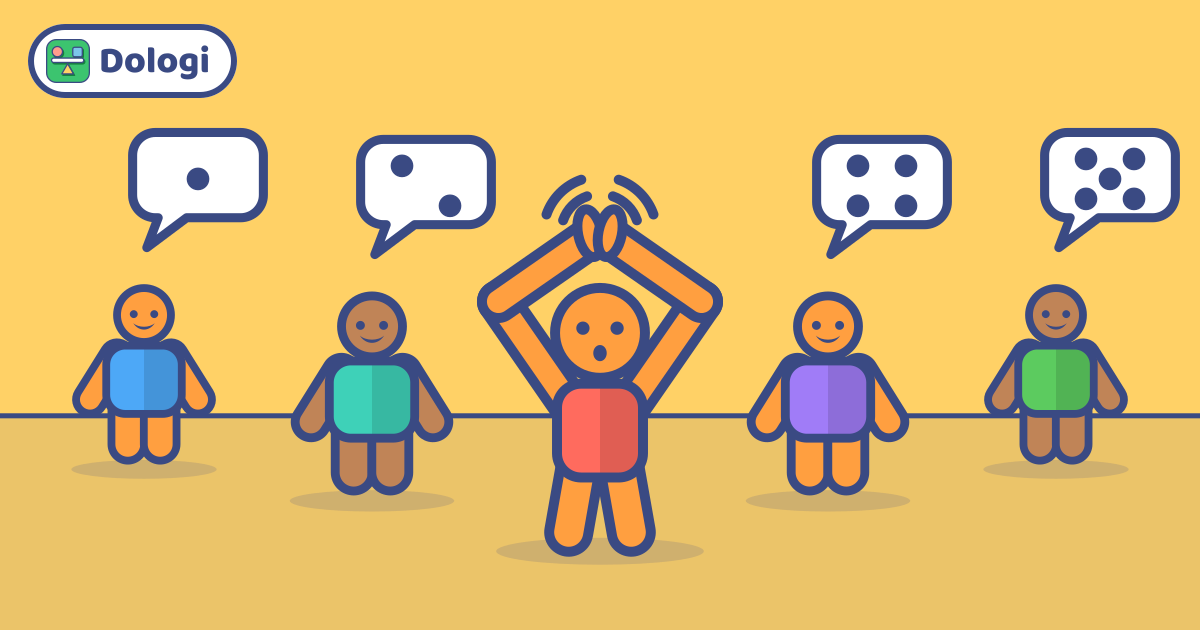
Some of the best games need no equipment at all, just a few people and a bit of focus. Here is one: sit in a circle and count, one person at a time. When the number is a multiple of three, you don't say it. You clap instead. It sounds easy, but after a few rounds even adults start tripping over it.
It works at the dinner table, while waiting at a restaurant or on a long car ride. Many kids in the US and UK already know a cousin of this game called Fizz Buzz, where you say "fizz" instead of clapping. This post covers the rules, how to start slowly so nobody gets frustrated, versions for different ages, and how to turn mistakes into the funny part of the game.
How to play
- Players: three or more, roughly ages 6 to 12. It's more fun when parents join in.
- What you need: nothing. Beginners may want a sheet of paper and a pencil.
- Sit or stand in a circle.
- One person says "one," the next says "two," and so on around the circle.
- On a multiple of three (3, 6, 9, 12...), the person whose turn it is claps once instead of saying the number.
- The next person carries on with the next number: "one, two, clap, four, five, clap, seven..."
- If someone says a number they should have clapped, claps in the wrong place or misses their turn, the whole circle starts again from "one."
Nobody is out. The goal is for the whole group to get as far as possible, say to 30, and then try to beat your family record next time.
Start slowly
The most common mistake is playing too fast too soon. A few ways to keep it manageable:
- Keep a beat. Everyone pats their knees twice together, then the next player speaks. A steady beat gives your child time to think without feeling rushed.
- Model one round. Count slowly to 15 yourself, clapping clearly on 3, 6, 9, 12 and 15.
- Write it out first. With beginners, write the numbers 1 to 30 together and circle the ones that get a clap. Let your child look at the sheet for the first game, then turn it over.
- Speed up once everyone's comfortable. A faster beat is a reward, not a condition for playing.
Rules for different ages
| Age (roughly) | Rule | What it practices |
|---|---|---|
| 6–7 | Clap only on even numbers: "one, clap, three, clap, five..." | Counting by twos, odd and even numbers |
| 7–9 | Clap on multiples of three | Counting by threes, the 3 times table |
| 9–12 | Clap on multiples of three and stomp on multiples of five; on numbers that are both (15, 30), clap and stomp | Keeping track of two rules at once |
| 10–12 | Also clap on any number with a 3 in it (13, 23, 31...) | Looking at digits, not just division |
Another twist for older kids: every time someone claps, the counting changes direction. Everyone has to listen to know whether the next turn is theirs or their neighbor's.
Only add a new rule once the family can count smoothly to 30 with the old one. Piling on rules too early turns a fun game into a confusing one.
What children practice
It's a short game, but it brings together several things children are learning:
- Skip counting and multiples. The claps land on 3, 6, 9, 12, 15... Afterward, ask your child: "Which numbers did we clap on?" They may notice those are the numbers in the 3 times table.
- Patterns on a hundred chart. After the game, take a hundred chart (ten numbers to a row) and color in the numbers that got a clap. They line up in diagonal stripes. The multiples of five fill exactly two columns.
- Stopping at the right moment. Children have said "one, two, three" countless times, so holding back the "three" takes effort. It's hard for adults too, so slipping up is completely normal.
- Listening and taking turns. To know what to say, your child has to follow the number the previous player said, even while waiting eagerly for their own turn.
When someone gets it wrong
Mistakes are part of the game. A few ways to keep it light:
- Everyone starts over together. No penalties, no blaming.
- Slip up on purpose now and then. Children love catching a parent's mistake, and they see that adults laugh it off and keep playing.
- Offer a self-check: "Before you say it, try saying your number silently in your head."
- Stop while it's still fun. About ten minutes is usually plenty, so your child wants to play again next time.
If your child enjoys working out what comes next in a counting pattern, Dologi's Patterns topic has "Next number" puzzles: "Each time, the same number is added or taken away. Which number comes next?" Some of the sequences count by twos or threes, just like the claps around the circle.
In short
- Count in turn around a circle, and clap instead of saying any multiple of three.
- Start slowly, keep a beat by patting your knees, and let beginners look at a sheet with the clap numbers circled.
- Younger children clap only on even numbers; older kids add a stomp on multiples of five.
- If someone slips, everyone starts again from one. Nobody is out, and the family tries to beat its own record.
Read more: Patterns in numbers: odd and even, counting in twos and skip counting · Times tables: should children memorize them or understand them first?