Lots of families have a deck of cards in a drawer that rarely comes out with young kids. Crazy Eights is one of the easiest card games to start with: the rules fit in a few sentences, games are short, and kids around 5 can play if they keep their cards face up. Versions of it are played all over the world under different names, but the core is always the same: match the top card, eights are wild, and the first player to run out of cards wins.
Here you'll find the basic rules, an easier version for little kids, what your child practices while playing, a few tips, and some extra rules for kids 7 to 9.
What you need
- A standard 52-card deck, jokers removed.
- 2 to 4 players. Deal 5 cards each, or 7 each if there are only two of you.
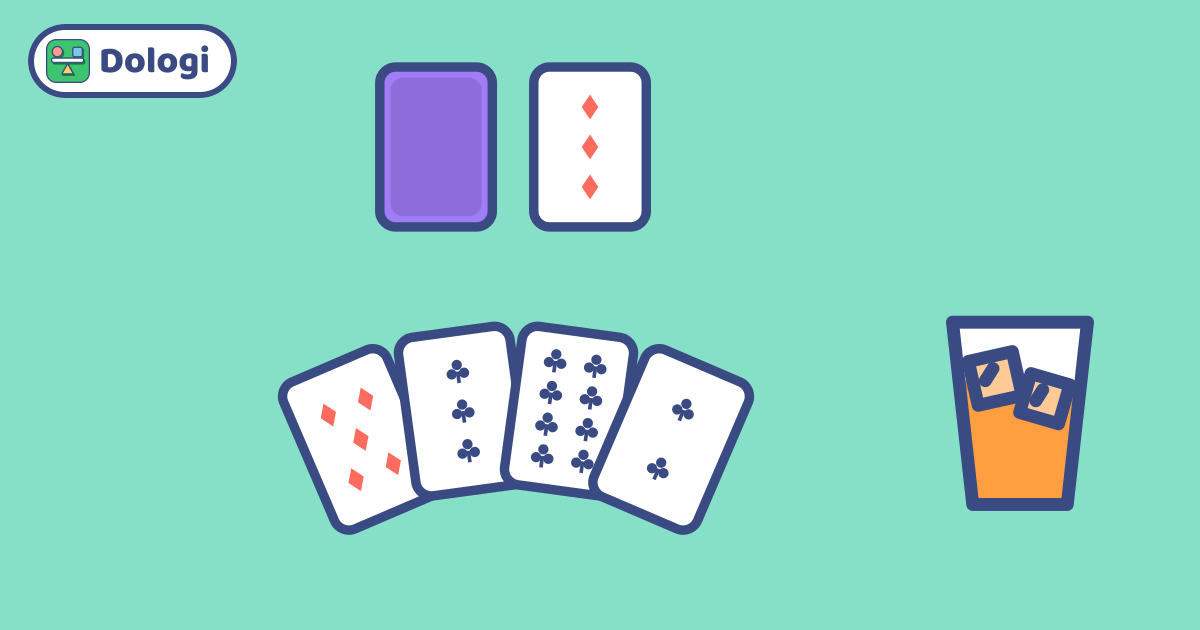
- Put the rest face down in the middle as the draw pile. Flip the top card and place it face up next to it: that's the starting card.
- Remind your child of the four suits: hearts and diamonds are red, clubs and spades are black.
The basic rules
- On your turn, play one card that matches the suit or the number of the face-up card on top. If the top card is the 3 of diamonds, you can play any diamond or any 3.
- Eights are wild. Play an 8 at any time and name a new suit; the next player has to follow that suit (or play another 8).
- Can't play? Draw one card from the draw pile. If it fits, play it right away; if not, your turn is over.
- When you're down to one card, say "Last card!"
- The first player with no cards left wins. If the draw pile runs out, keep the top card and shuffle the played cards into a new draw pile.
An easier version for 5 and 6 year olds
- Play with open hands: everyone lays their cards face up in front of them. You can see your child's cards and ask, "Do you have one that's the same suit?"
- Take out the face cards (jack, queen, king) at first and use only ace through 10, so your child just has to count pips.
- Say it out loud every time: "Diamond, same suit!" or "Another 3, same number!" You go first, and your child copies.
- Sort the hand by suit on the table: diamonds in one row, clubs in another. Finding a match gets much faster.
What your child practices
- Watching two features at once. Every card has a suit and a number. Your child has to check both and compare them with the top card, just like sorting by two rules at school.
- Waiting for a turn. With three or four players, your child has to wait and keep an eye on what others play.
- Saving the eights. An 8 rescues you when you're stuck. If another card can be played, hold on to the 8. Ask, "Do you need your 8 right now?"
- Picking a smart suit. After playing an 8, it's best to call the suit you have the most of. Your child counts: "I have three hearts and one spade, so hearts."
- Losing lightly. Games are short, so a loss is followed by a fresh deal right away.
Tips for playing together
- Don't rush. Little kids need a few seconds to search, and that's exactly the practice.
- When your child plays a card that doesn't fit, ask, "Is this the same suit or the same number as that one?" instead of "That's wrong."
- Think out loud now and then: "I have an 8, but I still have a diamond, so I'll save the 8."
- Stop after three or four games while your child is still having fun.
Extra rules for kids 7 to 9
Once your child knows the game, add one rule at a time:
| Card | Extra rule |
|---|---|
| 2 | The next player draws two cards (unless they can pass it on with another 2) |
| Jack | The next player loses their turn |
| Ace | Reverse the direction of play |
Scoring over several games: at the end of each game, everyone adds up the pips on the cards left in their hand (face cards count 10). Play five games; lowest total wins. Adding up the score is a nice bit of mental math, too.
To practice paying attention to two features at once in another way, the Logic topic in Dologi has a puzzle called Two rings: "Drag each thing into the ring whose label fits it, or the middle if both do." Just like looking for a card that matches the suit or the number, your child has to check each label before placing anything.
In short
- Match the top card's suit or number, eights are wild, and the first to empty their hand wins.
- Kids 5 and 6 can play with open hands, no face cards, saying "same suit" or "same number" out loud.
- Your child practices tracking two features, waiting for a turn, saving eights and picking the suit they have most of.
- Older kids can add rules for 2s, jacks and aces and keep score over several games.
Read more: Solitaire for kids, First board games for 4 and 5 year olds