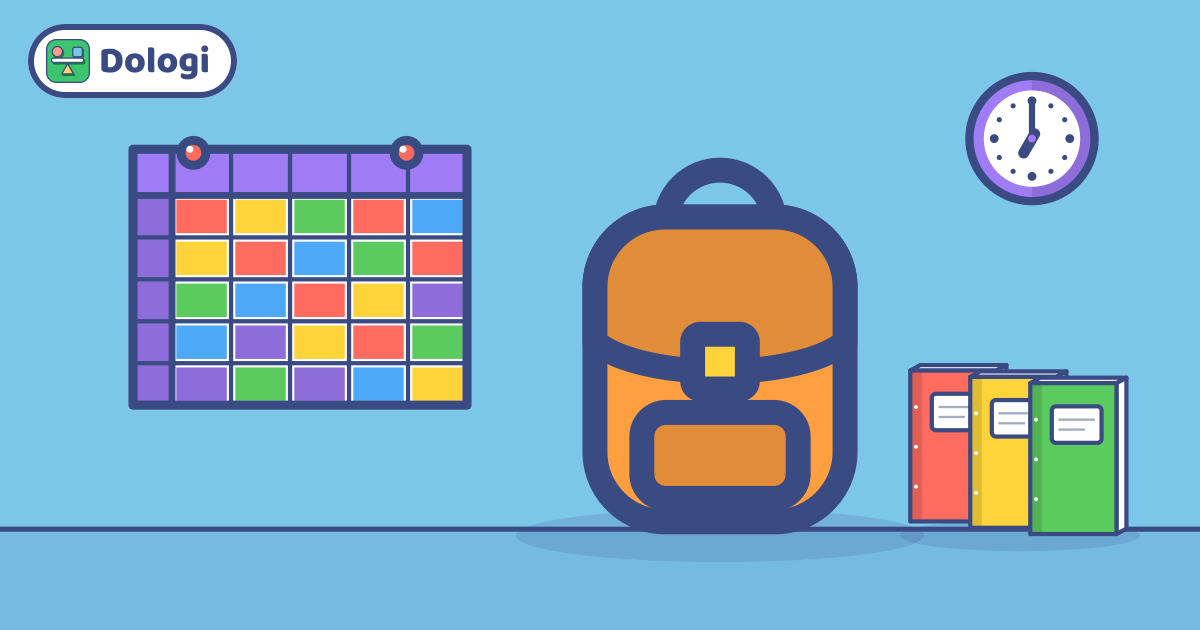
In many US school districts, middle school starts in sixth grade (in others it starts in seventh, and some schools run straight from kindergarten through eighth grade). Either way, your child goes from one main teacher and one classroom to a different teacher for every subject, a bell schedule, a locker, and homework that arrives from several directions at once. Most kids are a mix of excited and nervous.
What helps most is not getting ahead on sixth-grade math. It is the everyday skills of keeping track of materials, managing time, and asking for help, which you can practice together over the summer and in the first weeks.
What actually changes
Kids worry less when they know what to expect. Every school is different, but these changes are common:
| In elementary school | In middle school |
|---|---|
| One main teacher for most subjects | A different teacher for each subject, each with their own rules |
| The teacher reminds the class of everything | Your child writes down assignments and tracks due dates |
| One classroom all day | Moving between rooms when the bell rings, with a few minutes in between |
| A cubby or a hook | A locker, often with a combination lock |
| Friends from kindergarten | New classmates from several elementary schools |
No need to make it sound scary. Just let your child know that feeling a bit lost at first is normal, and that each change gets easier with practice.
Packing the bag by the schedule
Forgotten books and missing homework are the most common trouble in the first weeks, because each day has a different mix of classes. It is also the easiest skill to practice at home.
- Post the class schedule where it's easy to see, near the study spot or by the door. Together, give each subject a color and match folders or notebook covers to it.
- Pack the night before, not in the morning rush. Your child reads tomorrow's schedule, puts in what's needed, and takes out what isn't.
- Ask, don't pack. For the first few nights, ask "What classes do you have tomorrow? Is that folder in your bag?" Then slowly drop the questions.
- Let them forget once. Hearing about a forgotten worksheet from the teacher often teaches more than ten reminders from you. Don't rush it to school unless it really matters.
- Practice the locker. If the school uses combination locks, buy a cheap one over the summer and let your child practice until opening it is quick. It calms a lot of first-day nerves.
Writing things down and planning time
In middle school, every teacher gives work for their own class, some due tomorrow and some due next week. Your child needs one place to write it all down and a way to see the whole week.
- One planner. Paper or the school's online system, whichever the school expects. For each assignment: the class, what to do, and when it's due.
- A weekly look-ahead at a set time, such as Sunday evening: Which tests are coming? What should be started early?
- Break big projects into steps. A report due in two weeks becomes: find sources, make an outline, write a draft, finish and check. Each step goes on a day in the planner. It's the same skill as planning before doing.
- Guess, then check. Before starting homework, ask "How long do you think this will take?" and look at the clock afterward. Within a few weeks most kids estimate much better.
- An alarm clock of their own. Practice the school-day wake-up time for a few days before school starts.
Knowing how to ask for help
With six or seven new teachers, many kids hesitate to ask questions. Yet asking the right person at the right time is one of the most useful middle school skills.
- Rehearse the words. Practice a simple line at home: "I didn't understand this step. Could you explain it again?"
- Know who handles what. Questions about an assignment go to that subject's teacher. Questions about schedules, lockers, or problems with classmates can go to a homeroom teacher or the school counselor.
- Praise the asking, not just the grade. When your child says "I asked my math teacher about that problem," notice it right away. Asking is what strong students do.
The mindset: some worry is normal
- Ask what they're looking forward to and what worries them. Listen first instead of saying "There's nothing to worry about." A worry that gets said out loud often shrinks.
- Visit before the first day if you can. Many schools hold an orientation or open house. Walk the route and find the entrance together.
- Friendships take time. Old friends may land in different classes. New friendships often take a few weeks, and a club or team helps.
- The first weeks are tiring. Protect bedtime and keep evenings calm for a while.
- Early grades may dip. Grading works differently now. Look for steady progress rather than comparing with fifth grade.
If after several weeks your child is still very unhappy, dreads going to school, or can't sleep, talk with the school counselor, and with your child's doctor if needed.
Step back one stage at a time
Middle school is when jobs move gradually from you to your child, in three stages: first you do it together, then your child does it and you check, and finally your child does it alone and comes to you only when needed. Each job, like packing the bag, keeping the planner, or getting up on time, can be at its own stage. If your child still only does homework with you beside them, now is a good time to start stretching that out.
In Dologi's Logic topic, Who lives where? puzzles give your child a few clue cards to read before putting each robot in a different house. Holding several conditions in mind and checking each clue before deciding is much like what your child will do with a class schedule, a planner, and a list of upcoming tests.
In short
- Tell your child ahead of time what will be different: more teachers, more classes, writing down your own assignments.
- Practice packing the bag from the schedule the night before; you ask, your child packs.
- Use one planner, look at the whole week once, and break big projects into small steps.
- Rehearse asking teachers for help, listen to your child's worries, and step back one stage at a time.
Read more: A study corner at home: good light, the right desk and chair, and fewer distractions, Planning before doing: teaching children to think three steps ahead, My child will only do homework if I sit next to them: stepping back gradually so they can work alone