Here is a puzzle to try at the dinner table: "Ten people meet, and each person shakes hands with every other person exactly once. How many handshakes are there?" Many children answer straight away: 100, or 20, or "lots". Trying to picture ten people at once is hard, so the guess comes from nowhere.
There is a better way in, and it works for far more than handshakes: solve a smaller version of the problem first. Start with two people, then three, then four. Write down what you find, look for the pattern, and only then go back to ten. This article shows how to do that at home with children aged roughly 8 to 12.
Start with real handshakes: two, three, four people
Act the puzzle out with whoever is at home. If there are not enough people, soft toys can join in, with your child shaking their paws.
- Two people: you and your child shake hands. One handshake.
- Three people: add another family member or a teddy. Everyone shakes hands with everyone else once. Count together: three handshakes.
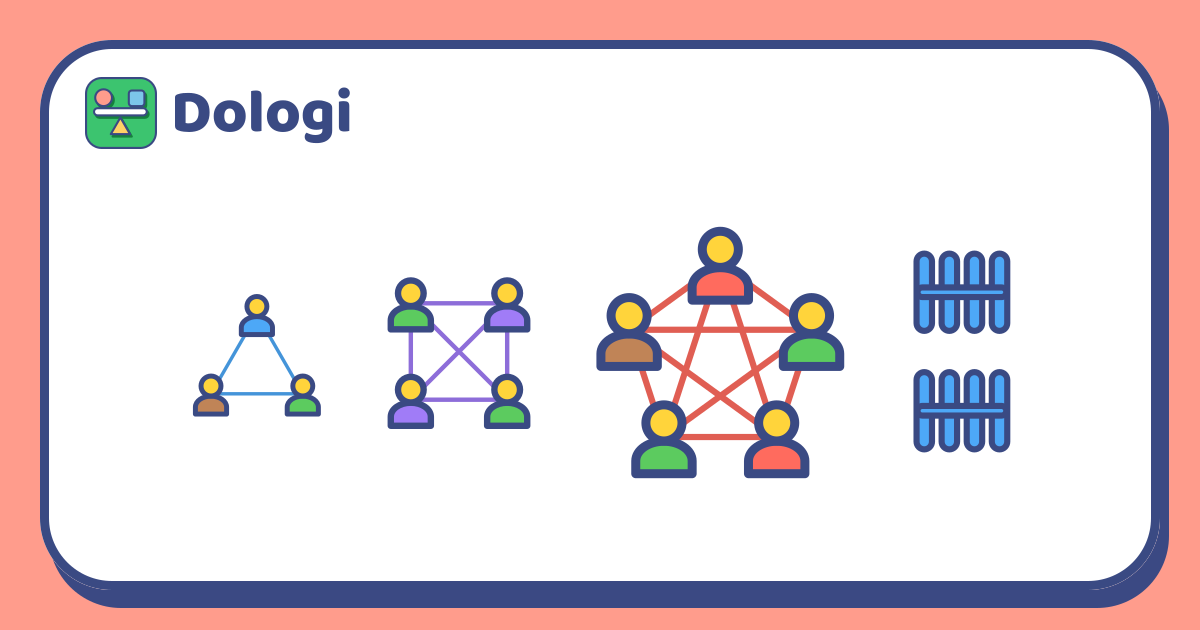
- Four people: add one more. This time it gets easy to lose track, so one person keeps score with tally marks on paper after each handshake. You should reach six.
Agree on the rules first: each pair shakes hands once. If the count comes out differently, do it again more slowly. That checking is part of the thinking.
Write it in a table and look for the pattern
Draw a simple table and fill in what you found. Then ask your child to guess the next row before you act it out.
| People | Handshakes | Added compared with the row above |
|---|---|---|
| 2 | 1 | – |
| 3 | 3 | 2 |
| 4 | 6 | 3 |
| 5 | 10 | 4 |
| 6 | 15 | 5 |
Some questions that help your child see the pattern for themselves:
- "When the fifth person arrives, how many hands do they need to shake?" (Everyone already there: four.)
- "So how many handshakes will five people make altogether?"
- "What do you notice about the numbers in the last column?"
The key idea: each new person shakes hands with everyone who was already there. So the number added each time grows by one. Once your child can say this in their own words, they have found the rule, not just memorized an answer.
List pairs in order so you don't miss any
Acting it out works for small groups, but for bigger ones your child needs a way to count on paper without missing or repeating a pair. Give each person a letter: A, B, C, D.
- A shakes hands with B, C and D: three handshakes.
- B has already shaken A's hand, so B only needs C and D: two.
- C has already shaken hands with A and B, so only D is left: one.
- D has already shaken everyone's hand.
That makes 3 + 2 + 1 = 6. Listing in order like this protects against the two most common mistakes: counting A with B and B with A as two different handshakes, and jumping around at random and missing a pair.
You can also draw it: place dots in a circle, one dot per person, and draw a line between every pair. Four dots give a square with two diagonals. Five dots give a pentagon with a star inside. Counting the lines is counting the handshakes.
From ten people to the whole class
Now go back to the original question. With ten people, the first person shakes 9 hands, the next shakes 8 new ones, and so on: 9 + 8 + 7 + 6 + 5 + 4 + 3 + 2 + 1 = 45.
Older children (around 10 to 12) can try a second way of thinking:
- Each of the 10 people shakes 9 hands, which gives 10 × 9 = 90.
- But every handshake involves two people, so it has been counted twice. Halve it: 90 ÷ 2 = 45.
Ask your child to check this rule against the small table: four people give 4 × 3 ÷ 2 = 6, which matches what you acted out. Then try a whole class of 30 children: 30 × 29 ÷ 2 = 435 handshakes. Nobody would want to act that out, which is why finding the rule from small cases is so useful.
Same idea, new story: every team plays every other team
Once your child has the handshake rule, look for the same structure in other situations:
- A tournament: six teams, and every team plays every other team once. How many matches? Exactly like six people shaking hands: 15.
- Clinking glasses: at a family meal, everyone clinks glasses with everyone else once.
- Joining dots: how many straight lines join every pair of seven dots?
It is also worth asking "Is this really the same?" For example, if ten friends each send a card to every other friend, there are 90 cards, not 45, because a card from A to B and a card from B to A are two different cards. Spotting what is the same and what is different is a big part of solving problems well.
As a rough guide, children around 8 or 9 enjoy acting it out and filling in the table; around 10 to 12 they can explain why the rule halves the total. Every child is different, so follow your child's pace.
In Dologi, the Patterns topic has "More and fewer" puzzles: children count the items in each picture, work out how many are added or taken away each time, and choose what comes next. It is the same habit of looking at small steps to find the rule.
In short
- When a problem feels too big, solve a smaller version first: two, three, four people.
- Write the results in a table and ask your child to predict the next row before checking.
- Listing pairs in order (A with everyone, then B with those left) stops pairs being missed or counted twice.
- The same rule fits tournaments, clinking glasses and joining dots; asking "what's different?" matters just as much.
Read more: How many outfits can you make? Counting combinations with children, Growing patterns: add two, double up, and guess what comes next