"It's my turn for show and tell tomorrow." For some kids that's the best news of the week. For others, it means a stomachache the night before. From kindergarten on, children are asked to speak in front of the class again and again: show and tell, sharing time on the rug, reading aloud, and later book reports and presentations. And every day there's the smaller challenge of raising a hand.
The good news is that speaking in front of others is a skill, and home is the easiest place to practice it. Here's how to rehearse at home, a few tricks for speaking slowly and clearly, how to practice asking questions in class, and when to ask the teacher for help.
Why standing up in front of the class feels so big
A racing heart, cold hands, a mind that suddenly goes blank: plenty of adults feel this before a speech. For children it's even stranger, because they don't yet know the feeling will pass. Tell them: "Everybody feels nervous in front of a lot of people. After the first couple of sentences, it gets easier."
It also helps to remember that confidence doesn't mean talking a lot or talking loudly. A quiet child who stands up, says three clear sentences and sits back down has done it.
Practice at home, with the family as the audience
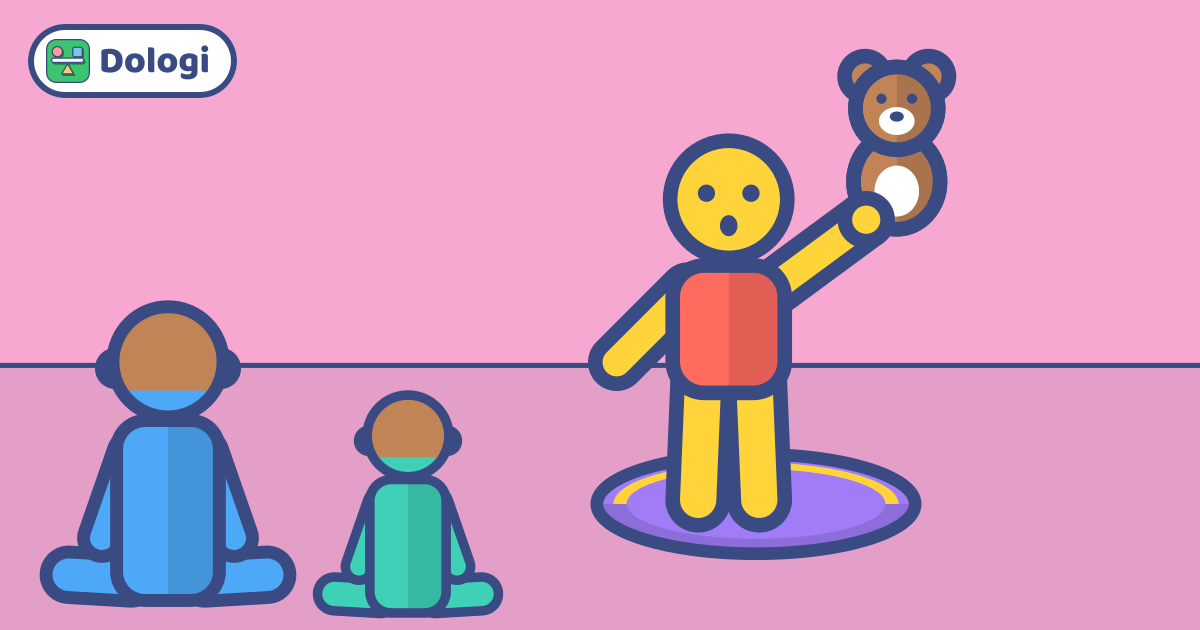
The living room is the first stage. Lay down a rug as the spot to stand on, have the family sit on the floor as the audience, and add a few stuffed animals to fill out the "class."
- Everyone takes a turn. Parents and siblings get up and talk too. Your child sees grown-ups stumble and forget, and learns that's normal.
- Keep the topic easy. A favorite food, a pet they'd like to have, what they did on the weekend. Easy topics make it easier to stand up.
- Praise one specific thing. "Your first sentence was loud and clear" helps more than "Great job." If you want to suggest something, pick just one thing.
- Grow the audience slowly. Once your child is comfortable, try telling Grandma on a video call, or a couple of neighborhood friends.
Bring something to show
Having something in their hands does two jobs: it gives your child something to talk about, and it gives those hands something to do besides shake. That's exactly why show and tell works so well for young children. A teddy bear, a leaf from the park, a photo from a trip: anything goes.
Give your child a three-sentence frame so they don't get stuck:
- What is it? ("This is my teddy bear. His name is Buttons.")
- Where did it come from? ("My grandma gave him to me when I turned five.")
- Why do you like it? ("I sleep with him every night.")
Older kids can add a question for the class: "Does anyone else have a stuffed animal they sleep with?" Once the frame feels familiar, it works for an "all about me" presentation, a talk about their family or a book report too.
Slow down and look at the audience
Nerves make everybody talk faster. A few things you can practice at home:
- Take a breath before the first sentence. Plant both feet, breathe in slowly, then start.
- Pause after each sentence. Practice "turtle talking": say one sentence, count "one, two" in your head, then say the next.
- Look at a friendly face. At school, that might be the teacher or a good friend. At home, practice looking at each person in turn.
- If you forget, look at your object. The thing in their hands reminds them what comes next. If their mind goes completely blank, it's fine to say "Let me start again" and go back to the first sentence.
Raising a hand to ask a question
Asking a question when you don't understand is also speaking in front of the class, and for many kids it's harder, because they're afraid others will laugh at them for not knowing. Practice a few openers together:
- "I don't understand this part yet."
- "Could you explain the second step again?"
- "I have a question."
Role-play at home: you're the teacher, your child raises a hand and asks. Then switch. When your child tells you they asked a question at school, praise the courage it took. The question doesn't have to be a brilliant one.
Good speakers are also good listeners: after show and tell, classmates ask questions, and your child has to hear the whole question to answer it. In Dologi, the Listening topic has a puzzle called "Listen and play back": your child hears a short string of notes, then plays the same keys in the same order. Listening all the way to the end before acting is also what helps children answer the question that was actually asked.
When your child is very scared
Some children just need more time. Others are so afraid that they cry or feel sick whenever they know a turn is coming. Don't force them up no matter what, but don't let them avoid it forever either. Break it into smaller steps: talk to one person, then two, then speak from their seat before standing at the front.
If the fear lasts for weeks, makes your child not want to go to school or keeps them from speaking even in familiar places, talk with the teacher, and if needed, ask a professional for advice. Teachers can often offer small steps at school, like going last or presenting with a partner.
In short
- Feeling nervous about speaking in class is normal, and confidence doesn't mean talking a lot or loudly.
- Practice at home with the family as the audience, take turns and praise one specific thing.
- Bring something to show and use a three-sentence frame: what it is, where it came from, why you like it.
- Practice pausing between sentences and a few openers for asking questions; if the fear lasts, talk with the teacher or a professional.
Read more: "I don't know": helping children dare to have a go at an answer, How to praise your child: praise effort and specific actions