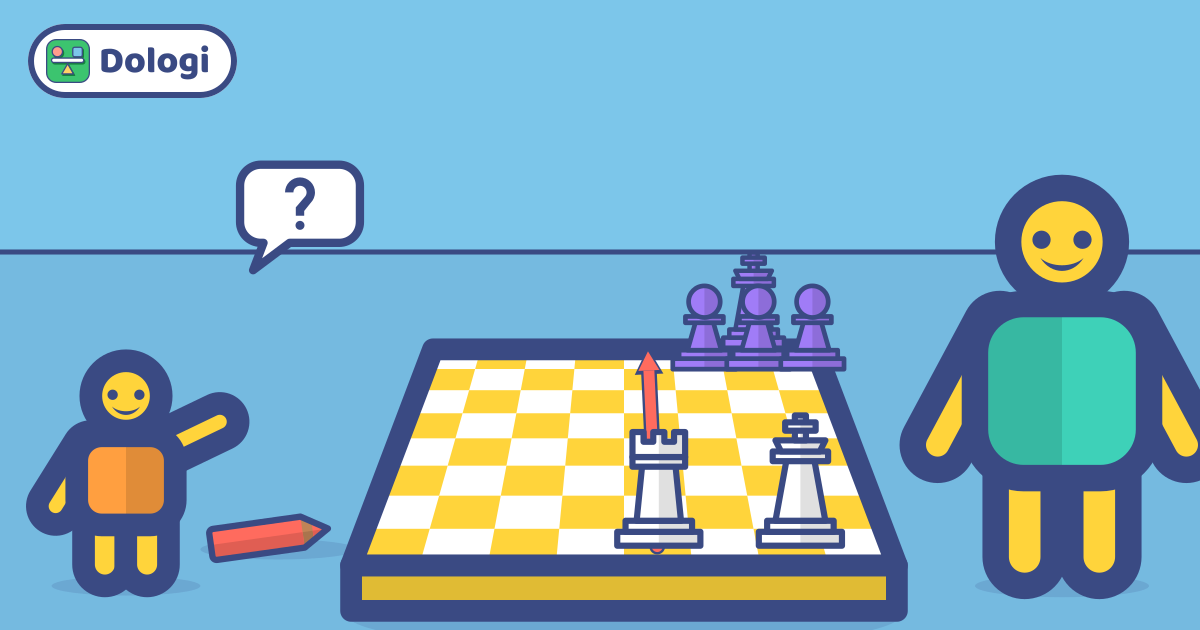
Your child has solved a stack of chess puzzles, and one evening says: "Now I'll make one for you." It sounds like a cute role swap. In fact it is one of the harder things a young chess player can try, and one of the most useful.
Solving looks forward: "What can I do from here?" Making a puzzle works backwards: decide the ending first, build the position that leads to it, then check it from the other side of the board. Here is that process with one small example you can set up on the kitchen table tonight.
Why making a puzzle is harder than solving one
A solver only needs one good move. A setter must know the answer before anyone else, then ask the uncomfortable questions: Does it work whatever the other side does? Is there a second answer? Is it too easy to be fun? Could this position even happen in a real game?
That is a referee's job. Your child has to step out of "my side wants to win" and see the board as the opponent would. This kind of working backwards from the goal is a thinking habit worth practicing, and chess gives it a clear, checkable shape.
From roughly age 7 or 8, once your child knows how the pieces move and what check and checkmate mean, they can build real puzzles. Younger kids can make simple "take a piece" puzzles with two or three pieces. Go by what your child knows, not by age.
Step 1: pick the goal first
Before touching the pieces, your child decides what the puzzle is about. From easiest to hardest:
| Goal | What the solver must do |
|---|---|
| Safe capture | Take a piece without losing one back |
| Check | Put the king in check |
| Checkmate in one move | Find the one move that ends the game |
| Checkmate in two moves | Plan a move, the reply, then mate (later on) |
Start with 3 to 6 pieces in total. Fewer pieces means fewer things can go wrong, and every reply is easier to check.
Step 2: build it backwards from the end
Here is a worked example. Picture the board with columns lettered a to h from left to right and rows numbered 1 to 8, with White at the bottom.
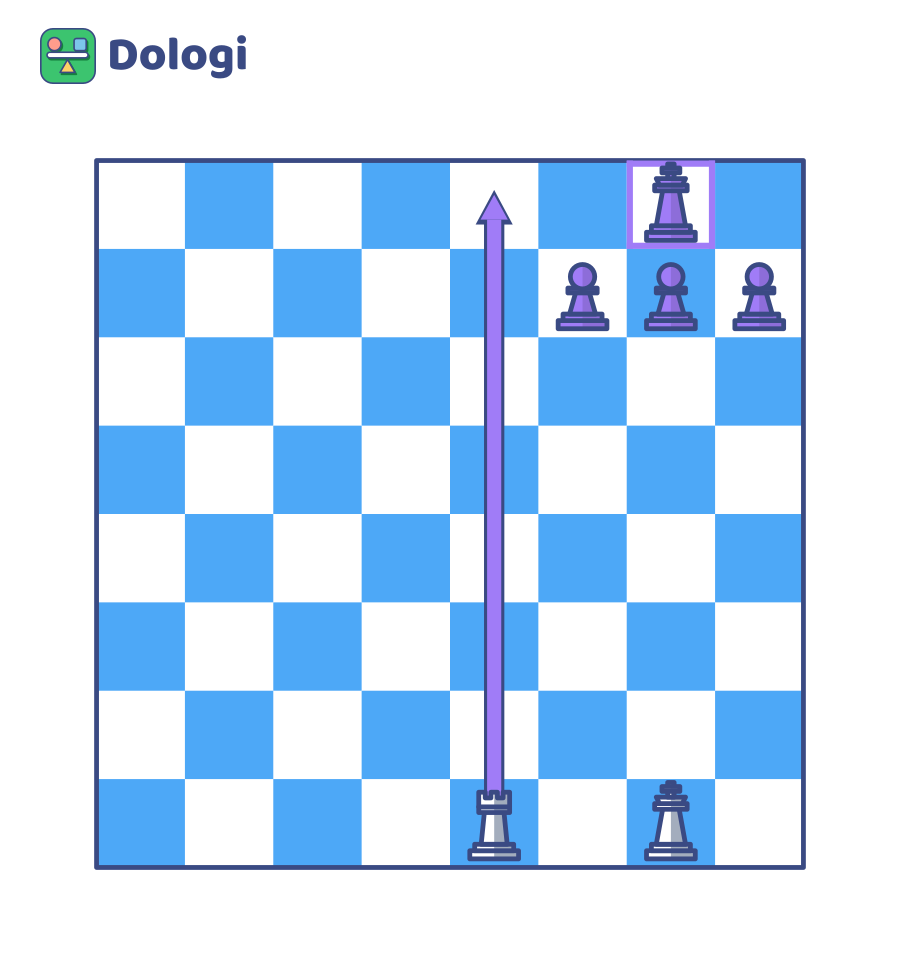
Start with the final picture. Black's king sits on g8, tucked behind its own three pawns on f7, g7 and h7. A white rook lands on e8 and gives check along the back row. The king can't step forward, because its own pawns are in the way. It can't slide to f8 or h8, because the rook covers the whole row. That is checkmate.
Now go one move back. Where could the rook have come from? Put it on e1, at the bottom of the same column, so it can travel straight up. Add the white king on g1 so both sides have a king.
The puzzle: "White to move. Checkmate in one." Answer: rook from e1 to e8. It is the only move that mates.
Notice the order: the checkmate came first, the starting position came second. That is the whole trick.
Step 3: test it as the opponent
Now your child switches sides and tries to break their own puzzle, asking "What if Black...?" for every reply. The usual ways a home-made puzzle breaks:
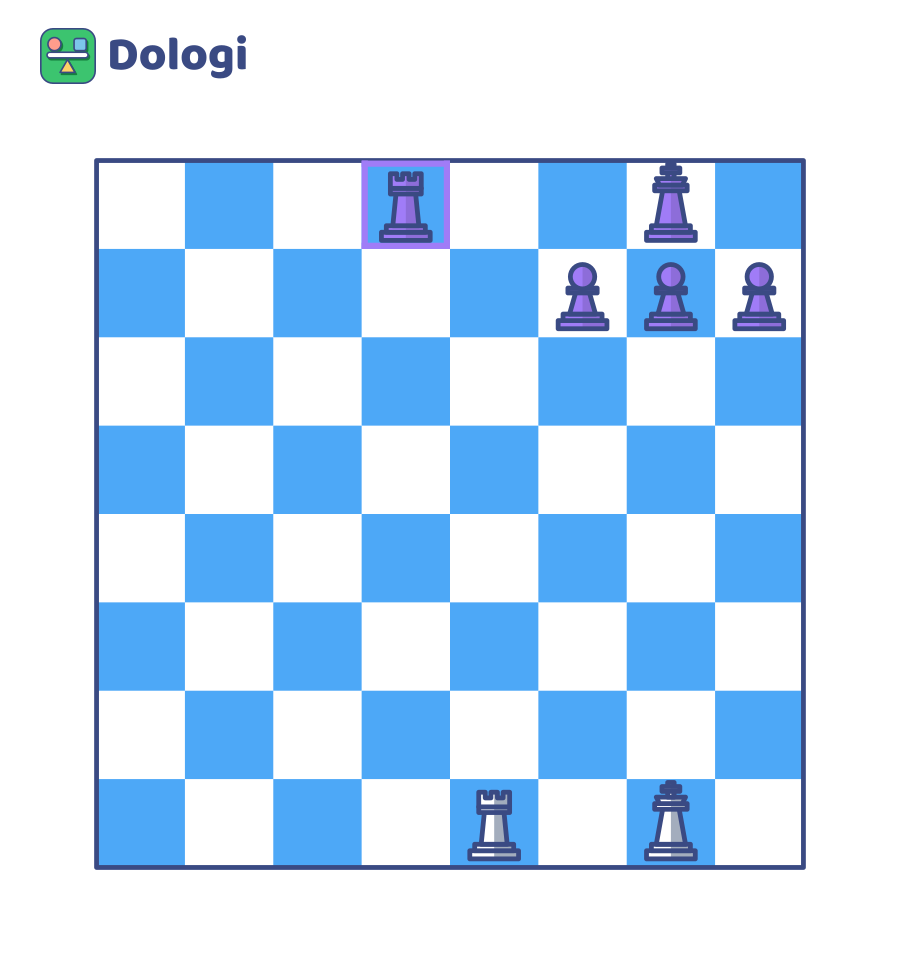
- A defender can take the attacker. If a black rook also stood on d8, the white rook landing on e8 would simply be captured. The puzzle is broken.
- The king has an escape square. If the pawn on h7 were on h6 instead, the king could slip out to h7. No more mate.
- The position is impossible. Each side needs exactly one king. The two kings never stand next to each other. The side that is not moving must not already be in check. Pawns never stand on the first or last row.
- There is a second answer. Not a disaster, but either say so in the puzzle or change it so only one move works.
A broken puzzle is not a failure. Fixing it is the best part: move one piece, add a pawn, or change the goal. If your child's puzzle is too easy or doesn't work, try not to correct it directly. Ask instead: "What could Black do here?" Let them find the hole.
Step 4: swap seats with your child
Now the fun part. Your child sets up the board, or draws it on graph paper with letters for the pieces (K for king, R for rook, and so on). They read the goal out loud and keep the answer to themselves.
You solve it while thinking aloud. It is fine to try a wrong move on purpose so your child gets to explain why it fails; explaining is half the learning. If you find a second answer they didn't see, celebrate it: "You've got a hole in your puzzle. Can you fix it?"
Then trade roles and set one for your child. Some families keep a small puzzle notebook for the best ones, a good thing to pull out on a rainy Saturday or when grandparents visit. Skip points and scores. Praise specific things, like "You checked the h-pawn before you showed me," rather than "You're so smart."
If your child likes building on a screen too, the Chess room in Dologi's Creative corner lets them Set up a board, then use Make a challenge: choose the goal (Check, Mate in 1, Mate in 2, Mate in 3 or Safe capture), choose which chess buddy will answer, and tap Check it. The app checks whether the challenge can be solved and says whether there is only one correct first move; only a solvable challenge can be saved. Saved ones go to Your challenges, where Challenge a parent lets you solve it on the same device, and a challenge can also be sent to another device as a file or QR code, once a parent unlocks that step.
In short
- Solving a chess puzzle looks forward; making one starts from the ending and works backwards.
- Pick the goal first, keep it to 3 to 6 pieces, build the final picture, then go one move back.
- Test it as the opponent: captures, escape squares, impossible positions, second answers. Fixing a broken puzzle is part of the fun.
- Swap seats: your child holds the answer, you solve out loud, then you set one for them.
Read more: Let your child set the puzzles: how children can make up math problems and riddles for the whole family, Working backwards: start from the goal to find the way, 10 easy chess puzzles for kids who are just starting, with hints and answers