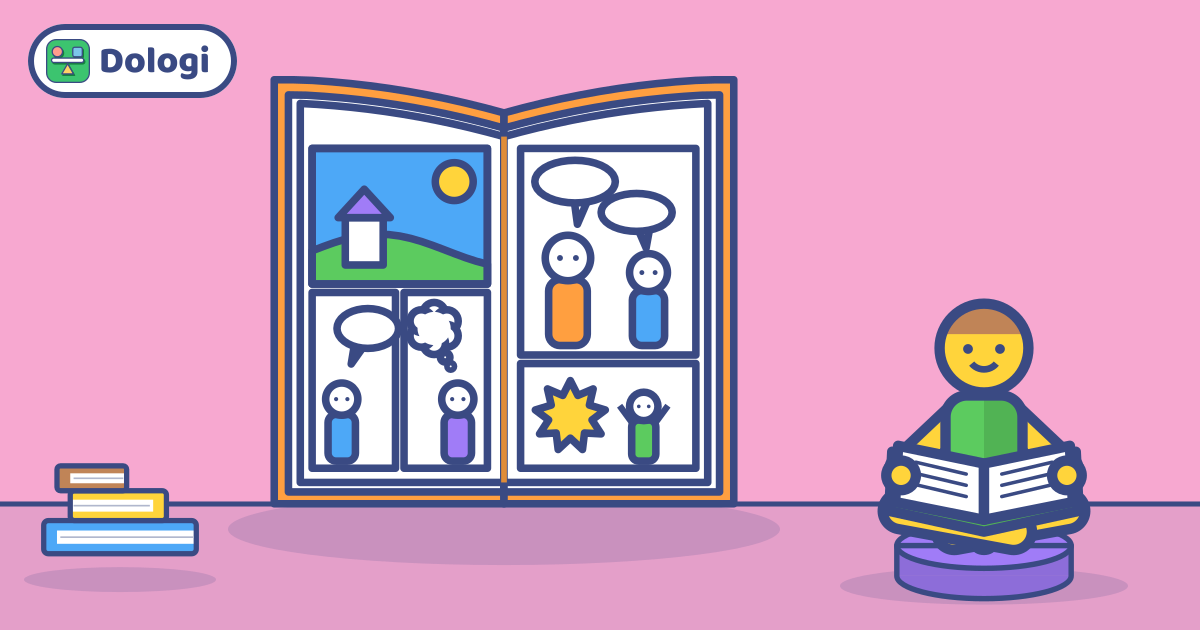
Your child reads the same comic for the fifth time, laughing at the same page, and walks right past the chapter books you picked out. It's easy to worry: is this "real" reading?
Good news: it is. Comics combine words and pictures, and reading them well takes real skill. They can also be the doorway that turns a reluctant reader into a kid who reads every day. The trick is to use comics well: choose them with care, keep other books around, and talk about what your child reads.
What children get from comics
- Reading pictures. Faces, gestures and backgrounds carry half the story. A child has to notice that the character is frowning, or that it started raining between two panels.
- Filling the gaps. Nothing is shown between two panels; the reader works out what happened. That's inference, the same skill teachers ask for in reading comprehension.
- Dialogue and new words. Comics are mostly people talking, which means everyday expressions, jokes, and sound words like crash and whoosh.
- Short, doable chunks. One page feels manageable to a child who gets tired by a full page of text.
- Rereading. Kids reread favorite comics again and again. Each reread is smoother and faster, which builds fluency; see how to build reading fluency at home.
How to read a comic page
Children who are new to comics sometimes get lost. Take one page and show them:
- The order of the panels: left to right, top to bottom, like lines of text. (Manga translated from Japanese is often printed to be read right to left; the first page usually explains.)
- Speech balloons: the tail points to the person speaking. Read the balloon higher up first.
- Thought clouds: bubbly edges and little circles mean the character is thinking, not talking.
- Caption boxes: the narrator's voice, often telling time or place ("The next morning...").
- Sound words and lines: big letters for noises, little lines for movement.
Reading aloud together helps a lot: you read the narrator, your child does the voices.
Choosing comics for your child's age
Comics cover every age, from wordless picture stories to graphic novels written for teens. Before buying or borrowing:
- Check the age on the cover or back, if there is one, and the library shelf it comes from.
- Flip through a few pages. Is the humor right for your child? How much fighting is there, and how scary are the pictures?
- Match the layout to the reader. Younger kids do best with a few big panels per page and short balloons; wordless comics work even for children who can't read yet.
- Follow interests. Animals, sports, friendship, mysteries: there are comics for almost everything, including nonfiction comics about science and history.
More general tips are in choosing books for your child by age.
Comics alongside other books, not instead of them
There's no need to ban comics to make room for chapter books. A few habits keep reading varied:
- Mix the shelf. Put comics, picture books, chapter books and nonfiction in the same basket or reading nook, so your child sees them as equals.
- Build bridges. If your child loves a comic about space, offer a short nonfiction book about planets next. Some stories come in both forms.
- Keep reading aloud. Longer novels read aloud at bedtime give your child rich language that comics don't always have.
- Notice the reading, not the format. "You read for half an hour!" is worth saying whatever the book.
Talk about what your child reads
Comics are perfect for conversation because you can point to the page:
- "What happened between these two panels?"
- "How is she feeling here? How can you tell?"
- Cover a speech balloon: "What do you think he's saying?"
- "Why is this panel so big?" or "Why are there no words on this page?"
- "What would you change in the ending?"
If your child reads smoothly but can't retell the story, the steps in building reading comprehension step by step work well with comics too.
Make a comic together
Many kids who love comics want to make their own:
- Fold a sheet of paper into four or six panels.
- Plan a tiny story: a beginning, a problem, an ending. Stick figures are fine.
- Start without words, then add balloons and captions.
- Read it aloud to the family, with voices.
You can also cut a comic strip from an old newspaper into panels and ask your child to put it back in order; see games with old newspapers.
In Dologi's Logic topic, the What happened first? puzzle asks your child to put pictures in order, like a plant growing or a candle burning down, looking for the small change from one picture to the next. It's the same attention to sequence that reading comic panels needs.
In short
- Comics are real reading: pictures, words and the gaps between panels all carry meaning.
- Show your child how a comic page works: panel order, balloons, thought clouds, captions.
- Choose comics by age and interest, and keep other kinds of books on the same shelf.
- Talk about the panels together, and try making a comic of your own.
Read more: Choosing books for your child by age, How to set up a reading nook at home, My child reads slowly: building reading fluency at home