The game is almost over. Your child has a king and a queen, and the other side has nothing but a king. Check, the king runs. Check again, it runs again. Ten moves, twenty moves, and the game still isn't finished. Sometimes your child gives up chasing; sometimes they play a move that looks crushing, and the game ends in a draw because the other king has no legal move.
Checkmating with king and queen is the easiest and most common endgame, the last part of a game when only a few pieces are left. This guide breaks it into three steps, shows the trap that turns wins into draws, and suggests a way to practice at home, from easy positions to harder ones.
Why learn this endgame first
- It really comes up. New players love capturing, so games often end with one side far ahead, or with a pawn that marched to the last row and became a queen. Knowing how to checkmate is knowing how to win.
- It teaches a plan instead of random checks. There's a clear order: squeeze, bring the king, finish. For many kids, this is the first time a chess game feels like following a plan.
- Two pieces have to work together. The queen is strong, but she can't checkmate alone. Your child learns that the king has an important job too.
- It builds care. At the end, one careless move is a draw. Your child gets used to asking, "After my move, does the other side still have a move?"
This lesson fits once your child knows what check and checkmate are, often from around age 7, though every child is different. If checkmate and stalemate still get mixed up, start with our article on how a chess game ends, linked at the bottom.
The king's "box": two walls built by the queen
The queen guards a whole row and a whole column at the same time, like two walls. The other king can't step through a wall, so it's shut inside part of the board. Call that part the box.
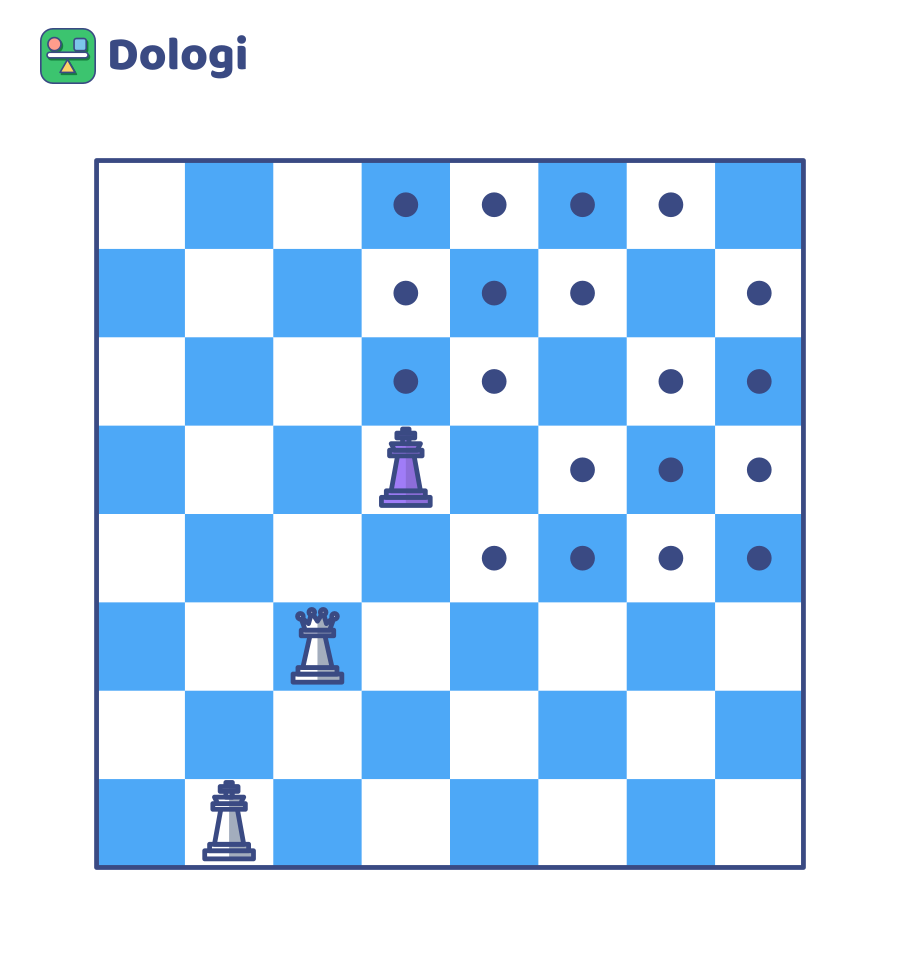
Here the white queen guards the c-file, the 3rd rank and one diagonal. The black king can only move around the dotted squares. The queen's job is to make the box smaller, and she doesn't need to give check to do it.
An easy trick to remember: keep the queen a knight's jump away from the black king (like the queen on c3 and the king on d5 in the picture). Wherever the black king steps, the queen follows so that she's still a knight's jump away, and the box shrinks. If the black king goes up to d6, the queen goes to c4; if it steps to e6, the queen goes to d4.
Have your child count the squares in the box after every queen move. The number should go down, or at least never go up. It's a simple way for them to check their own moves.
Three steps to checkmate
- Squeeze with the queen. Keep shrinking the box until the black king is pushed to the edge and can only move along one row (or one column) next to it.
- Stop the queen, bring your king. The queen holds her wall while your king walks up, one step at a time, until it stands facing the black king with one square in between. This is the step kids forget most: the queen can't do it alone.
- Checkmate. Once your king has arrived, there are two common finishes. The queen moves right next to the black king, protected by your king so it can't be captured. Or the queen gives check along the edge while your king blocks the escape squares in front.
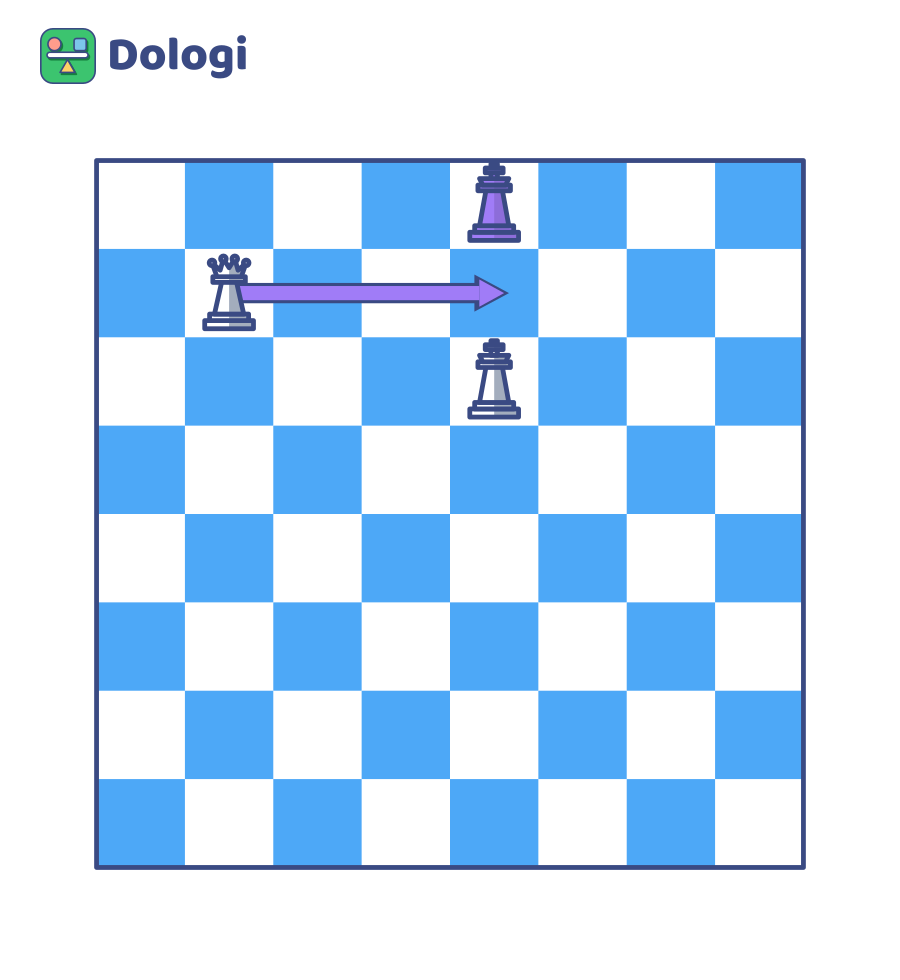
In this picture, the queen moves to e7. The black king is in check, it can't capture the queen because the white king protects her, and every square around it is covered. Checkmate. From b7, the queen could also checkmate on the back row (a8, b8 or c8), because the white king already covers the 7th rank. Ask your child, "How many different checkmates can you find here?"
Watch out for the stalemate trap
Once the black king is in a corner, the knight's-jump trick becomes dangerous. Say the black king is on a8 and the white queen is on b6. Black isn't in check, but all three squares around the king are covered. It's Black's turn and there's no legal move, so the game is a draw, even though White has a whole extra queen.
A rule for your child: when the box is down to two or three squares, stop squeezing with the queen and bring the king first. And before every move near the end, ask: "After my move, can the other king go anywhere? If not, am I giving check?"
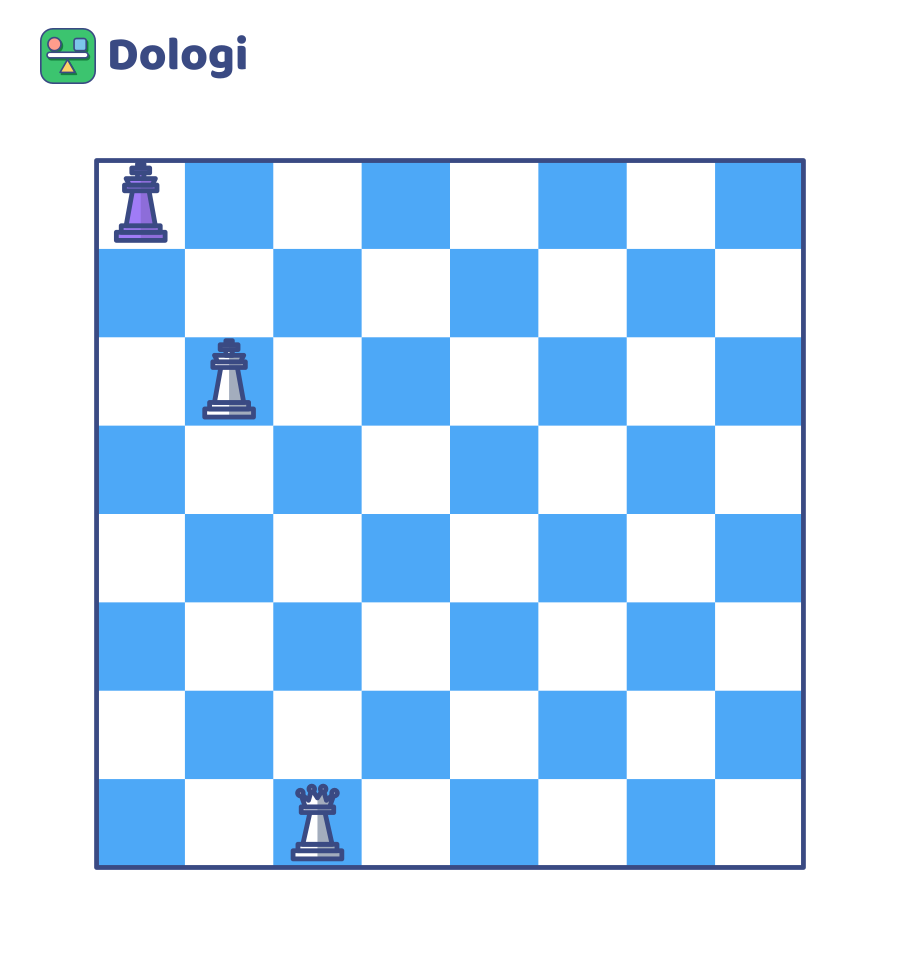
Try it now: White to move. Find the checkmate. Careful: two moves look very strong but end in a draw.
Answer: Queen to c8, giving check along the back row; a7 and b7 are already covered by the white king, so the black king has nowhere to go. The two drawing moves are queen to c7 and queen to f4. Both cover b8, so the black king isn't in check but has no square to move to.
Practicing at home: easy to hard, with you as the lone king
You play the black king; your child plays the white king and queen. Set up a position, play until checkmate or a draw, then try another. About fifteen minutes is plenty for one session.
| Level | Setup | Goal |
|---|---|---|
| 1 | The puzzle above; or black king h8, white king g6, white queen b1 | Checkmate in one without playing a drawing move |
| 2 | Black king g8, white king f6, white queen a1 | Checkmate in a few moves when the king is already on the edge |
| 3 | Black king d5, white king a1, white queen g1 | All three steps: squeeze, bring the king, checkmate |
A few tips:
- Play for real. Run your king toward the center and stay close to the queen. Your child learns much more than if you head straight for the corner.
- Laugh off a draw and set it up again. The first stalemate usually stings. Put the exact position back and ask, "Which move left the black king with nowhere to go?"
- Switch sides now and then. When your child plays the lone king, they have to understand how the queen traps it.
- Move up a level once your child has solved the current one a few times in a row. There's no rush.
In the Chess room in Dologi's Creative corner, Learn chess has a lesson called Mate with queen and king: your child watches the queen shrink the black king's space, tries it, practices a few short positions, then plays a chess buddy who holds the lone king. For extra practice, Set up a board lets your child place the kings and queen anywhere and play a chess buddy from there, as many times as they like.
In short
- King and queen against king is the endgame to learn first: it comes up often, it has a clear method, and it teaches playing with a plan.
- Three steps: the queen pushes the king to the edge by shrinking its box, your king comes up, then checkmate.
- When the box is down to a few squares, stop the queen to avoid stalemate, and ask "Does the other side still have a move?"
- Practice from checkmate-in-one up to a king in the middle of the board, with you holding the lone king and playing for real.
Read more: Check, checkmate, stalemate and draws: how a chess game ends, explained for kids, 10 easy chess puzzles for kids who are just starting, with hints and answers