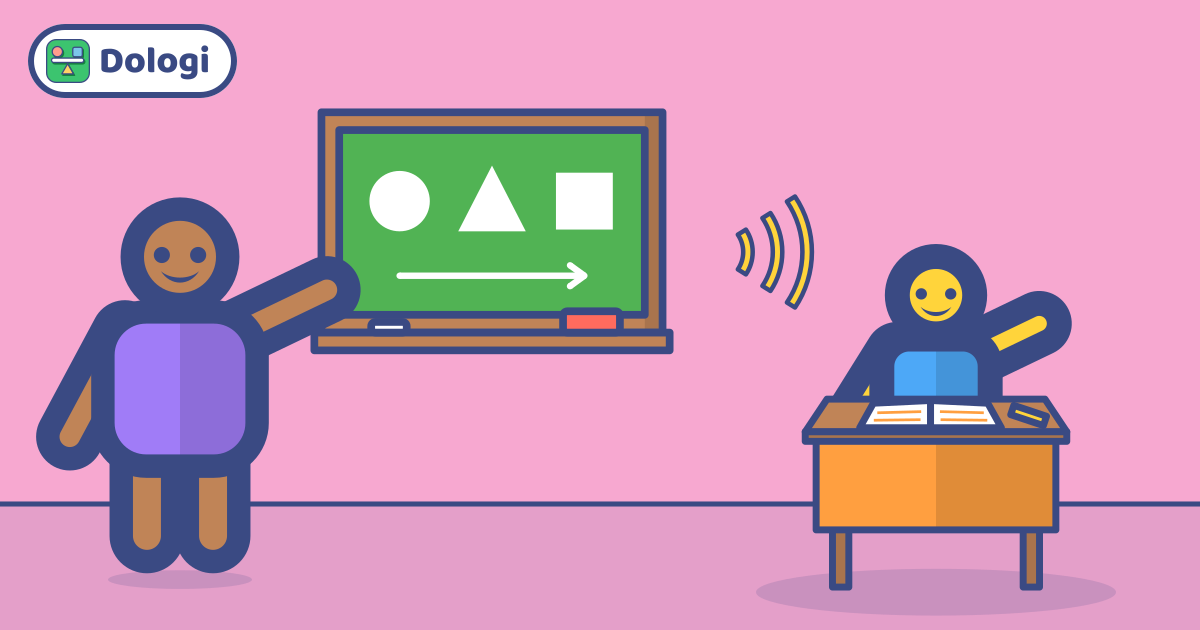
"We had a spelling test today? Nobody told me." "The teacher said to bring what?" Many parents hear this and wonder whether their child was listening at all. Usually the child was in the room, sitting fairly still, and still missed the part that mattered.
Listening in class isn't the same as sitting quietly. It's a set of small skills: looking at the person speaking, noticing which words matter, holding on to one main idea, and asking when something isn't clear. These skills can be practiced, and home is a good place to start. This article is for children from about 5 to 12.
What good listening in class looks like
A child who listens well in class usually:
- Looks toward the speaker, the teacher or a classmate who is answering.
- Catches signal words, such as "first," "today we're going to," "this is important," or "for homework."
- Keeps one main point in mind, for example "we're learning to add tens," even if they don't remember every sentence.
- Notices when they're lost, and asks.
Children grow into this gradually. A kindergartner may follow a short explanation; a fifth grader can follow a longer lesson and pick out what to remember.
Why listening is hard
- Thoughts wander. Recess, a friend, a noise outside. This happens to adults too.
- Long explanations. The longer the talk, the more likely a child drifts off. How long a child can focus changes a lot with age; see how long children can focus at each age.
- Not knowing what matters. If everything sounds equally important, nothing stands out.
- A tired or hungry body. A late night or a skipped breakfast makes listening harder for anyone.
- Where they sit. Far from the teacher, near the door or next to a chatty friend.
Three habits to practice
1. Look at the speaker. Turning eyes and body toward the person speaking helps the brain tune in. Don't make it a rigid rule, though: some children listen well while their hands are busy, and staring isn't the goal.
2. Catch one idea. Before a lesson, your child can set a small goal: "I'll remember one thing the teacher says." Older kids can jot down a word or a tiny sketch. The article on taking notes shows how children around 8 to 12 can turn that into short notes.
3. Ask when lost. Many children stay silent because they don't know what to say. Practice a few simple sentences at home:
- "Could you say that again, please?"
- "Do we write this in the notebook or on the worksheet?"
- "I didn't understand the second step."
If raising a hand feels too scary, your child can ask the teacher after the lesson or ask a classmate. The article on speaking up in class has ideas for children who freeze when they need to talk in front of others.
Practice at home with games
Short, playful practice works better than lectures about paying attention.
- The mini-lesson. Explain something for two or three minutes: how a bicycle brake works, why leaves change color. Then ask your child for two things they remember. Swap roles next time.
- Signal word hunt. Read a short story aloud and agree on a signal word; your child claps each time they hear it. For younger kids, use a word that comes up often.
- One question at the end. After a picture book or an audio story, ask one specific question: "What did the fox want?" Not a quiz, just a habit of listening to the end.
- Instruction games. "Take the blue cup, put it on the table, then sit on the rug." The article on following multi-step instructions has games and a rough guide to how many steps suit each age.
- Better questions after school. Instead of "How was school?", try "What did your teacher draw on the board today?" or "What's one thing you learned in math?" Your child starts noticing these things during the day.
Keep homework time in short pieces too; the article on breaking study time into short blocks explains how.
Work with the teacher
- Ask how listening looks in class. The teacher sees things you don't: when your child drifts off, and what helps.
- Talk about seating. A seat closer to the teacher or away from distractions sometimes helps.
- Agree on small signals. Some teachers use a tap on the desk or a quiet word to help a child refocus.
- Pay attention to patterns. If your child often says "What?", turns the TV up very loud, seems not to hear when you call from another room, or the teacher reports trouble paying attention that lasts for months, talk with the teacher and your pediatrician. A hearing check is a simple place to start. Only professionals can say whether something more is going on.
In Dologi, the Listening topic has a puzzle called Which note changed?: your child hears two short tunes that are the same except for one note, and taps the note that changed. It takes listening all the way to the end, the same skill that helps in class when one sentence holds the important part.
In short
- Listening in class means looking at the speaker, catching signal words and one main idea, and asking when lost.
- Wandering thoughts, long talks, tiredness and seating all make it harder; it improves gradually with age.
- Practice at home with mini-lessons, signal word games and specific questions about the school day.
- Work with the teacher, and if listening problems keep coming up, ask the pediatrician about a hearing check.
Read more: Listened, then forgot? Games for following two-step and three-step instructions, Helping your child feel confident speaking in class: practice at home, bring something to show, slow down, How long can children focus at each age?