Is your child spotting checkmate in one move pretty easily now? The next step up is mate in two: White makes a move, Black answers with their best defense, and then White delivers checkmate. That middle step is where the real thinking happens. Before moving, your child has to ask, "What will the other side do?"
The eight puzzles below were written by Dologi for kids around 8 to 10 who know check and checkmate and can read square names. Every position was checked by a computer: there is exactly one first move that forces checkmate in two, no matter how Black replies.
What mate in two means
- Move 1: White moves.
- Black replies: Black picks the move that holds out the longest, not the one that makes it easy for White.
- Move 2: White checkmates.
A correct answer has to work against every reply. If Black has even one way to escape, that first move isn't the solution, even if every other reply loses.
In the diagrams, the bottom row is White's side and the bottom left square is a1 (the letter is the column, the number is the row). White's pieces are white and Black's pieces are purple. White moves first in every puzzle.
How to find the first move
- Check where the black king can run. Which squares are blocked by its own pawns? Which are covered by White's pieces?
- Try the forcing moves first: checks, captures and threats of checkmate. Most puzzles start with one of these, but not all of them (look at puzzle 8).
- For each try, list every reply Black has: moving the king, blocking, or capturing the checking piece. Every single reply needs a checkmate.
- Say it out loud before moving. Have your child say both moves and Black's reply, like "Rook takes e8, check. Black has to take back. The other rook takes e8, mate." Talking it through helps kids catch what they missed.
Hints come in steps: hint 1 tells you which piece moves first, hint 2 tells you which square. Give your child a few minutes before opening a hint; the answers are at the end. Setting the position up on a real board makes it easier to test Black's replies.
Group 1: Two pieces working together
Puzzle 1
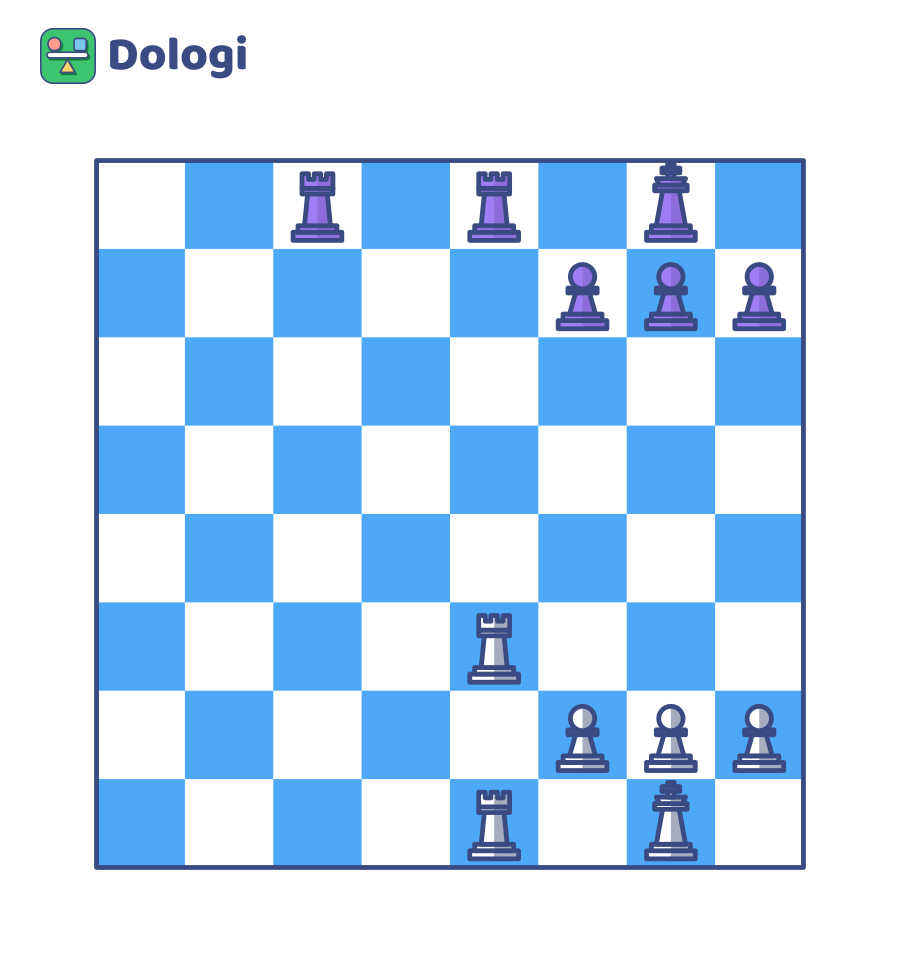
White to move and checkmate in two.
- Hint 1: The rook on e3.
- Hint 2: The square e8.
Puzzle 2
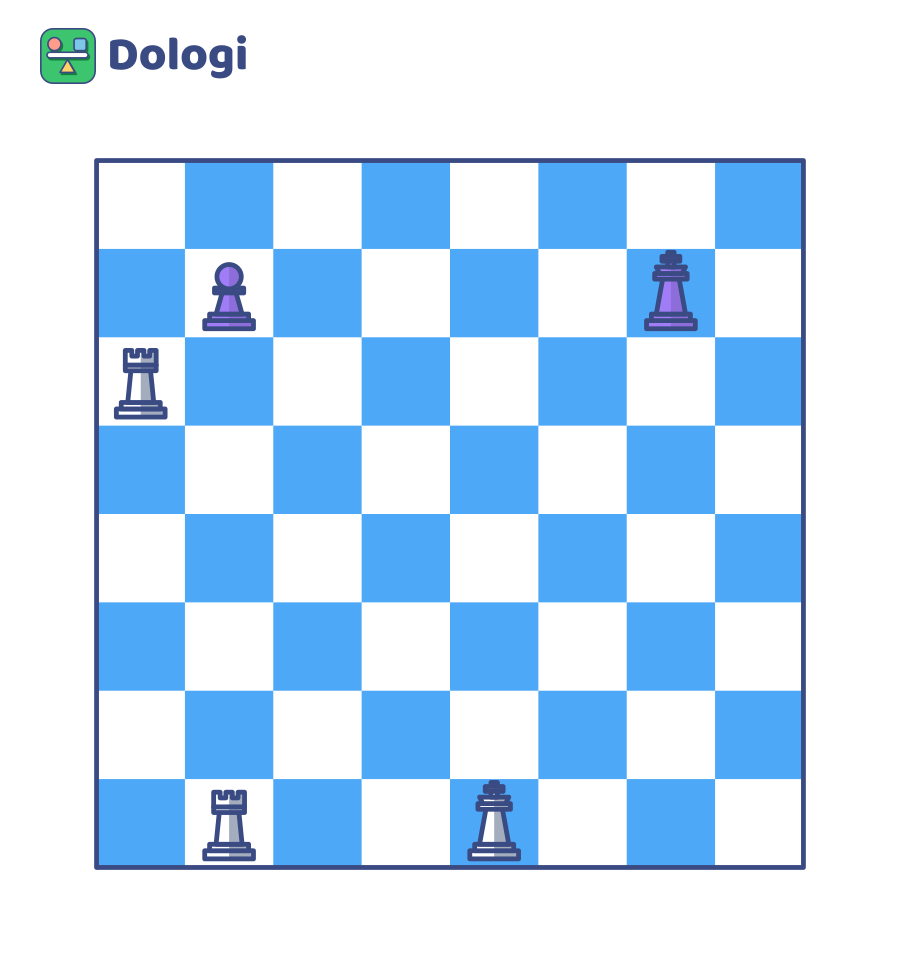
White to move and checkmate in two.
- Hint 1: The rook on b1.
- Hint 2: The square b7.
Puzzle 3
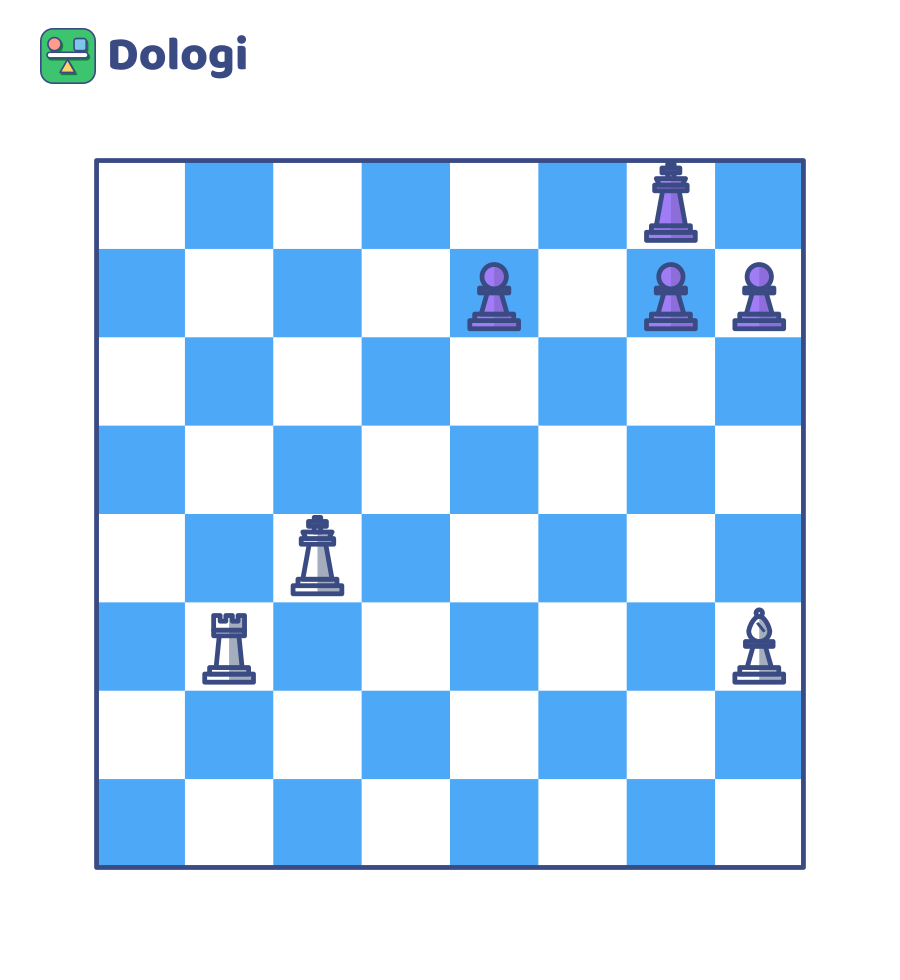
White to move and checkmate in two.
- Hint 1: The bishop on h3.
- Hint 2: The square e6.
Group 2: The queen and a helper
Puzzle 4
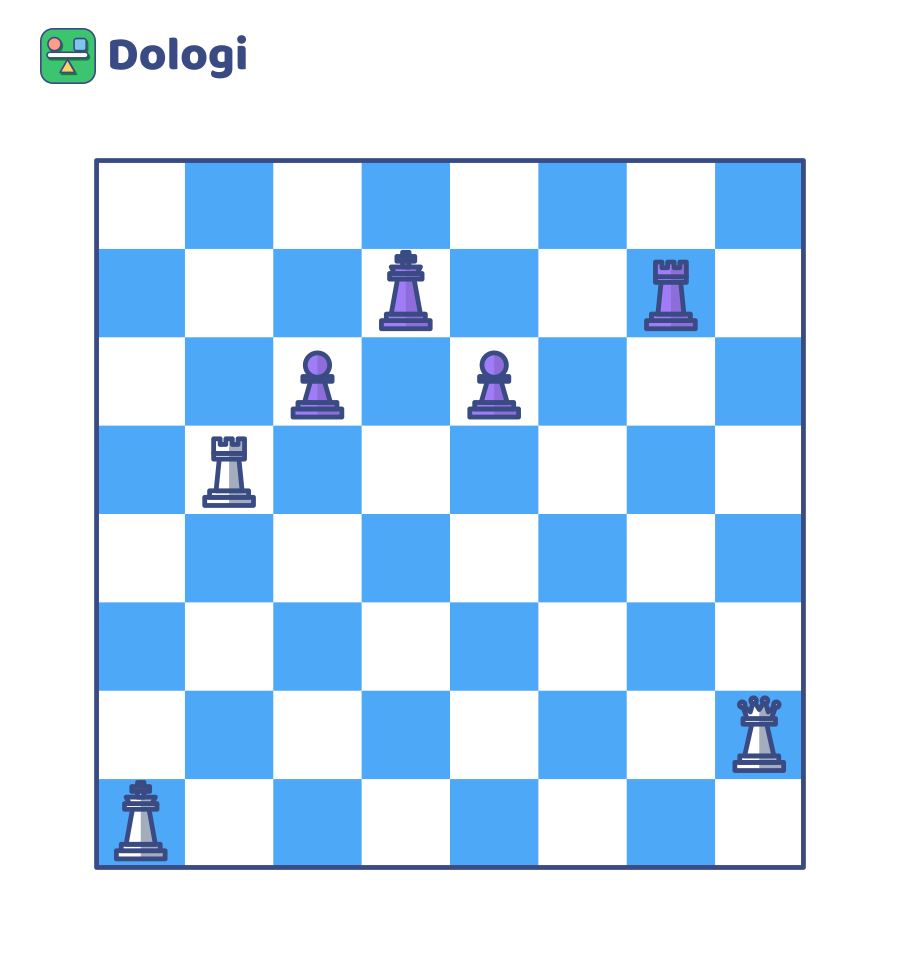
White to move and checkmate in two.
- Hint 1: The rook on b5.
- Hint 2: The square b7.
Puzzle 5
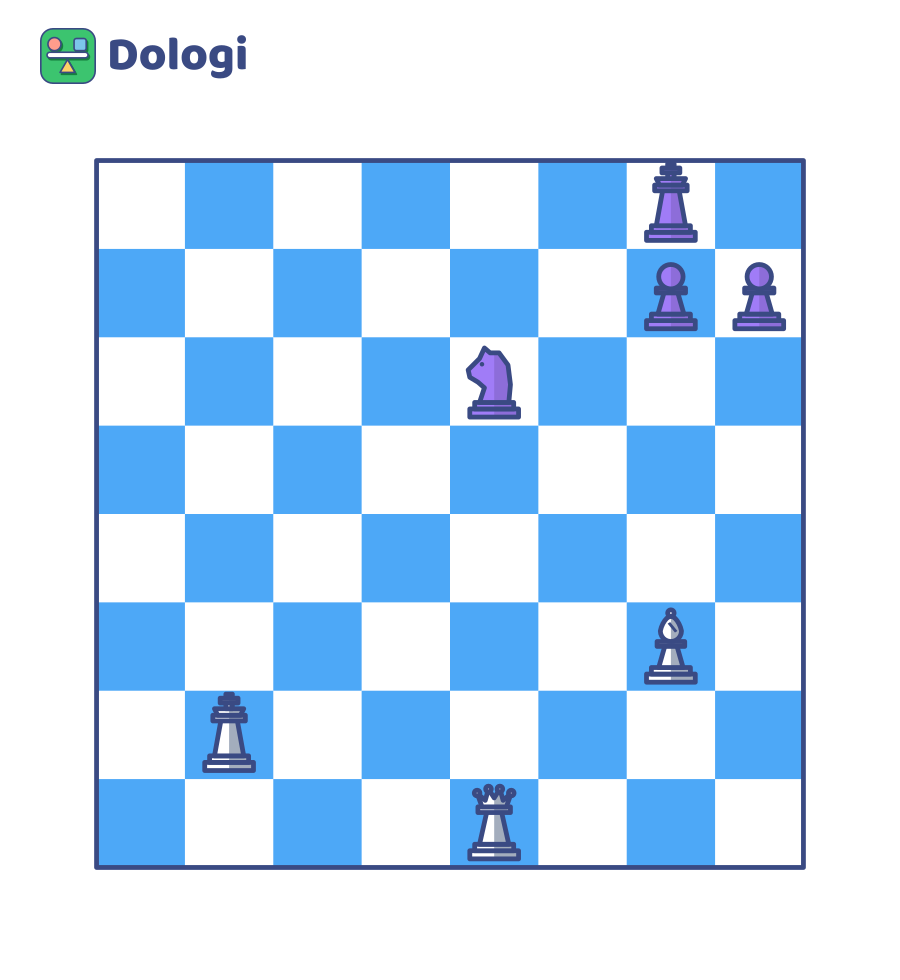
White to move and checkmate in two.
- Hint 1: The queen on e1.
- Hint 2: The square e6.
Puzzle 6
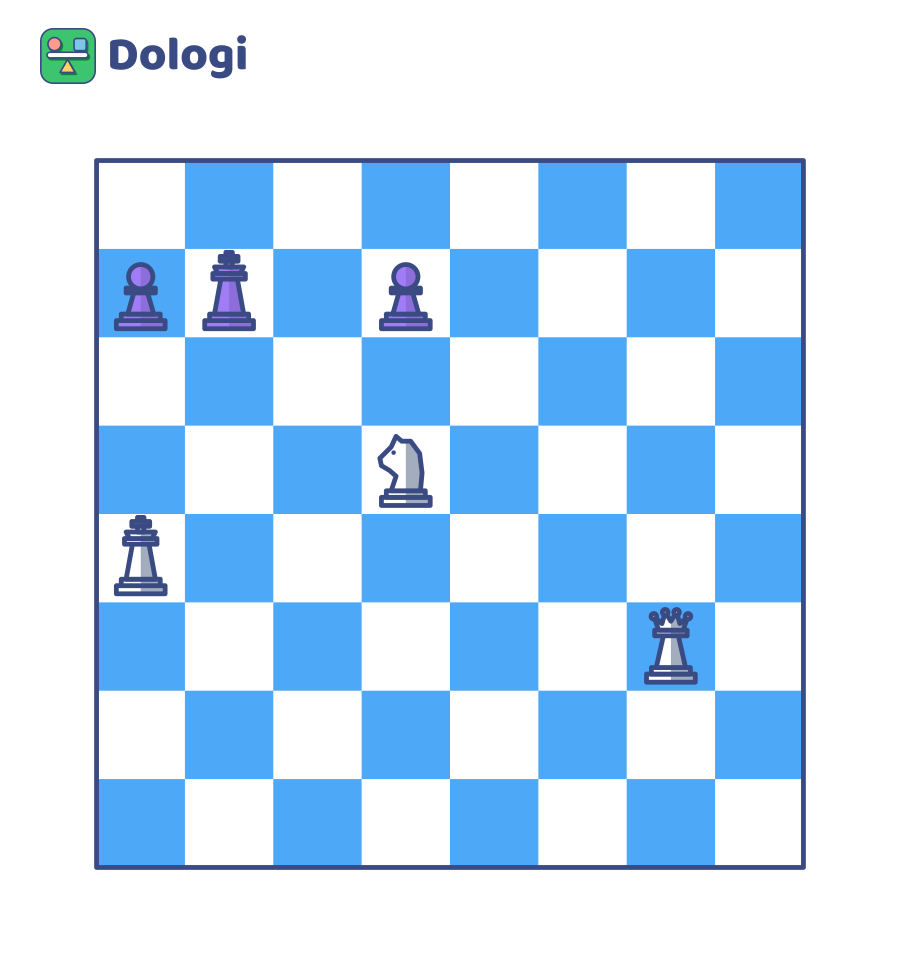
White to move and checkmate in two.
- Hint 1: The queen on g3.
- Hint 2: The square c7.
Group 3: The surprise move
Puzzle 7
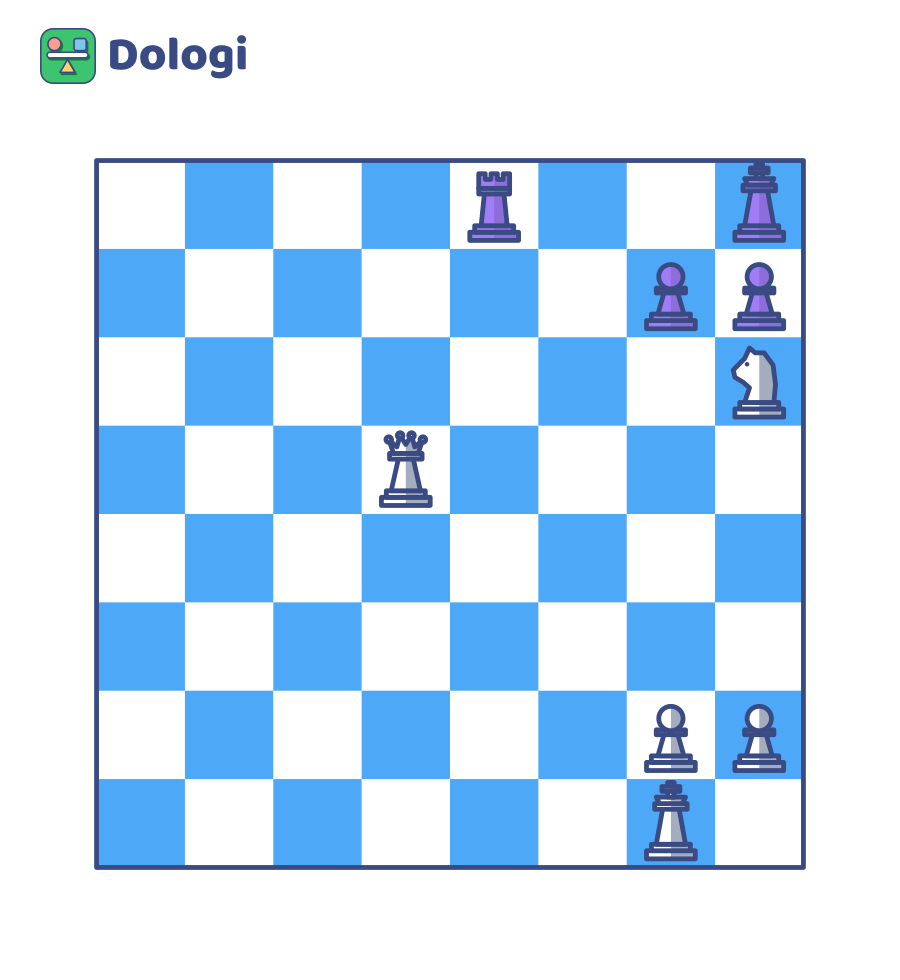
White to move and checkmate in two.
- Hint 1: The queen on d5. Yes, the strongest piece.
- Hint 2: The square g8.
Puzzle 8
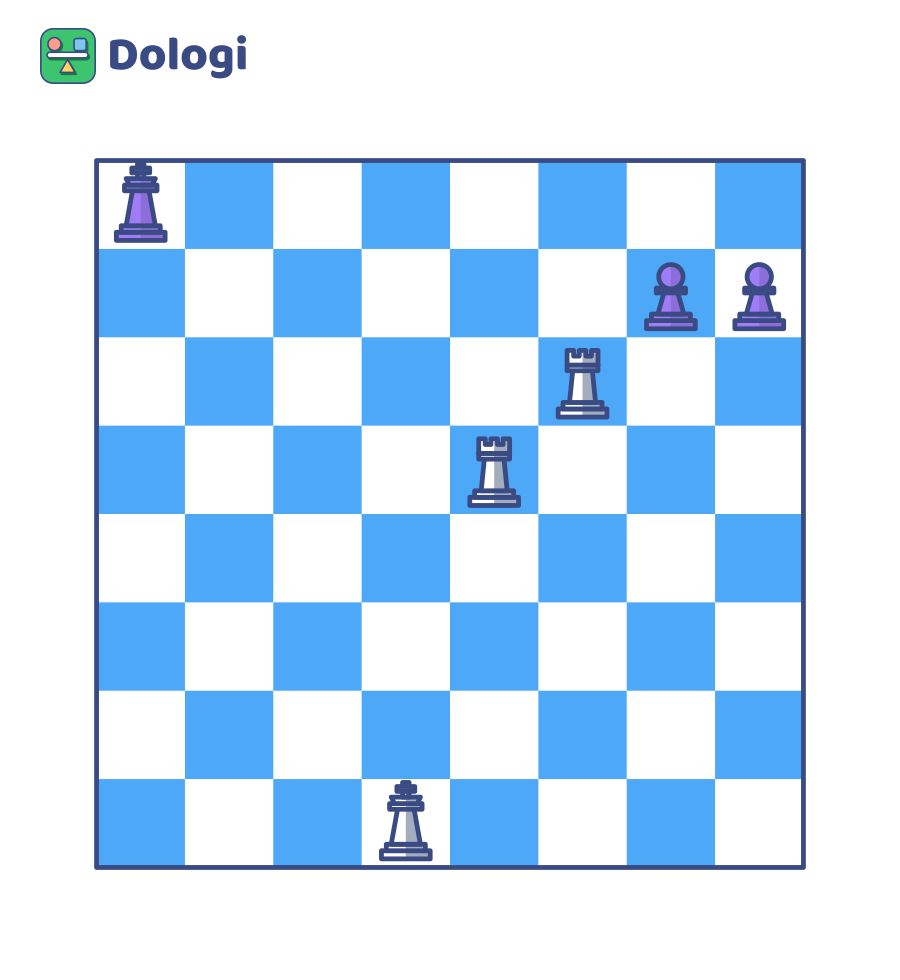
White to move and checkmate in two.
- Hint 1: The rook on f6.
- Hint 2: The square f7. This move is not a check.
Answers
- The rook on e3 takes the rook on e8, check. Black has to take back with the rook from c8 (the king can't move because its three pawns are in the way). The rook on e1 takes on e8, checkmate. Nobody is left to guard the back row. This back-rank mate shows up in real games all the time.
- The rook on b1 takes the pawn on b7, check. The rook on a6 covers the sixth row and the rook on b7 covers the seventh, so the black king can only step up to the eighth row (f8, g8 or h8). The rook on a6 goes to a8, checkmate. The two rooks push the king up like climbing a ladder. The b1 rook can't go straight to b8 because the pawn on b7 is in the way, so taking the pawn clears the path and gives check at the same time.
- The bishop on h3 goes to e6, check. The bishop also covers f7, so the black king can only go to f8 or h8. Either way: the rook on b3 goes to b8, checkmate. If the rook goes to b8 first, the king escapes to f7.
- The rook on b5 goes to b7, check. The black rook on g7 can't block, because its own king is in the way. The king has to step back to c8, d8 or e8. In every case: the queen on h2 slides diagonally across the board to b8, checkmate. The rook on b7 protects the queen, and the queen covers the whole back row.
- The queen on e1 takes the knight on e6, check. Black has two replies:
- King to f8: the bishop on g3 goes to d6, checkmate (the queen covers e8, f7 and g8, and the bishop checks through e7).
- King to h8: the queen goes to e8 (or c8), checkmate.
- The queen on g3 goes to c7, check. The knight on d5 protects c7, so the king can't take the queen. Black has two replies:
- King to a8: the queen goes to c8, checkmate.
- King to a6: the knight on d5 goes to b4, checkmate (queen to c8 is also mate).
- The queen on d5 goes to g8, check! The king can't take the queen because the knight on h6 guards g8, so the rook on e8 has to take it. Now the black king is completely boxed in by its own rook and pawns. The knight on h6 goes to f7, checkmate. This is called a smothered mate: the king has no squares because its own pieces are in the way. Giving up your strongest piece to win is a lesson kids remember.
- The rook on f6 goes to f7. It isn't check, but the rook on f7 locks the whole seventh row, so the black king can only shuffle between a8 and b8. Whatever Black does (push the g-pawn, the h-pawn, or move the king to b8), the rook on e5 goes to e8, checkmate. If White checks right away with a rook on e8 or f8, the king slips out to a7 or b7. Sometimes the best move is a quiet one that just closes the escape route.
Let your child make a puzzle for you
Once your child has solved a few, invite them to be the puzzle maker: put the black king on the back row behind a few pawns, add two white pieces, then check whether it really is mate in two and whether Black has any way out. Making a puzzle forces your child to try every possible reply, which is exactly the skill mate in two needs.
In the Chess room in Dologi's Creative corner, Challenges sorts positions by level; Level 7 and Level 8 include mate-in-two positions like the ones above, and after your child moves, the chess buddy answers with the toughest defense. Tap Hint once and the app points to the piece, again for the move, and once more to hear why. To stump a parent, your child opens Set up a board, picks Mate in 2 and taps Check it: the app says whether the puzzle can be solved and has only one first move. Save it, then use Send to another device and Show QR code; on the other device, open the Chess room, tap Receive a challenge and scan the code.
In short
- Mate in two teaches kids to think about the other side's reply, not just their own move.
- To find the first move: look at the king's escape squares, try checks, captures and threats first, then test every reply.
- Hints in steps (which piece, then which square) help your child find the answer instead of just reading it.
- Let your child make puzzles to stump you: to build a correct one, they have to check every escape.
Read more: 10 easy chess puzzles for kids who are just starting, with hints and answers, Check, checkmate, stalemate and draws: how a chess game ends, explained for kids