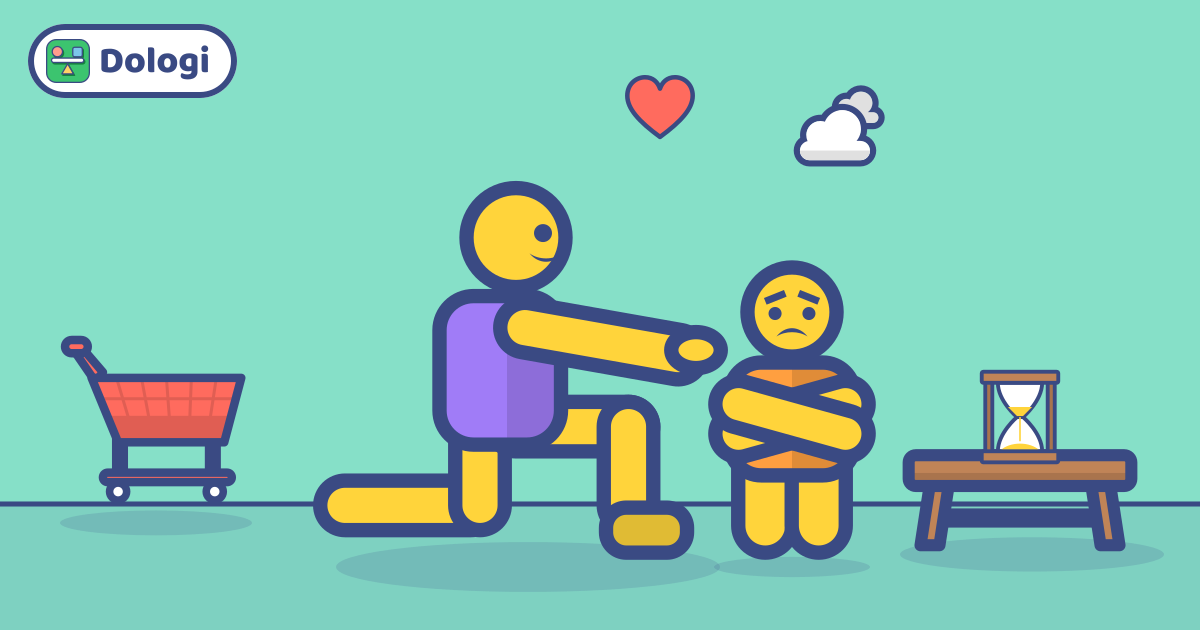
You're in the checkout line when your child spots the candy by the register. You say no. Within seconds they're on the floor, crying and kicking. People turn to look. Your face goes hot, and all you can think is: how do I make this stop, right now?
Almost every parent has been there, especially with a child somewhere around 2 to 6. This post covers why meltdowns tend to happen in busy places, how to set your child up before you leave the house, what to do when it starts, and how to talk about it once everyone has calmed down.
Why tantrums love busy places
The grocery store, a restaurant, a crowded birthday party, a long afternoon at a relative's house: they all have a lot in common. They're loud, full of people and things to look at, and kids usually have to wait. Add one of these and a meltdown gets much more likely:
- Your child is hungry, tired or past nap time.
- They've been asked to sit still or wait with nothing to do.
- There's too much noise, light and too many strangers.
- They saw something they wanted and heard "no."
At this age, tantrums are common. Young kids have very big feelings and not many tools yet to calm themselves down. Your child isn't being "bad," and they aren't trying to embarrass you. Older kids, from around 6 or 7, still get angry, but they can usually put more of it into words, and you can often talk it through on the spot.
Set things up before you go
Much of the work happens before you walk out the door:
- Fed and rested. Avoid running errands right before nap time. Bring a snack and some water.
- Keep it short. For a young child, a quick trip for a few things is easier than a whole morning at the mall.
- Say the plan ahead of time. "We're getting milk and vegetables, then going home. No toys today." Say it at home, and once more at the door.
- Give your child a job. Holding a picture shopping list, picking three apples, counting the yogurts into the cart. A busy child has less time to get bored.
- Agree on a break spot. "If it gets too much, squeeze my hand, and we'll step outside for a minute."
When it starts: calm first, few words
Calm yourself first. Take two or three slow breaths. Strangers will look for a moment and move on; your child needs you right now.
Few words, low voice, short sentences. "I'm here. You're really mad." In the middle of a meltdown, a long explanation just doesn't get through.
No threats, no bargaining, no giving in. "Stop or I'm leaving without you" only makes a child more scared. And if you buy the candy to end the crying, your child learns that crying louder works, and the next one may be bigger.
Keep everyone safe. Don't let your child run toward the parking lot, throw things or hit. You can hold them gently or take their hand: "I won't let you run out there."
Move to somewhere quiet. If you can, carry or walk your child to a calmer spot: a corner with fewer people, just outside the door, a bench, the car. Get down to their level and wait. You don't need to say much. Just be there. It's okay to leave the cart and come back later, or to head home. The groceries can wait.
Instead of saying, try saying
| Instead of saying | Try saying |
|---|---|
| "Stop it right now, everyone's looking!" | "I'm here. Let's go somewhere quiet for a minute." |
| "Fine, I'll buy it, just stop crying." | "I know you really want it. We're not buying it today." |
| "Keep crying and I'm leaving without you." | "I'm staying right here with you. We'll go on when you're ready." |
| "You're too big for this. It's embarrassing." | "You're really upset. I'll wait with you." |
| "If you don't stop, there will be trouble." | "Let's blow out the birthday candles together. One, two, three." |
Dealing with onlookers
You don't owe strangers an explanation. A small smile, or a short "He's had a long day," is plenty. If a grandparent or friend offers to "just buy it for her," you can say kindly, "Thanks, but not today," and take your child somewhere calmer.
Talk it over once you're both calm
Later, after a snack and some rest at home, tell the story back to your child, in order: "At the store, you wanted the candy. I said no. You got really mad, you cried and sat on the floor. We went to the bench. After a while, you felt better."
Name the feelings: mad, disappointed, tired. Then come up with a plan together for next time: squeeze my hand, say "I need a break," take a big breath and blow it out like birthday candles. Hug it out and reconnect. The next time your child calms down a little faster, notice it out loud: "You squeezed my hand and we stepped outside. You helped yourself calm down."
When to ask for help
Public meltdowns usually get less frequent as kids grow and find more words. It's worth talking to your child's doctor, teacher or another professional if tantrums happen very often, last a very long time, your child hurts themselves or others, they're still frequent when your child is clearly older, or you feel worn out or worried. Asking early doesn't mean something is wrong. It just means you don't have to carry it alone.
At home, when your child is relaxed (not as a way to calm a meltdown), the Follow the string puzzle in Dologi's Focus topic lets your child practice slowing down and tracing each piece of a tangled string to find which animal is at the end. Slowing down, looking closely and going one step at a time is exactly what helps when big feelings show up, too.
In short
- Public tantrums often come when your child is hungry, tired, waiting too long or hears "no." It isn't about being "bad."
- Prepare ahead: food, rest, short trips, a plan said out loud and a job for your child.
- In the moment: calm yourself first, use few words, keep everyone safe, move somewhere quiet, and don't threaten or give in.
- Afterward, retell what happened, name the feelings, plan for next time together and notice when your child manages it.
Read more: Teaching kids about feelings, Discipline without punishment, After shouting at your child