Dictate a number to your child: "two thousand and twelve." They write 200012. They aren't being careless: they're writing exactly what they hear, in order. "Two thousand" is 2000, "twelve" is 12, so they put the two side by side. This mistake is very common among 8- to 11-year-olds who are starting on four-, five- and six-digit numbers. Here's why it happens and a few ways to help your child read and write big numbers with confidence.
Why extra digits creep in
When we say a number aloud, we say the names of the places ("thousand," "hundred") but never the zeros. When we write it, each place gets exactly one slot, and empty slots must be filled with 0. A child who hasn't grasped this writes "thousand" as a full 1000 and then adds the rest on the end.
Mistakes of the same kind:
| Said | Often written | Correct |
|---|---|---|
| One thousand and five | 10005 | 1,005 |
| Two thousand and twelve | 200012 | 2,012 |
| Thirty thousand four hundred | 30000400 | 30,400 |
| One hundred thousand | 1001000 | 100,000 |
Split the number into groups of three from the right
In English we put a comma between groups of three digits: 30,400 and 1,250,000. Teach your child to:
- Count from the right and mark off every three digits. 1250000 becomes 1,250,000.
- Name each group: the first group on the right is ones, the next is thousands, then millions.
- Read each group as a three-digit number, then add the group's name: "one million, two hundred fifty thousand."
Writing works the other way round: hearing "thirty thousand four hundred," your child knows the thousands part is "thirty" and the ones part is "four hundred" (400). Every group after the first must have three digits: 30,400.
Use a place value chart to see zeros holding places
Draw a four-column chart: thousands, hundreds, tens, ones. Saying "one thousand and five," your child fills in each box:
| Thousands | Hundreds | Tens | Ones |
|---|---|---|---|
| 1 | 0 | 0 | 5 |
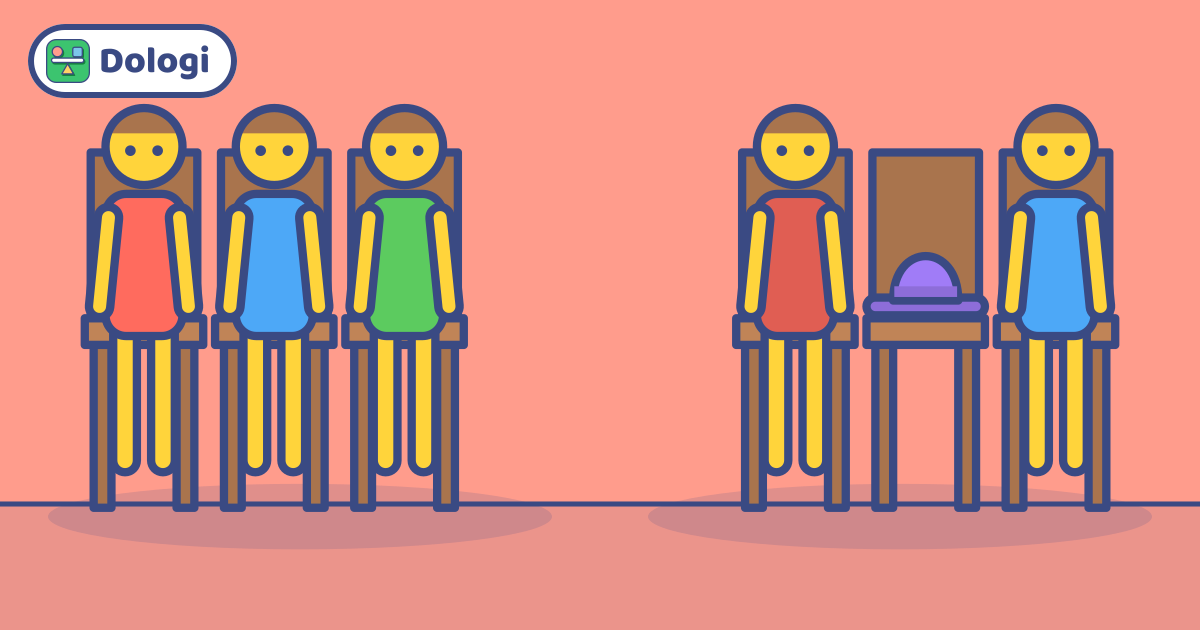
The hundreds and tens boxes have nothing in them, but they can't be left blank: the zero holds the place, like a hat on a chair that says "this seat is taken." Drop both zeros and the number shrinks to 15.
Once four columns feel easy, add ten thousands and hundred thousands. Over time your child won't need the chart at all.
Reading numbers in everyday life
Big numbers are everywhere once your child starts noticing:
- Prices: "This bike costs $1,250. Can you read that for me?"
- Distances: a road sign saying a city is 1,005 miles away. Read it aloud, then compare: more or less than a thousand miles?
- Populations: the number of people in your town or state, from the news. Your child reads it, you write it down from what they said, then compare with the original.
Swapping roles works well too: you read a number, your child writes it, then reads back what they wrote to check.
Comparing two big numbers: count digits, then compare from the left
Which is bigger, 98,765 or 102,030? Looking at the first digits (9 and 1) can mislead. Teach two steps:
- Count the digits. The number with more digits is bigger: 102,030 has six digits and 98,765 only five, so 102,030 is bigger.
- If they have the same number of digits, compare from the left, place by place, and stop at the first difference: 45,310 and 45,301 match at 4, 5 and 3, then differ in the tens (1 and 0), so 45,310 is bigger.
The Patterns topic in Dologi has a puzzle called Next number: "Each time, the same number is added or taken away. Which number comes next?" Try having your child count on in fives across a thousand on paper (990, 995, 1,000, 1,005): it shows at once how much the place-holding zeros matter.
In short
- Your child writes 200012 because they write what they hear, in order; we never say the zeros aloud.
- Split numbers into groups of three from the right; every group after the first always has three digits.
- Use a place value chart to see zeros holding places.
- Read numbers on prices, road signs and the news; compare big numbers by counting digits, then comparing from the left.
Read more: Tens and ones: teaching place value with bundles of sticks, What does a thousand look like?