The assignment is "Write about your weekend." It's a familiar topic, and the weekend really happened. Still, thirty minutes later there's one sentence on the page, half erased. Your child chews the pencil and says, "I don't know what to write." You nudge, and they freeze even more.
Most of the time this isn't laziness. Writing asks a child to do a lot at once: come up with ideas, put them in order, pick words, remember spelling, form letters neatly, and keep the page tidy. This post splits those jobs into separate rounds for kids about 6 to 11: talk first, draw next, write after that, and fix things last.
Why the page stays blank
Before you jump in, watch for where your child gets stuck:
- No ideas: the topic is too big, and they don't know which part of the weekend to pick.
- Ideas, but no way in: they think the first sentence has to be great, so they don't write one.
- Starting, then quitting: they're worried about spelling or red marks, so they erase after half a sentence.
- Tired hands, wiggly body: for younger kids, holding a pencil for a long time is work on its own.
Each sticking point needs a slightly different fix, but the four steps below help with most of them.
Four steps: talk, draw, write, fix
Step 1: tell it out loud first
Most kids can say much more than they can write. Ask your child to tell you what they want to write, the way they'd tell a story at dinner. Your job is just two things:
- Ask questions that stretch the story: "Then what?" "What did you see?" "What did Grandpa say?" "How did that feel?"
- Jot a few key words on a sticky note: "lake," "fishing," "fell in," "Grandma laughed." Words only, not whole sentences written for them.
If your child loves to talk, use the voice recorder on your phone and let them tell it once, then listen back. Hearing their own voice often brings back the whole story.
Step 2: sketch four quick boxes
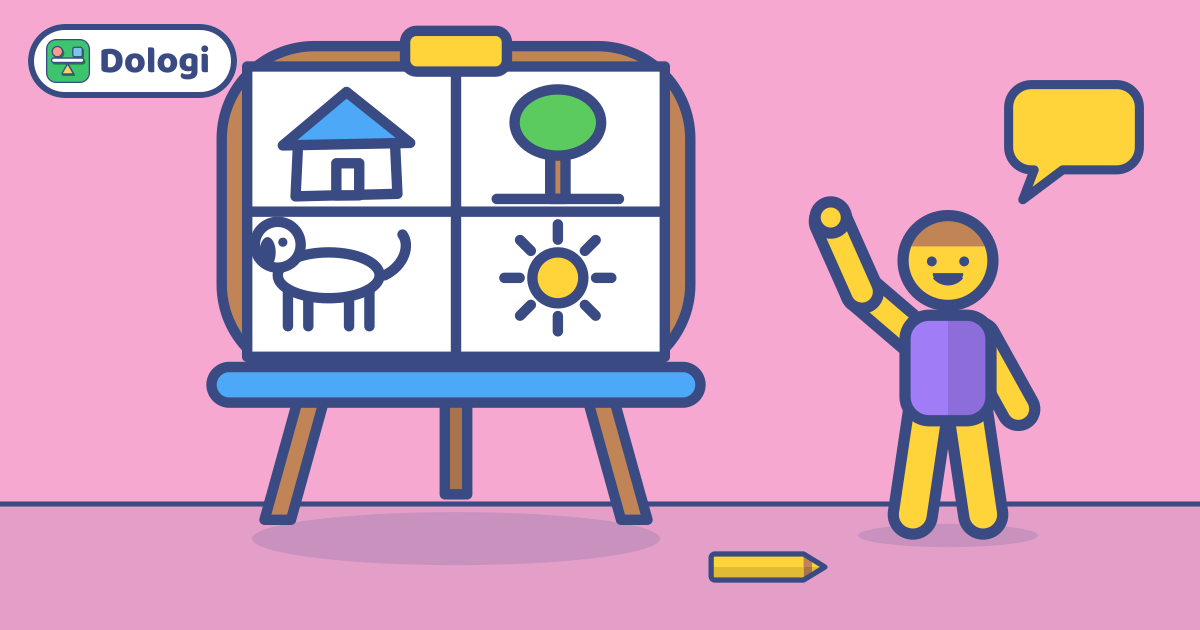
Fold a sheet of paper into four. Your child sketches one box at a time, stick figures are fine, about a minute each:
| Box | Question | Example: "Saturday at the lake" |
|---|---|---|
| 1. Beginning | Where, and who was there? | Driving to the lake with Grandpa |
| 2. What happened | What did you do? | Fishing off the dock |
| 3. Then what | Any surprise? | Slipped and fell in the water |
| 4. Ending | How did it feel? | Grandma laughed, we had hot cocoa |
Those four boxes are the plan. Your child can look at the pictures to see what comes first and what comes next, instead of thinking up ideas and spelling at the same time. Don't grade the drawings; they're only there to remember the story.
Step 3: start with one short sentence
Each box turns into one or two sentences. The first sentence can be as plain as "On Saturday we went to the lake." It doesn't need to be a great hook; a stronger opening can come later.
A few ways to get started:
- Take turns: you write the first sentence from what your child told you, and they write the next one.
- Set a short timer: 5 to 10 minutes for younger kids. When it rings, take a break, even if there are only two sentences.
- Follow the boxes: finish the sentences for box 1, then move to box 2.
Step 4: save spelling for the second round
The first round has one job: get the ideas on paper. If your child isn't sure how to spell a word, they underline it and keep going instead of stopping to erase. Checking comes once the whole piece is done.
When you read it, praise the ideas first, then pick one or two mistakes to fix, not all of them at once.
| Instead of | Try |
|---|---|
| "Just write something!" | "Tell me the story first." |
| "That's spelled wrong." | "The part where you fell in is great. We'll check spelling later." |
| "That sentence is too short." | "What did you see right then? Can you add that?" |
| "Copy it over neatly." | "You finished it. We can copy it tomorrow." |
Write things real people will read
Outside of homework, give your child short writing jobs with a real reader: a birthday card for Grandpa, the grocery list, a sticky note on the fridge, a caption for a vacation photo. When kids know someone will read it and answer, they're usually more willing to write. A journal with one sentence and one picture a day is another gentle way to practice.
If your child tells stories easily but writing stays very hard for months, or they get very stressed or cry whenever they have to write, talk with the teacher. Teachers see your child write every day, and they can suggest someone with the right expertise if needed.
Putting four boxes in order before writing is a sequencing job: what comes first, what comes next. In Dologi's Logic topic, the puzzle What happened first? asks your child to put pictures in order, like a plant growing or a candle burning down. Afterward, you can ask them to tell the story picture by picture.
In short
- A blank page usually means your child is juggling too many jobs at once, not that they're lazy.
- Have them tell it out loud first while you jot key words, then sketch four quick boxes as a plan.
- Start with one short sentence, one or two sentences per box, and use a short timer for younger kids.
- Save spelling and neatness for later; praise the ideas first and fix only one or two mistakes at a time.
Read more: Journaling for kids, Writing a first paragraph, Reading and writing milestones by age