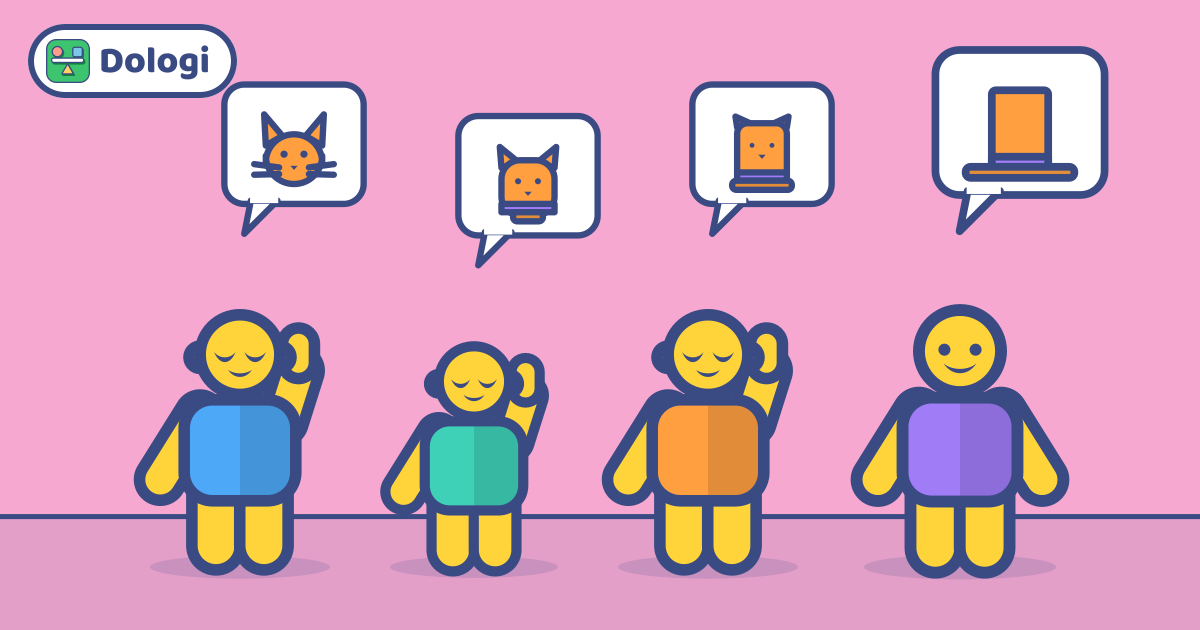
The first child whispers, "The cat sat on the mat." By the end of the line it comes out as, "The hat's got a cat." Everyone bursts out laughing, and then comes the interesting question: where exactly did the cat turn into a hat?
Telephone (some families call it "pass the whisper") needs nothing but four or more people. It works at birthday parties, sleepovers, family reunions, in the car with cousins and at school. This article explains how to play with children aged about 5 to 12, which sentences make good rounds, and the part most people skip: going back along the line to find out where the message changed, and why.
How to play
- Line up or sit in a circle. The more players, the more the sentence tends to change.
- The first player thinks of a short sentence and writes it down secretly, or a parent writes one and shows it to the first player. With the original on paper, nobody can argue about it later.
- Whisper it once into the next player's ear. Agree beforehand: just once, or one "say it again, please" allowed.
- The last player says it out loud. Then the first player reads the original.
- Swap places so everyone gets a turn at starting and at being last.
A round takes a minute or two, so five or six rounds in a row never feel long.
Choosing sentences
Start with short sentences that paint a clear picture, so even the youngest can hold on to them:
- "The cat sat on the mat."
- "A duck in a hat went to the store."
- "The bear ate three pancakes for breakfast."
Once everyone knows the game, try harder ones and see which survive better:
- Lots of details: "On Saturday we'll go to the park, bring two water bottles and the red kite."
- Numbers and names: "Aunt Rosa has fourteen chickens in Ohio."
- Tongue twisters: "She sells seashells by the seashore" or "Peter Piper picked a peck of pickled peppers."
- Nonsense: "A dolphin in a cooking pot rode a bicycle." With no meaning to hold on to, these often change faster.
After a few rounds, many families notice that sentences with a clear picture tend to hold up better than strings of small details. One rule worth keeping: no mean sentences, and no sentences about anyone who is playing.
Find where it changed
This is the step that turns a funny game into a thinking game. Don't stop at the laugh. Go back along the line from the end: each player says out loud what they heard. Like detectives, the group looks for the exact point where the sentence changed and which word became which.
Here is how the cat could turn into a hat:
| Player | What they heard | What happened |
|---|---|---|
| 1 (original) | The cat sat on the mat | |
| 2 | The cat's at the mat | "sat on" got squeezed into "'s at" |
| 3 | The cat's got a mat | "at the" sounded like "got a" |
| 4 | The hat's got a cat | "cat" and "hat" sound alike in a whisper, and the two got swapped |
The aim is not to find out who "broke" the message. It is to see that everyone caught part of it and filled in the rest with whatever made the most sense. Say this out loud before you trace back: anyone can be the place where it changed, parents included.
Why it changes, and what helps
After a round, ask: "Why do you think the cat turned into a hat?" Children usually come up with several reasons themselves:
- Whispering hides some sounds. It is quieter and flatter than normal speech.
- Words sound alike. Short words that differ in just one sound, like "cat", "hat" and "mat", are easy to mix up.
- The middle of a long sentence gets lost.
- When we miss a bit, we guess. The listener fills the gap with something that makes sense, so the changed sentence still sounds complete.
Then play the same sentence again with new rules: whisper slowly and clearly, and the listener quietly says it back to check before passing it on. Compare the two rounds. Your child can see for themselves which way keeps the message right.
You can add one gentle thought about everyday life: messages passed along at school or in the family can change the same way, so when you hear something secondhand, checking with the person who said it first is the surest way.
Variations by age
These ages are rough guides only. Every child is different.
| Age (approx.) | How to play |
|---|---|
| 5 to 6 | Three or four words. One repeat allowed. An adult nearby reminds them to whisper close to the ear and not too fast |
| 7 to 9 | A full sentence, no repeats. Trace back afterwards to find where it changed |
| 10 to 12 | Two sentences in a row, with numbers and names, or a message with a task ("meet at the gate at three, bring the ball"). Or split into two lines, pass the same sentence along both, and compare |
A shy little one can stand with an older sibling, listen together and pass it on together. If your child often seems not to hear you clearly in everyday life, not just in the game, it is worth mentioning to their teacher or doctor.
In Dologi, the Listening topic has a puzzle called "Which note changed?": your child hears tune 1, then tune 2, which is the same tune with one note changed, and taps the note that changed. Just like tracing back the whisper, it is about comparing what you heard with the original and finding exactly where it differs.
In short
- Line up, write the original sentence down, whisper it once, then have the last player say it out loud and compare.
- Start with short sentences that paint a picture, then try details, numbers, tongue twisters and nonsense.
- Trace back from the end of the line to find where the sentence changed, not who was to blame.
- Play the same sentence again with slow whispering and a say-it-back check, and compare the two rounds.
Read more: Listening skills for children: sound games to play at home, Describe and draw: a listening game that helps children listen closely and explain clearly, "Someone said…": critical thinking and classroom rumors