Once your child knows their addition and subtraction facts to 20, the next step is mental math with two-digit numbers: 47 + 25, 83 − 27, 36 + 99. Your child can probably do these written in columns, but in the head it's different: they have to calculate and hold numbers at the same time. This post is for parents of 7- to 10-year-olds, with three common strategies and tips to stop numbers slipping away mid-sum.
Strategy 1: Split into tens and ones
47 + 25: split each number into tens and ones.
- Tens with tens: 40 + 20 = 60.
- Ones with ones: 7 + 5 = 12.
- Put them together: 60 + 12 = 72.
This is the easiest to understand, especially once your child has worked with tens and ones using bundles of sticks. The tricky part is holding 60 in mind while working out 7 + 5.
Strategy 2: Add on, keep one number
Instead of splitting both numbers, split only the second one and add it on to the first, step by step:
- 47 + 20 = 67.
- 67 + 5 = 72.
There's only ever one "running" number in your child's head (47, then 67, then 72). Many children lose track less often this way. Subtraction works the same: 83 − 27 is 83 − 20 = 63, then 63 − 7 = 56.
Strategy 3: Round to a friendly number
When a number is close to a ten, round it and then adjust:
- 36 + 99: add 100 to make it easy, giving 136, then take back 1: 135.
- 47 + 28: add 30 to get 77, then take away 2: 75.
- 64 − 29: subtract 30 to get 34, then give back 1: 35.
The usual mistake is adjusting the wrong way. If you added too much, take some away; if you subtracted too much, add some back. On a number line it's easy to see: one long jump to the round number, then one short step back (or forward, for subtraction).
Another version of rounding is moving some across: for 47 + 28, take 2 from 47 and give it to 28, making 45 + 30 = 75.
Three strategies, when to use which
| Strategy | Example | Good when |
|---|---|---|
| Split into tens and ones | 47 + 25 = 60 + 12 = 72 | Just starting out; the ones don't add up to much |
| Add on, keep one number | 47 + 20 + 5 = 72 | Your child often loses numbers midway |
| Round to a friendly number | 36 + 99 = 136 − 1 = 135 | One number ends in 8 or 9 |
There's no single "right" strategy. The aim is for your child to have a few and pick the quickest one for each sum.
Say each step out loud to hold the numbers
Two-digit mental math is a workout for working memory: your child has to keep one number in mind while working on another. A few tips stop numbers from slipping:
- Say each step out loud: "Forty-seven plus twenty is sixty-seven. Sixty-seven plus five is seventy-two." Hearing their own voice helps children hold numbers longer.
- Start with the tens: adding the tens first makes the running number jump in big, memorable steps; the ones come last.
- Jot down the running number if needed: when starting out, let your child write just one number (67) and carry on. Drop the note over time.
"Who can find the most ways?" at the shops
At the supermarket, pick two items: "The cereal is $38 and the cheese is $45. How much altogether?" Everyone races to find as many different ways as possible that still give 83:
- 30 + 40 = 70, 8 + 5 = 13, 70 + 13 = 83.
- 38 + 40 = 78, 78 + 5 = 83.
- 40 + 45 = 85, take away 2 to get 83.
- Move 2 from the 45 over to the 38: 40 + 43 = 83.
Each correct way earns a point, and the most unusual way gets a bonus point. Your child sees that the same answer can be reached by many routes.
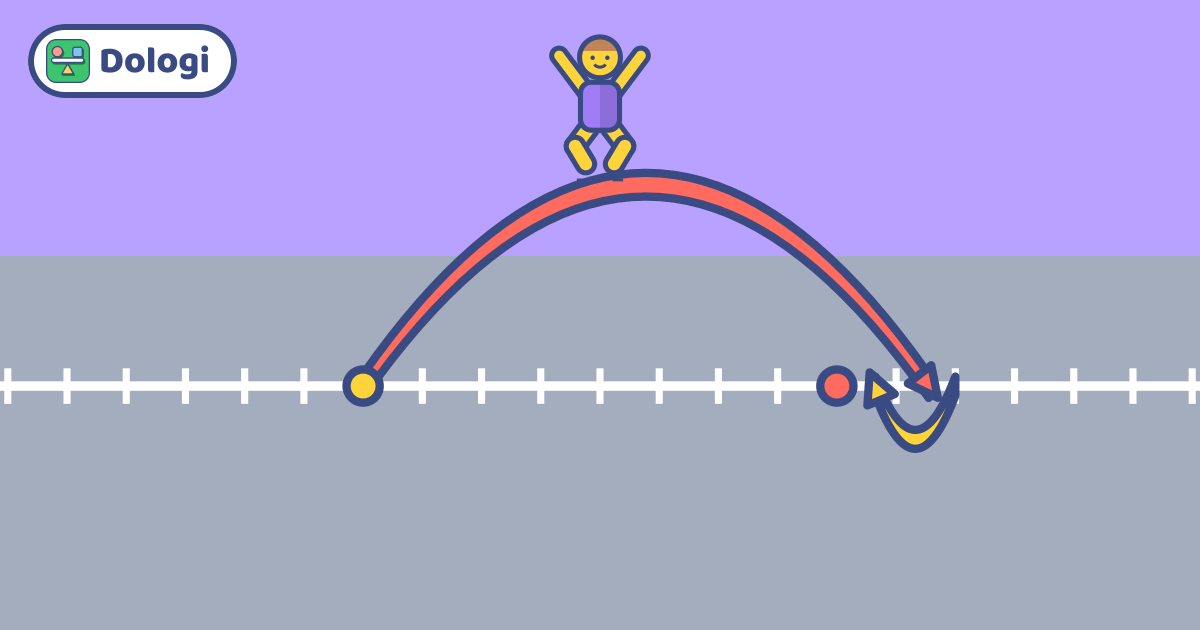
The Math topic in Dologi has a puzzle called Number line hops: "From the dot, the rabbit hops along the arrows. Which number does it stop on?" The long and short hops, forward and back, on the number line are a picture of the mental math strategies above.
In short
- Split into tens and ones: 47 + 25 = 60 + 12.
- Add on and keep one number: 47 + 20 = 67, 67 + 5 = 72; subtraction works the same way.
- Round to a friendly number: add 100 then take 1 away, subtract 30 then give 1 back; mind which way to adjust.
- Say each step out loud and start with the tens; at the shops, see who finds the most ways.
Read more: Mental math to 20, A sidewalk chalk number line: hop forward to add, hop back to subtract