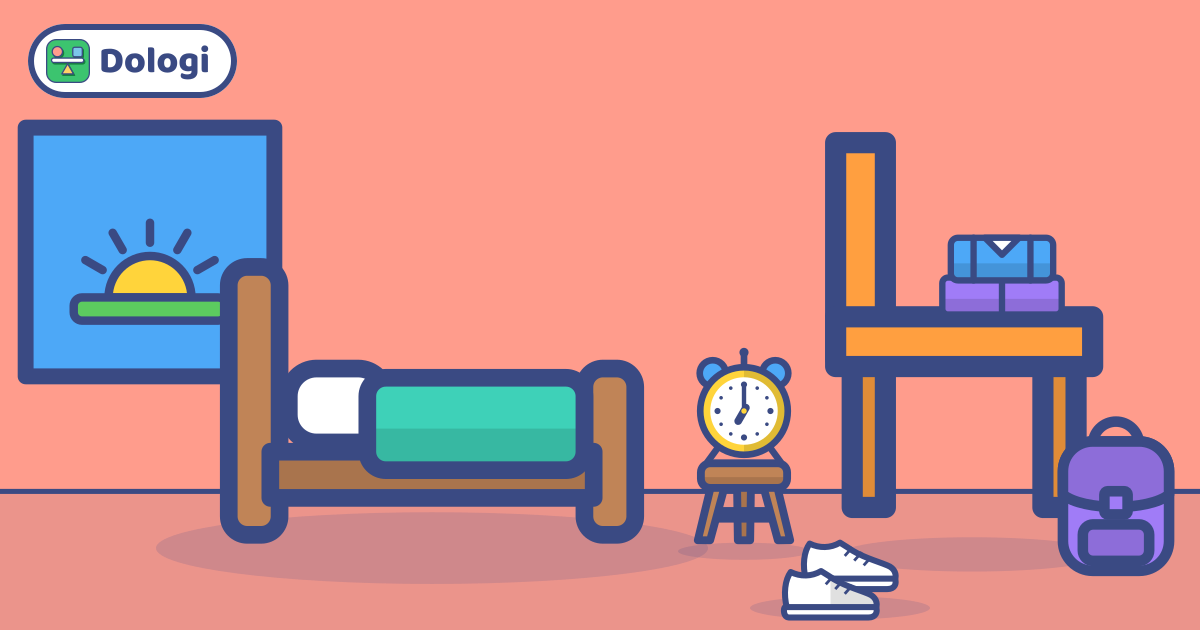
6:45: first wake-up call. 6:55: third call, louder. 7:10: your child is sitting on the bed asking which shirt to wear. 7:20: everyone is hunting for the library book that's due today. You finally get out the door at 7:38, everyone's grumpy, and breakfast was half a granola bar in the car.
Messy mornings usually aren't about a slow child. They're about too many decisions and too many jobs crammed into thirty minutes. This post covers moving most of the work to the night before, making a picture checklist your child can follow on their own, teaching them to wake up to an alarm clock, and timing the morning so you don't have to nag.
What can move to the night before
Evenings are usually less rushed than mornings, and nobody's watching the clock yet. These jobs make mornings much lighter when they're done the night before:
| Job | How | Many kids can do it from about |
|---|---|---|
| Pick out clothes | Your child chooses tomorrow's outfit, including socks, and lays it out in one spot. Check the weather together | 4–5, with your help |
| Pack the backpack | Check tomorrow's schedule: homework folder, library book, gym shoes on PE days | 6–7, with you checking at first |
| Shoes and jacket | Set them by the door | 4 |
| Paperwork | Sign permission slips and the reading log, and put them straight into the folder | You do this |
| Lunch and water bottle | Pack lunch or prep the parts that keep overnight, and wash the water bottle | Your child helps |
Fifteen minutes after dinner or right before brushing teeth is enough. Done every night, it becomes a habit that needs little reminding. The post on an evening routine for school-age kids shows where "get ready for tomorrow" fits into the whole evening.
A launch pad by the door
A lot of morning minutes go to searching. Pick a spot near the door as the "launch pad": a hook for the backpack, a basket or small chair for tomorrow's clothes or jacket, a place for shoes.
The rule is simple: every night, everything for tomorrow goes to the launch pad. In the morning, your child just walks from the bedroom to the door and it's all there. And when something gets left at school or at grandma's, everyone knows where it needs to end up.
A picture checklist for the morning
Instead of calling out every step ("Did you brush your teeth? Did you wash your face?"), make a picture checklist with your child:
- Together, list the morning jobs in order: get up, make the bed, use the bathroom and wash up, get dressed, eat breakfast, brush teeth, backpack on, shoes on.
- Your child draws one small picture for each job on a card. Kids who can't read yet can still use it, because the pictures do the work.
- Tape the cards in a row on the wall or the fridge, in order.
- When a job is done, your child flips the card or moves a magnet or clothespin to it.
Because the checklist repeats every morning, your child learns the order and starts doing it alone. You can just ask "Which card are you on?" instead of listing every job. Six to eight cards is plenty; more than that gets overwhelming.
Older kids, around 8 to 12, can draw their morning as a flowchart with yes-or-no questions like "Is it raining? Yes: grab a raincoat." See draw your child's morning as a flowchart.
Waking up to an alarm clock
From around 6 or 7, many kids can learn to wake up to an alarm clock instead of a parent's voice. It's a small step, and kids are often very proud of it.
- Choose a simple clock with hands and no screen, and put it on a shelf or stool a few steps from the bed, so turning it off means getting up.
- Practice on a weekend first. Saturday morning the alarm rings, your child turns it off and comes to show you. Do that a few times before trying it on a school day.
- Let your child set the alarm (with you double-checking). It's also good practice reading a clock with hands.
- Look at bedtime. If waking up is a struggle most mornings, try moving bedtime 15 or 20 minutes earlier instead of dragging your child out of bed. If you're worried about your child's sleep, ask your pediatrician.
For the first few days you can peek in, but don't call before the alarm rings. When your child gets up on time, praise exactly what they did: "You got up by yourself as soon as the alarm went off."
Work backward from the school bell
Figure out wake-up time together, starting from when school begins and working backward:
- School starts at 8:00.
- The drive or walk takes 15 minutes, plus 5 minutes extra for traffic or a missed bus: leave at 7:40.
- Breakfast takes 15 minutes: start eating at 7:25.
- Bathroom, getting dressed and making the bed take 20 minutes: wake up at 7:05.
If your child rides the school bus, start from the pickup time instead. Write the times next to the picture checklist. Kids around 7 or 8 can count backward on the clock face; older kids can do the subtraction. The extra few minutes are the secret of a calm morning: with a little slack, an untied shoelace doesn't turn into a meltdown.
When mornings still go wrong
Some mornings will still fall apart: rain, a child who wakes up sick, the first Monday after a break. A few things help everyone stay calm:
- Talk less, point to the chart. "What's the next card?" is gentler than a string of reminders.
- Don't reopen last night's decisions. The outfit chosen last night is the outfit. If your child wants a change, they can pick again tonight.
- Look back together that evening. Where did this morning get stuck? Is there something else that could move to the night before? Ask instead of blaming.
If your child has a few minutes to spare before leaving, five-minute brain warm-ups before school has quick games that won't make you late.
In Dologi, the What time is it? puzzles (in the Math topic) practice reading a clock with hands, and What happened first? (in the Logic topic) practices putting events in order, the same two skills your child uses every morning to check the clock and follow the checklist.
In short
- Move jobs to the night before: lay out clothes, pack the backpack by tomorrow's schedule, get shoes and paperwork ready.
- Set up a launch pad by the door, and send everything for tomorrow there every night.
- Make a picture checklist so your child can follow the morning in order, and teach waking up to an alarm clock from around 6 or 7.
- Work backward from the school bell with a few extra minutes. On rough mornings, talk less and review together that evening.
Read more: An evening routine for school-age kids, Draw your child's morning as a flowchart, Five minutes before school