School lets out, and a few hours later it's bedtime. In between come a snack, homework, dinner, a bath, and packing for tomorrow, all at the time of day when everyone is most tired. Many evenings turn into a string of reminders: "Homework, please." "Dinner's ready." "Did you shower yet?" Kids don't know when they'll get to play, and parents don't know when anything will be done.
An evening routine doesn't need a minute-by-minute schedule. What helps most is doing things in the same order every night, so your child knows what comes next without waiting to be told. This article covers the whole stretch from coming home to getting into bed. The last few steps before sleep have their own article on bedtime routines.
Fix the order, not every minute
Pickup times and dinner times vary from family to family and from day to day. The order can stay the same even when the clock moves. Here is what a weekday evening looks like for many elementary school families:
| Order | What happens | Why |
|---|---|---|
| 1 | Home, backpack away, snack, a short break | After a full school day, kids rarely focus right away |
| 2 | Homework at the usual spot | TV off, supplies ready |
| 3 | Play, ideally moving or outside | Something to look forward to after homework |
| 4 | Family dinner | A good time to hear about the school day |
| 5 | Pack the backpack, lay out clothes for tomorrow | Fewer morning scrambles |
| 6 | Bath or shower, teeth, quiet time, bed | About the same time each night |
This is only an example. Some families move dinner earlier, some do the bath before dinner. Choose the order that fits your home, then keep it.
Homework first or play first?
Families argue about this more than anything else. There is no single answer for every child:
- Some kids need to move first. After sitting all day, they fidget and dawdle if homework starts the moment they walk in. Fifteen or twenty minutes of running around or biking can help them sit still afterward.
- Some kids like to get it done. Finishing early leaves the rest of the evening free.
- Try each for a week. Jot down a line each day: which days they started quickly, which days dragged with tears. After two weeks, pick the order that works for your child, not the one you assumed was right.
Either way, don't let homework slide to just before bed. Kids are tired, the work feels harder, and bedtime keeps creeping later.
Make a picture schedule together
Younger elementary students in particular remember an order of pictures more easily than spoken reminders.
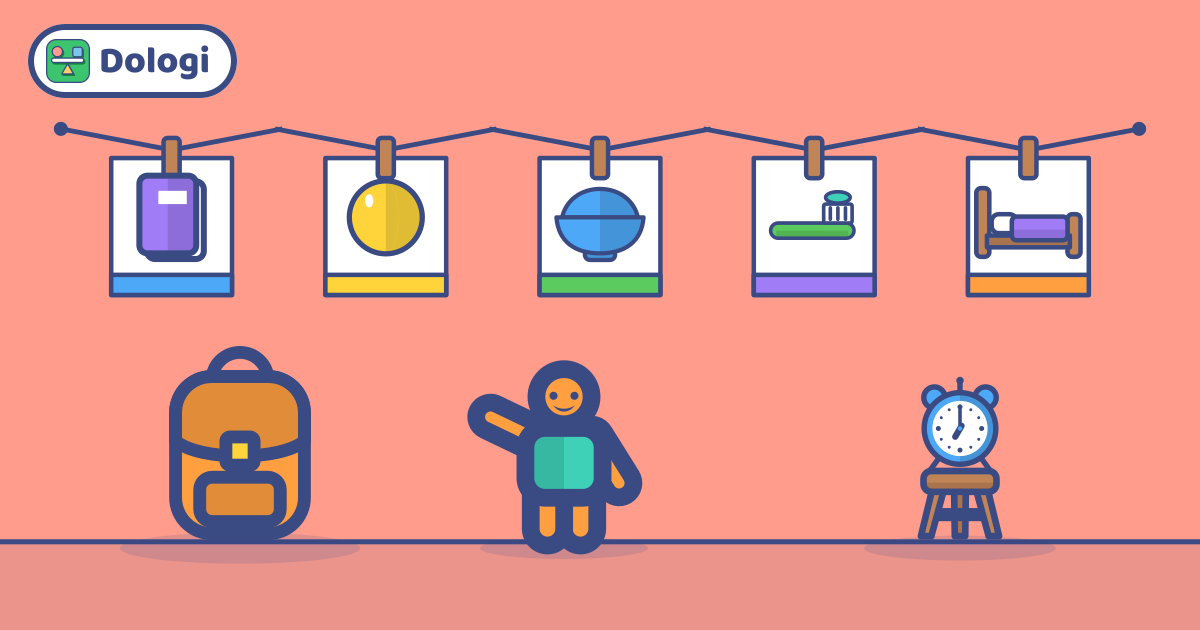
- One card per step. Let your child draw them: a book for homework, a ball for play, a bowl for dinner, a toothbrush, a bed. They don't need to be pretty, just easy to recognize.
- Hang the cards in order, taped to the wall or clipped to a string at your child's eye level. Clips make it easy to swap cards when you try a new order.
- Flip a card or drop it in a box when the step is done. Your child can see how far they've come and what's left.
- Older kids can switch to a short written checklist by their study spot.
Once the schedule is up, swap "Why aren't you in the shower?" for "What does the chart say is next?" The reminder moves from you to the chart, and your child is the one who checks it.
The nights that are different
No two evenings are the same. On nights with soccer practice, music lessons, or a parent working late, trying to fit everything in just pushes bedtime later.
- Keep a short version ready. Decide together which steps always stay: dinner, the homework due tomorrow, packing the backpack, bed on time. Extras like extra reading or review can shrink that night.
- Watch the activity count. If several nights a week your child gets home late, eats in a hurry, rushes homework, and goes to bed late, it may be time to rethink the schedule.
- When you get home late, let your child start the parts they know, mark the spots they're stuck on, and look at just those together.
- Weekends can be looser, but keeping bedtime and wake-up time close to school nights makes Monday mornings easier.
Screens and a quiet last hour
- Give screen time a set spot in the order, such as after homework and before getting ready for bed, with an agreed length. When kids know when it's coming, they push less for it in between.
- Screens off a while before bed, with phones and tablets charging outside the bedroom.
- Keep the end of the evening calm: packing up, reading, talking about the day. A gentle end usually makes for an easier morning.
How late kids go to bed and how much sleep they need varies from child to child. If your child is often tired, has trouble concentrating at school, or has ongoing trouble falling asleep, talk with your child's doctor.
Doing the same steps in the same order is a pattern, and children are good at spotting patterns. In Dologi's Patterns topic, Repeating patterns puzzles ask your child to find the part that repeats in a row of pictures and choose what comes next. Save puzzles like these for the afternoon, during agreed screen time, so the last part of the evening stays screen-free.
In short
- Keep the same order every evening; the exact times can move.
- Try homework first and play first for a week each, then choose what suits your child.
- Make picture cards for each step, and ask "What's next on the chart?" instead of nagging.
- Have a short version for busy nights, give screens a fixed spot, and keep the last hour calm.
Read more: A bedtime routine for children: a story, lights out, and the same time every night, My child will only do homework if I sit next to them: stepping back gradually so they can work alone, Getting ready for middle school: the skills and mindset that help most