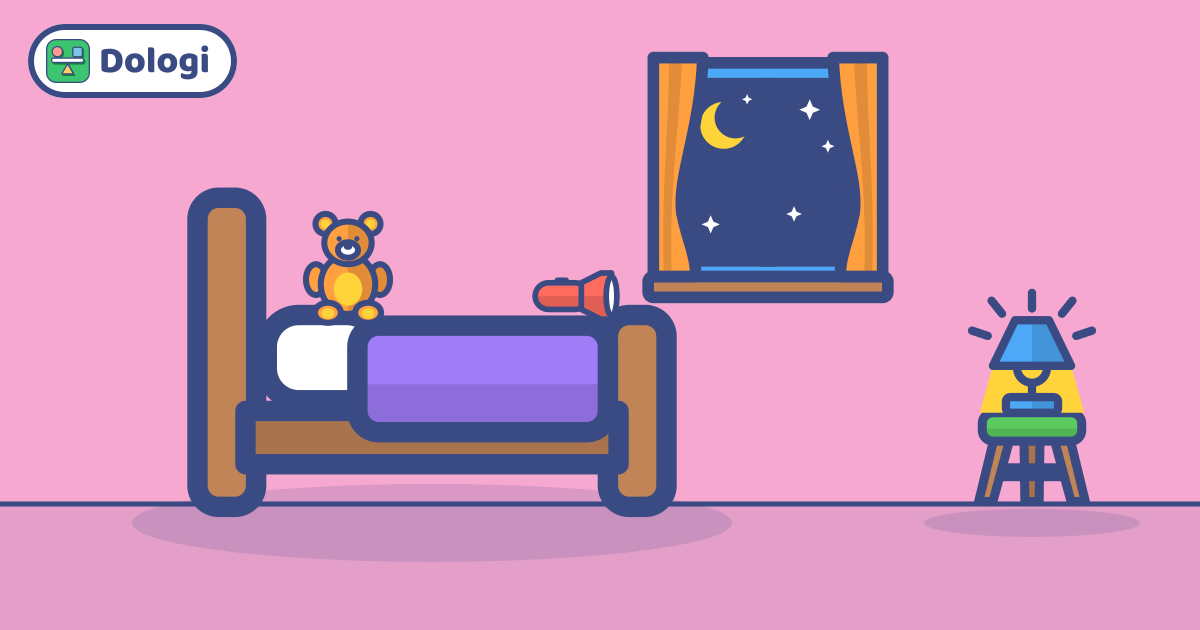
"Can you leave the light on?" "What was that noise?" Many children, often from around age 3 to 8, start to fear the dark as their imagination grows. The fear is real to your child, even when the danger is not. The goal is not to make them be brave. It is to help them feel safe.
Why the dark feels scary
- Imagination grows faster than the ability to tell real from imagined. A monster under the bed can feel very real at 4.
- The dark changes familiar shapes. A jacket on a chair looks like someone standing there.
- Houses make noises at night. The fridge hums, pipes knock, the wind rattles a window, a neighbor's door closes, the house cools down and creaks.
- Big changes can bring fears up. A new school, a new sibling, a move, or a scary story or video.
Listen, don't laugh or dismiss
"There's nothing there, don't be silly" and "Big kids aren't scared" tend to make children hide their fear rather than lose it. Teasing in front of others makes it worse.
Start by listening. Ask what exactly feels scary: a shape, a sound, being alone? In the daytime, your child can draw it, and the drawing often makes it smaller.
| Instead of | Try saying |
|---|---|
| "There's nothing there, don't be silly." | "I hear you. You're safe, and I'm here." |
| "Big kids aren't scared." | "Lots of people feel scared at night. Let's find what helps." |
| "Just close your eyes." | "What part feels scary? Tell me, or show me." |
| (laughing with a sibling) | (a hug, then: "Want to tell me about it?") |
Go and look together
Turn on the light and look at the "shape" together. "Oh, it's the jacket!" Let your child touch it.
In the daytime, lie in the darkened room together with a flashlight. Look around and see that everything is where it was.
Name the noises. One evening, lie still, listen, and name every sound in the house: "That's the fridge." "That's the neighbor's door." "That's the pipes warming up." A sound with a name is much less scary than one without. Give your child their own flashlight, so they control the light.
Make the room feel safe
- A dim, warm night light. Soft, not bright.
- A night buddy. A soft toy to look after.
- The door a little open, with your voice nearby.
- A calm, predictable bedtime routine. See our post on a bedtime routine for kids.
- No scary shows or videos before bed.
Then take small steps, at your child's pace, over days or weeks: the night light a bit dimmer, you sit by the bed, then by the door, then in the hallway. If your family co-sleeps or children share a room, that is fine. The tips still apply, with the night buddy and the naming game doing the work.
After a nightmare
Go to your child, and keep it short and calm: "It was a dream. Dreams aren't real. You're safe." Stay until they settle.
The next day, only if your child wants to, draw the dream and then draw a new ending, a funny or happy one. Do not push them to talk about it.
Small brave steps
Practice in the daytime, playfully:
- A treasure hunt with a flashlight in a darkened room
- Hide and seek with the lights dim
- Shadow puppets on the wall
Praise the effort, not "being brave": "You turned off the big light yourself." If feelings run high, the post on helping an angry child calm down has tools that also work for fear, and so does teaching kids about feelings.
When to ask for help. Talk with your pediatrician or a child specialist if the fear keeps your child from sleeping on most nights for weeks, if it affects the daytime (tired, worried all day), or if it started after a frightening event. Asking does not mean you did something wrong.
In Dologi's Listening topic, puzzles like Which instrument? and High or low practice listening carefully and telling sounds apart, the same skill as naming the noises of the house. In the daytime you can turn it into a game: "What was that sound? Where did it come from?"
In short
- Fear of the dark is common, and it feels real to your child. Aim for safe, not brave.
- Listen without laughing, and look at the scary shapes together with the light on.
- Name the night noises, use a dim night light and a calm routine, and move to less help in small steps.
- After a nightmare, comfort first and talk only if your child wants to.
Read more: Bedtime routine for kids, Helping an angry child calm down, Teaching kids about feelings