"Mom, where are my shoes?" It is five minutes before you need to leave, and your child is running from room to room, opening the same drawer for the third time. A library book, a water bottle, one glove, a favorite toy car: most families know this scene well.
Losing things is part of being a child, and adults do it too. What helps is not a lecture about being careful, but a method. Searching well is a small thinking skill: remembering in order, planning, and keeping track of what you have already done. This article shows a simple routine you can practice with children aged roughly 5 to 11, plus a few habits that mean fewer lost things in the first place.
Why searching at random rarely works
When something goes missing, children (and many adults) tend to search in a hurry. They look in the first place that comes to mind, then the next, then go back to the first one again. They scan a room with their eyes without moving anything. After a few minutes they feel sure it has "disappeared" and give up or ask you to find it.
The problem is not effort; it is the lack of a plan. A random search repeats some places and skips others. A calm, ordered search covers each place once. You can turn that into steps your child can learn, starting with one simple rule: first think, then look.
Rewind: when did you last see it?
Before anyone moves a cushion, sit down for a minute and play the film backwards together. Ask questions rather than giving answers:
- "When did you last have it in your hand?"
- "What were you doing then? Where were you sitting?"
- "What did you do after that? Where did you go next?"
- "Did you carry anything else at the same time, like your bag or your coat?"
Younger children may need you to fill in a little: "We came home, you took off your shoes… then what?" Older children can tell the route on their own, or even sketch it on paper as a line from room to room.
Often the answer appears during this rewind: "Oh, I was reading on the sofa!" Even when it doesn't, you now have a short list of the most likely places, in order.
Search zone by zone
If the rewind did not solve it, divide the house into zones, for example one room each, or for a big room "the floor", "the shelves" and "the table". Then search one zone at a time, fully, before moving on.
| Step | What your child does | Why it helps |
|---|---|---|
| Pick a zone | Start with the places from the rewind, then the rest of the house | The most likely places are checked first |
| Search the whole zone | Look under, behind and inside things; lift, open, move | Things are often hidden, not in plain view |
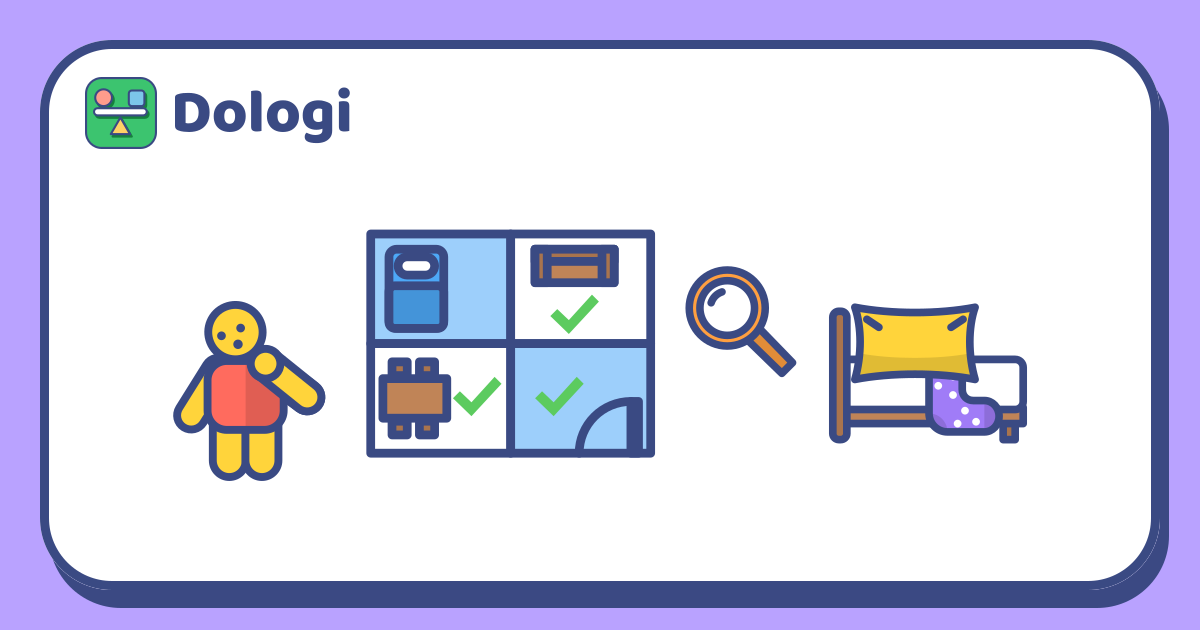
| Mark it as done | Say it out loud, or draw a check mark on a quick plan of the home | No zone gets searched twice by mistake |
| Move on | Go to the next zone and repeat | Each place is covered once |
Drawing a rough plan of the home and checking off rooms works well for children from about 7, and it turns a frustrating hunt into a small mission. With younger children, simply say together: "Kitchen: done. Now the hall."
If two people are searching, split the zones between you instead of both checking the same room.
Look in the usual hiding spots first
Every home has places where lost things like to end up. Within each zone, check these first:
- Under and between: under cushions and pillows, between the sofa seats, under the bed, behind the door.
- Inside other things: pockets of yesterday's clothes, the school bag, a shopping bag, a box of toys.
- Where hands put things down: next to the front door, on the table where you eat, by the bathroom sink.
- Where the activity happened: a toy is often near the last game played; a pencil near the last homework.
Make a list together of "our family's usual hiding spots" and stick it on the fridge. Next time something goes missing, your child can go through the list before asking for help.
Give every wanderer a home
The best search is the one you never need. Pick the things your child loses most often and give each one a fixed home: a hook for the school bag, a basket by the door for shoes, a tray for glasses, a small box for hair clips. A simple picture on the spot can help a child who doesn't read yet.
Then practice the habit "when you come in, put it home" for a few weeks, and do it yourself where your child can see. Praise the small wins: "Your shoes are in the basket, so tomorrow morning will be quick."
Remembering where things belong is also a memory game in its own right. In Dologi's Memory topic, the "Put it back" puzzles show a few objects in a grid for a short moment, then ask your child to put each one back in its place: the same skill of linking things to places.
In short
- Losing things is normal; searching well is a skill your child can learn step by step.
- Start with a rewind: when did you last see it, and where did you go after that?
- Search one zone at a time, mark each zone as done, and check the usual hiding spots first.
- Give often-lost things a fixed home, and practice putting them there every day.
Read more: Draw a map of your child's room: seeing things from above, Working backwards: start from the goal to find the way, The process of elimination: the "if it's not this one, which one is it?" game