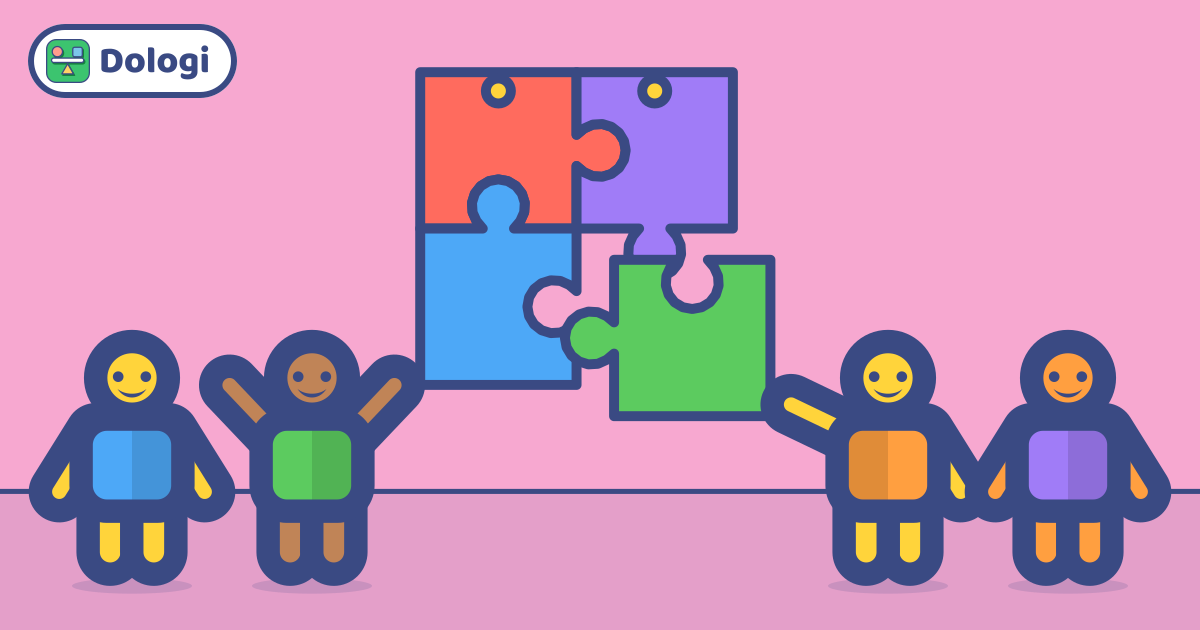
"I did the whole poster myself." "Nobody listens to my ideas." "They wouldn't let me do anything." When children start doing projects in groups, these complaints often come home with them. Group work can be frustrating, for kids and for parents watching from the side.
Working with others is also one of the most useful things school teaches: sharing out tasks, listening, giving and taking, and finishing something together. Like any skill, it gets better with practice, and much of that practice can happen at home. This article is for children from about 6 to 12, from first pair activities to bigger projects in the upper elementary grades.
Why group work is hard
- Different speeds. One child wants to start right away, another needs time to think.
- Different styles. Some children talk a lot, others rarely speak up even when they have good ideas.
- Unclear tasks. "Make a poster about the water cycle" doesn't say who does what.
- Strong opinions. Everyone wants their own idea to win.
- Fairness worries. Children notice quickly if one person does more or less than the others.
None of this means your child is bad at teamwork. These are the normal bumps of learning to work together.
Splitting up the work
Many group problems start because nobody decided who does what.
- List the tasks first. For a poster: find information, write the text, draw the pictures, check the spelling, present it.
- Give everyone a job. Common roles are time keeper, note taker, materials helper, checker and presenter. Roles can rotate from one project to the next.
- Match jobs to strengths, sometimes. A child who loves drawing can do the pictures, but it's good to try a new role now and then.
- Agree on what "done" means. "Three facts and one drawing each by Friday" is clearer than "do your part."
At home, practice with a family project: making dinner, building a cardboard house, planning a picnic. Let your child help list the tasks and hand them out.
Listening to other people's ideas
Good teamwork is mostly good listening.
- Everyone shares one idea before the group chooses. Quieter children can write theirs on a sticky note first.
- Say it back before disagreeing. "So you think we should draw a map. I was thinking of a timeline." Repeating an idea shows it was heard.
- Build on ideas. "Yes, and we could also..." keeps the conversation going.
- Look at the person talking and let them finish. The article on listening in class has more on these habits.
If your child is shy about speaking in the group, practicing a short sentence at home helps: "I have an idea" or "Can I try the drawing?" The article on speaking up in class has ideas for children who freeze in front of others.
When the group disagrees
Disagreeing is normal. What matters is having a way through it.
- Put all the ideas on the table, without judging them yet.
- Look for a mix. Often two ideas can be combined: the map and a short timeline.
- Try one, then the other, if there's time.
- Vote if nothing else works. The article on family votes explains majority and fairness in a way children understand.
- Ask the teacher if the group is stuck.
Losing a vote or seeing another idea chosen can sting. Help your child practice saying "OK, let's try yours" and putting full effort into the group's choice. The article on winning and losing has more on handling disappointment.
Common problems and what to say
- "I did everything." Some children take over because they worry the result won't be good enough. Help your child see that their job is their part, and that letting others try is part of the task.
- "One kid didn't do anything." First, encourage your child to talk to the group: "We still need the pictures. Can you do them by Thursday?" If it keeps happening, it's fine to tell the teacher, calmly and with facts.
- "They didn't let me do anything." Help your child choose a specific job to ask for, and practice how to ask.
- "Nobody wants to be in my group." This hurts. Listen first, without rushing to fix it. If your child is often left out, teased or excluded over weeks, talk to the teacher. Teachers can arrange groups and watch what happens in class.
Practice at home
- Cooperative games, where everyone wins or loses together, teach teamwork without rivalry. The article on a homemade cooperative board game shows how to make one.
- Family projects with roles: cooking, a garden bed, a holiday decoration.
- Talk after a project: "What did your group do well? What would you do differently next time?" Ask about the group, not just your child's part.
- Show it yourself. Let your child see you listen to others, compromise and say "Good idea, let's do it your way."
In Dologi, the Listening topic has a puzzle called Which instrument?: your child hears a sound and taps the instrument that made it. When siblings or friends sit down to play it together, try a team rule: everyone says which instrument they think it is and why before anyone taps. It's a small way to practice listening to each other and agreeing on one answer.
In short
- Group work is hard because of different speeds, styles and opinions; the bumps are normal.
- List the tasks, give everyone a job and agree on what "done" means.
- Let everyone share an idea, say ideas back, and handle disagreements by mixing, trying, voting or asking the teacher.
- Practice with family projects and cooperative games; if your child is often left out or teased, talk to the teacher.
Read more: Listening in class: how to help your child pay attention to the teacher, A homemade cooperative board game: the whole family wins or loses together, A family vote on where to go: teaching children about majority, ranking and fairness