At the parent-teacher conference, you hear that your child listens well, finishes their work and joins in. At home, the same child takes half an hour to find a pencil, sighs over a single page and drifts to the couch. It's easy to think "lazy." It's usually not that.
School and home are very different places to learn. Once you see what school gives children that home doesn't, you can bring a little of it home and make the afternoon easier for everyone. This article is for children from about 6 to 12.
Why home feels so different from school
- Your child is tired. A school day means hours of sitting, listening, waiting and following rules. By the afternoon, there isn't much focus left.
- School has a built-in structure. The bell rings, the teacher says "open your books," and everyone starts. At home, "do your homework" has no clear start and no clear end.
- Everyone around is doing the same thing. In class, the whole room works together. At home, a sibling is playing, someone is cooking and a screen might be on.
- Home is where children relax. Many kids hold it together all day and let go when they walk in the door. That's often a sign they feel safe at home.
- The task may be the problem. Homework that's unclear, too long or too hard is easy to avoid, especially when no teacher is there to explain.
None of this is a character flaw. These are reasons, and most of them can be changed.
Rest first, then a set time
Asking a tired child to start homework the moment they walk in rarely works.
- Start with a real break. A snack, some water, and time to move or play outside help children reset. Active play usually works better than screens, which are hard to stop.
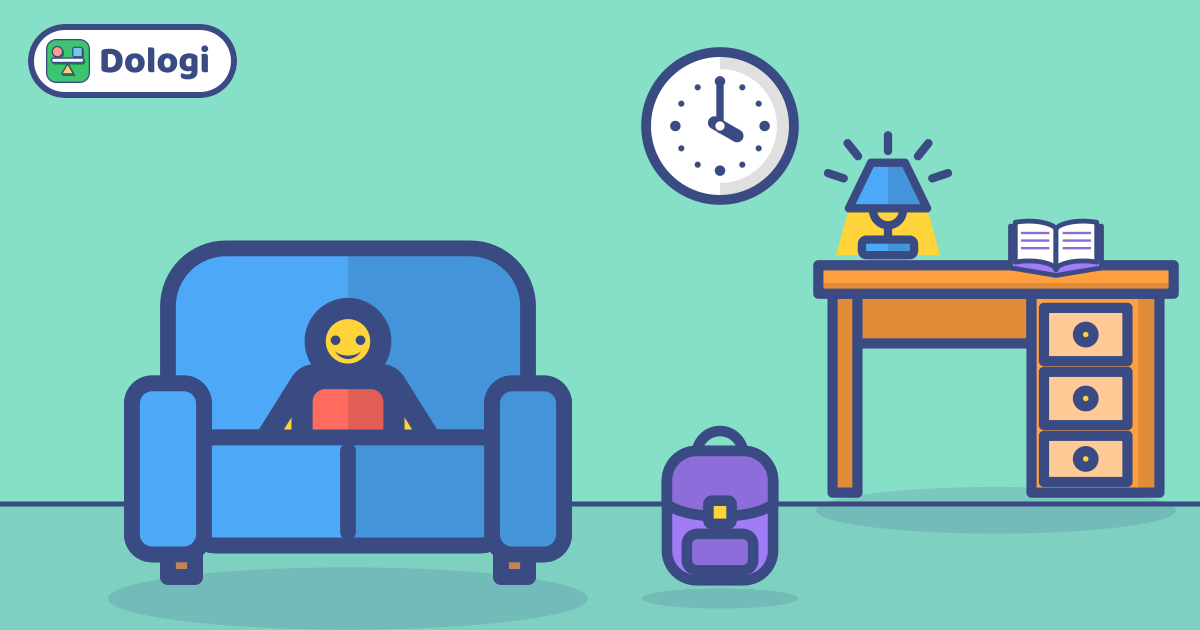
- Choose the start time together. "After snack and some play, at 4 o'clock" is clearer than "later." When the time is the same each day, there's less to argue about.
- Keep the break a break. Don't fill it with reminders about what's coming. The clock does that job.
The article on an evening routine for school-age kids shows how to fit homework, play, dinner and bed into a steady order.
Borrow a little of school at home
You don't need to turn your kitchen into a classroom. A few pieces of school structure are enough.
- A start signal. Turning on the desk lamp, setting a timer or putting the backpack on the table can mean "we're starting now."
- A clear plan for today. Look at the homework together and decide what comes first. Breaking it into small pieces with short breaks helps; the article on short study blocks explains how.
- A ready spot. Pencils sharpened, the table clear, nothing to hunt for. See a study corner at home for ideas.
- Someone working nearby. At school, classmates working quietly make it easier to work too. At home, sit nearby with your own quiet task, like reading or writing a list, or let siblings do their homework at the same table. Over time, you can step back gradually so your child gets used to working alone.
Talk about it without labels
Children tend to believe what they hear about themselves. "You're so lazy" can turn into "I'm someone who doesn't try."
- Describe what you see. "It seems really hard to get started after school" opens a conversation; a label closes it.
- Ask what's hardest. Is it starting, one particular subject, being tired, or not understanding the task?
- Look for patterns. If it's always the same subject, or the work regularly takes much longer than the teacher expects, let the teacher know. They can explain, adjust or tell you what's normal for the class.
- Watch the bigger picture. If your child often seems very worn out, worried or unhappy, at home and at school, talk with the teacher or your child's doctor rather than pushing harder on homework.
Make starting easier
Often the hardest part is the first five minutes.
- Begin with something small and doable, like one problem or reading the instructions out loud. Getting going is half the battle.
- Set one small goal for the week, chosen by your child. The article on small learning goals shows how.
- Notice the effort. "You sat down right at 4 o'clock today" means more than "Finally."
If your child likes a short puzzle during the break, Dologi's Focus topic has Spot the difference and Follow the string. A session has a set number of puzzles and a clear end, which makes moving on to homework easier than stopping an endless video, and you can set a daily time limit in the Parent area.
In short
- Children who focus at school but not at home are usually tired, missing school's structure, or unsure about the task, not lazy.
- Start with a real break, then sit down at the same time each day.
- Borrow a little of school: a start signal, a clear plan, a ready spot and someone working nearby.
- Talk without labels, ask what's hardest, and talk to the teacher if the same problem keeps coming up.
Read more: An evening routine for school-age kids: homework, play, dinner, and bed in the same order, Sitting at homework for ages without getting anywhere: breaking study time into short blocks, My child will only do homework if I sit next to them: stepping back gradually so they can work alone