

Logic
Balance scales, code breaking, clue grids and who lives where.
Try a puzzleShort puzzle sessions at the right level, a little each day. Learning through play.
No ads, a wide variety of thinking puzzles
Try a puzzle
Loading puzzles…
Seven topics, each with many kinds of puzzles.
Balance scales, code breaking, clue grids and who lives where.
Try a puzzle
Repeating patterns, what comes next, rules that change.
Try a puzzle
Fitting blocks, rotation, symmetry, mazes and routes.
Try a puzzle
Counting, adding, ordering and number pictures.
Try a puzzle
Spot the difference, secret pictures and secret codes.
Try a puzzle
Flip cards and remember where everything is.
Try a puzzle
High or low, long or short, play back a melody.
Start playingTwelve levels for ages 4 to 12. Each skill moves up on its own, so every puzzle stays a small, doable stretch.
Level 3Ages 5–6
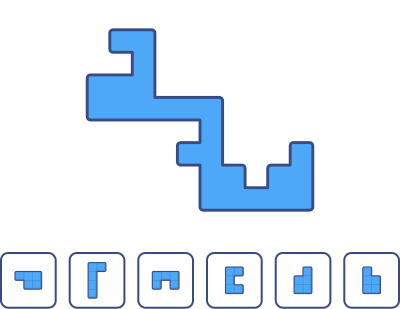
Choose the blocks that build this shape. Turning is OK, flipping is not.
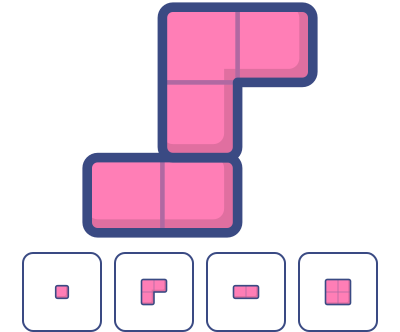
Level 8Ages 7–8
Choose the blocks that build this shape. Turning is OK, flipping is not.
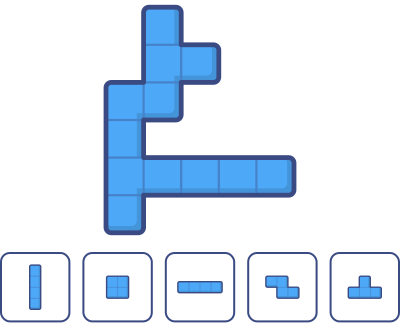
Level 11Ages 10–11
Choose the blocks that build this shape. Turning is OK, flipping is not.
Besides puzzles, children program drawing robots, compose music, build marble machines, lay out gardens for visitors and run a market stall, counting money and giving change. Nothing is scored. Here is what some of these tools can make.
Sample: house
Tap any piece to write your own commands.
Sample: sunny stroll
Tap the grid to write your own tune.
Sample: two-lock door
One lamp less. Door opens?
Tap the room to set up your own lamps and mirrors.
The app also has Drawing board, Robot room, Marble works, Visitor garden, Gear workshop, Chess room, Block workshop, Coral Cove and Garden market.
Puzzles are generated from templates, so every session is different.
Difficulty follows each skill: a little harder after a good run, easier after a struggle.
No ads and no tracking tools. Progress stays on the device.
In the apps for phones and tablets, puzzles run on the device, even without an internet connection.
A drawing board, a drawing robot and a music workshop for free play.
Daily play limits, a 7-day report and family goals with real-world rewards.
Children aged 4 to 12. Difficulty adjusts to each child and each skill.
Dologi works in a web browser on a computer, phone or tablet, and as an app for phones and tablets. Every version has every feature. The apps are available on the App Store and Google Play.
Every day there are free puzzles and free uses of the creative tools, counted separately. In the apps they are counted per device, without an account; on the web a parent signs in and they are counted for the whole account. To play more, a parent can buy a plan.
Player profiles, progress and creations stay on the device and are not sent to us. There are no ads and no tracking tools.
A session is 5 puzzles, usually just a few minutes. In the parents’ area you can set a daily play limit.
Dologi is available in 10 languages, each with its own reading voice: English, Tiếng Việt, Español, Bahasa Indonesia, Português (Brasil), 한국어, 日本語, ไทย, Français, Deutsch.
Each device keeps its own progress. Progress is not synced between devices.
Play in a web browser or with the app on a phone or tablet. Every version has every feature.
Ideas and tips for building logical thinking at home.
Calling your child five times, hunting for one shoe, rushing out the door late? Which jobs to move to the evening, how to make a picture checklist for the morning, teaching your child to wake up to an alarm clock, and working backward from the school bell.
Your child promises to feed the new pet every day, and a few weeks later the job is yours. How to talk it through before you say yes, split pet care by age, make a picture chart, handle the days your child forgets, and start with a plant if your family isn't ready.
Your child was home sick for three or four days and came back to a pile of missed work. How to ask the teacher what really matters, sort the work into must-learn, skim and skip, borrow a classmate's notes, and spread the rest over 15 minutes a day for about a week, for kids 6 to 12.
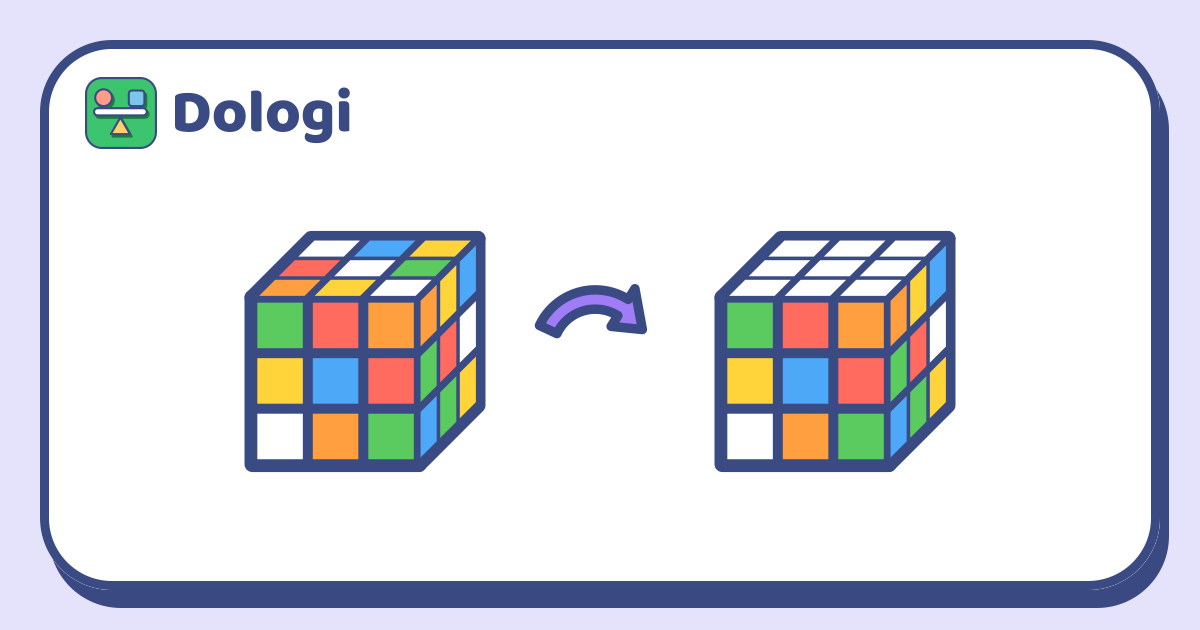
Nine colored squares on each face, six colors, and a lot of twisting. What the twisting cube puzzle trains, which age it tends to suit, how to start with one face and small goals, why speed doesn't matter, and easier versions for younger children.
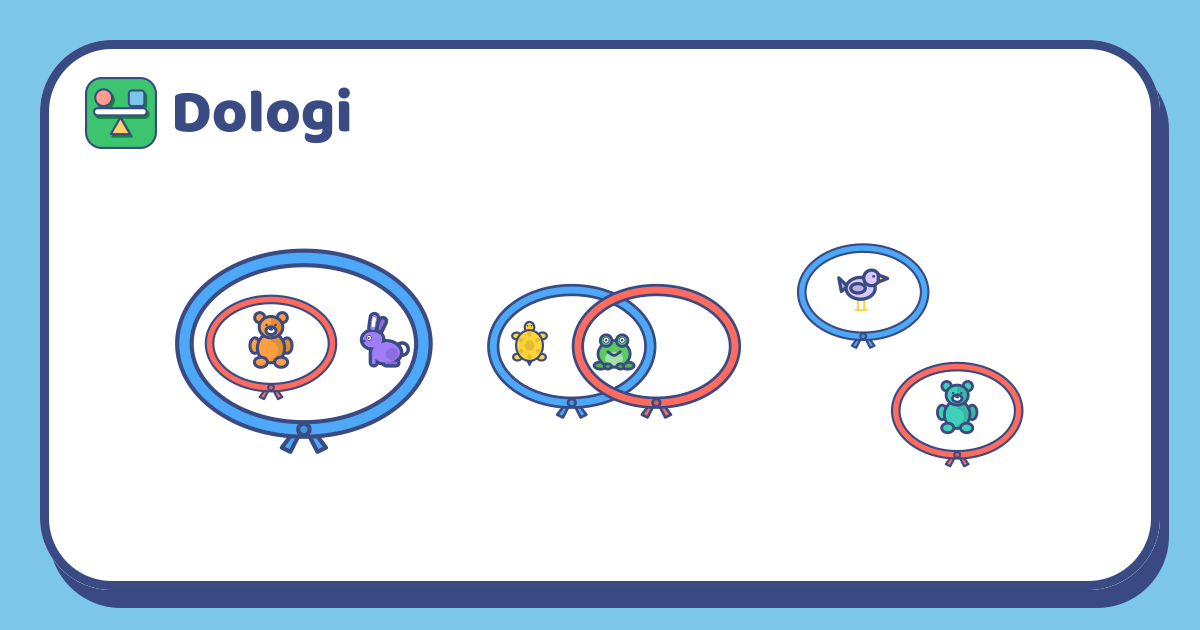
"All cats have tails. This animal has a tail. So it's a cat?" Drawing two circles, one inside the other, overlapping or apart, helps children aged 8 to 12 check whether a conclusion really follows from two sentences and catch conclusions that jump too fast.
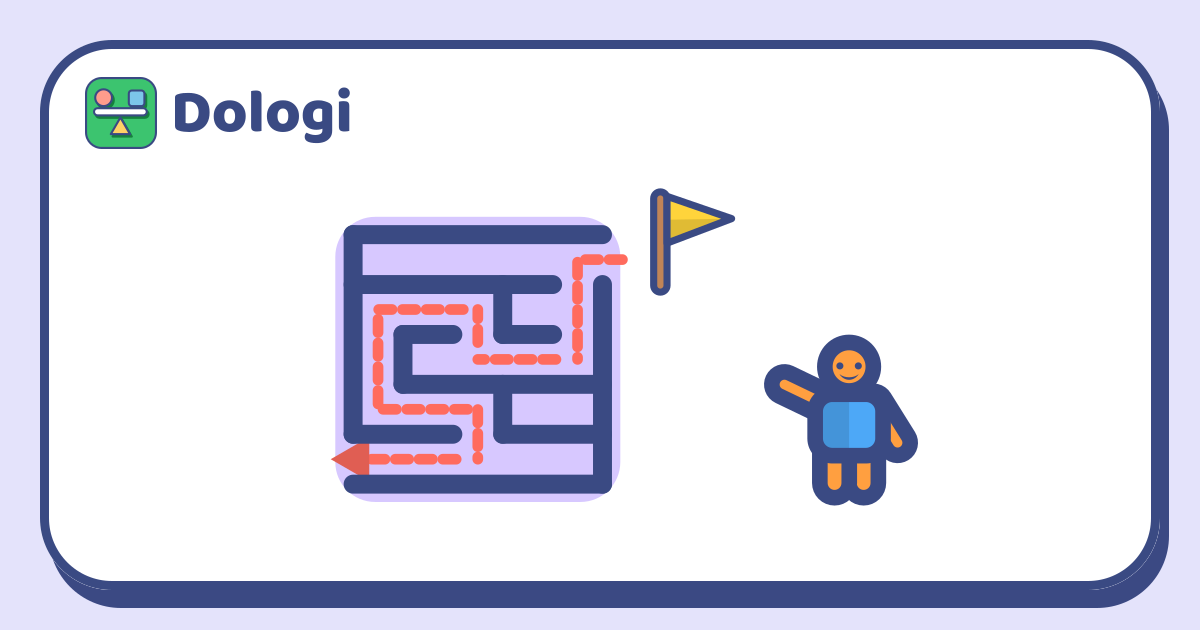
Some problems are easier when you start at the end. How to show children the "work backwards" strategy with mazes, everyday timing (when do we need to leave?) and simple "think of a number" puzzles, plus when it helps to go forwards instead.