The library book is due today and it's still on the couch. The gym shoes are by the door. The permission slip is signed, but it's on the kitchen counter. Many parents end up driving back to school with forgotten things, or packing the backpack themselves every night just to avoid it.
Forgetting school things isn't a sign that a child is careless or doesn't care. Keeping track of your own things is a skill, and like any skill it has to be taught and practiced. This article shows a simple system for children from about 6 to 12: a home for school things, two short lists, packing the night before, and a check your child does on their own.
Why children forget their school things
- There's a lot to remember. Homework, a pencil case, a water bottle, lunch, a library book, gym clothes, notes from the teacher.
- It changes from day to day. Gym on Tuesday, library on Thursday, a show-and-tell item on Friday. A fixed routine is easier than a shifting one.
- Mornings are rushed. Packing while eating breakfast and looking for shoes is when things get left behind.
- Someone else has always done it. If a parent has packed the bag for years, the child hasn't had a chance to practice.
- Their mind is somewhere else. Children are busy thinking about friends, games and what happened at school. That's normal.
The good news: most of this can be fixed with a system, not with more reminders.
Give school things a home
Things are easier to find when they always live in the same place.
- One spot near the door for the backpack, shoes and jacket. A hook, a basket or a corner of the floor works.
- One folder for papers that travel between home and school. Notes and forms go straight in, and you look in it together each evening.
- A spot for things that come out, like the water bottle after washing or a library book after reading. When it's done, it goes back to the spot by the door.
Two lists: every day and by the day
A short written list does the remembering, so your child doesn't have to keep everything in their head.
| Every day | Only on certain days |
|---|---|
| Homework folder | Monday: library book |
| Pencil case | Tuesday: gym clothes and sneakers |
| Water bottle | Wednesday: recorder or music folder |
| Lunch or snack | Friday: show-and-tell item |
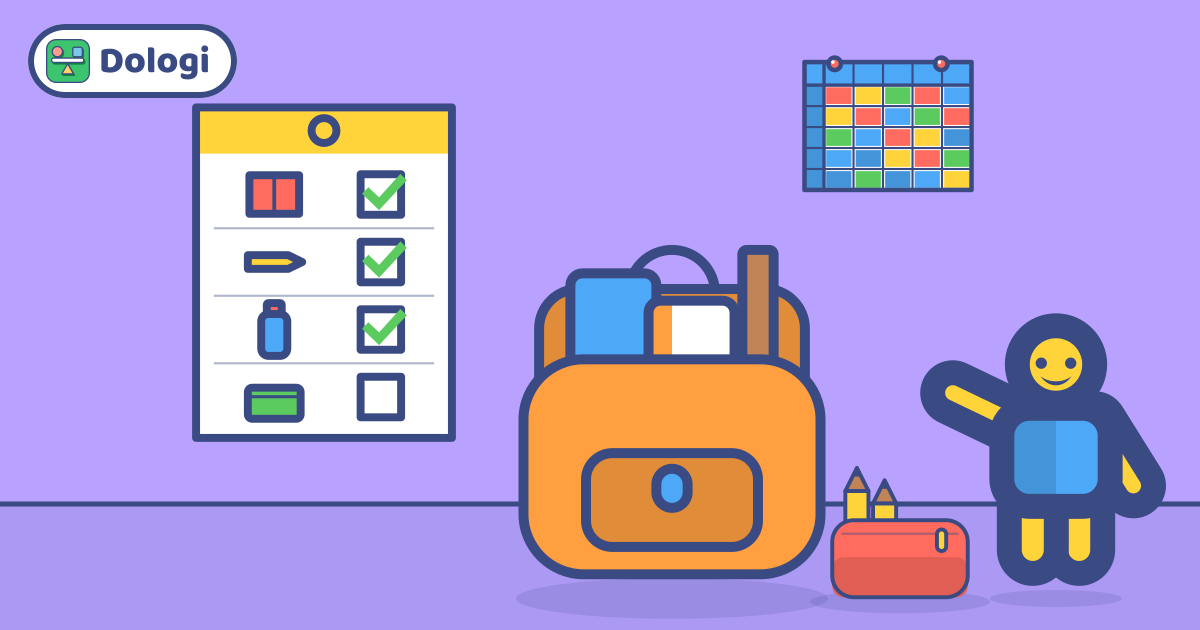
Make the second column from your child's real class schedule, and put both lists where the backpack gets packed. For children who don't read well yet, draw the list as pictures: a book, a pencil, a bottle, a lunch box, with a box to check next to each.
Keep the list short. If it gets long, group things: "pencil case" covers pencils, an eraser, a ruler and a glue stick.
Pack the night before, with your child in charge
- Pick a fixed time in the evening, for example right after homework. The article on an evening routine for school-age kids shows how to fit it into a steady order.
- Start with the folder and the planner. What did the teacher send home? Is anything due tomorrow?
- Check the schedule and the list, then pack.
- Touch and say. At the end, your child touches each item in the bag and names it: "Folder, pencil case, bottle, library book." Saying it out loud makes gaps easier to notice.
Move the job to your child in stages. First you pack together. Next, your child packs while you ask questions: "What do you have tomorrow? Is your gym bag in?" Finally, your child packs alone and you only check now and then. Children who struggle to remember several steps in a row can practice with the games in the article on following multi-step instructions. This same habit matters even more later, when there are more subjects and teachers: see getting ready for middle school.
When something still gets left behind
It will happen, even with a good system.
- Stay calm. A forgotten water bottle is a small problem, not a character flaw.
- You don't have to rescue every time. If it's safe and not too serious, missing gym once is often a lesson that sticks better than any reminder. If you do bring it, say so plainly and move on.
- Fix the system, not the child. Ask together: "What happened? What would help next time?" Maybe the item needs a spot by the door, or a place on the list.
- Label everything with your child's name, so lost items can find their way back.
- If things often go missing at home, the article on finding lost things shows how to teach a calm, step-by-step search.
Noticing what's missing is also a memory skill. In Dologi's Memory topic, What disappeared? shows a few things, then hides one, and your child works out which is gone. What's in the sack? asks your child to remember what went into a sack. Both practice the same "look, remember, notice the gap" habit that a backpack check needs.
In short
- Forgetting school things is a skill gap, not carelessness, and a simple system helps more than reminders.
- Give school things one home near the door, with one folder for papers.
- Use two short lists, every day and by the day, as pictures for younger children.
- Pack the night before and finish with a "touch and say" check; hand the job over to your child in stages.
Read more: An evening routine for school-age kids: homework, play, dinner, and bed in the same order, Listened, then forgot? Games for following two-step and three-step instructions, My child keeps losing things: teaching a step-by-step search instead of turning the house upside down