It usually comes in the middle of homework, with a sigh: "Why do I have to learn this? I'm never going to use it." Many parents answer on autopilot: "Because it's on the test," or "You'll need it when you're older." Neither one tends to help much. A test is a reason to study for a week, and "when you're older" feels very far away to an eight-year-old.
A better answer is one your child can see and touch. This post covers what the question often really means, answers that work better, and simple ways to let your child use school skills on real jobs at home, so the "why" answers itself.
What your child may really be asking
The same words can mean different things:
- "This is hard and I'm stuck." Your child is tired or lost, and the question is a way out. Help with the hard part first, and talk about the "why" later, when they're calm.
- "This is boring." The lesson feels like a list of steps with no point.
- "I really want to know." Some kids are genuinely curious, especially around 9 to 12, when they start asking how everything connects.
You can simply ask back: "Which part feels pointless?" or "Is it hard, or is it boring?" The answer tells you whether your child needs help, a reason, or both. Try not to hear the question as back talk. It's a fair question, and adults ask it too.
Answers that work better
| Instead of | Try |
|---|---|
| "Because it's on the test." | "Good question. Let's find somewhere you could use it this week." |
| "You'll need it when you grow up." | "I used this yesterday. Here's how." |
| "Because I said so." | "I'm not sure. Let's figure it out together." |
| "Study hard so you can get a good job and make money." | "It lets you do things yourself, like planning your room or splitting snacks fairly." |
Be honest when a lesson isn't directly useful. Some practice is like drills in sports: a soccer player never dribbles around cones in a real game, but the drills make the real moves easier. Long division or spelling lists work a bit like that. The skill matters even if a specific worksheet doesn't.
Put the lesson to work on a real job
The strongest answer is to give your child a real task that needs the skill. Here's one that works well from about age 8:
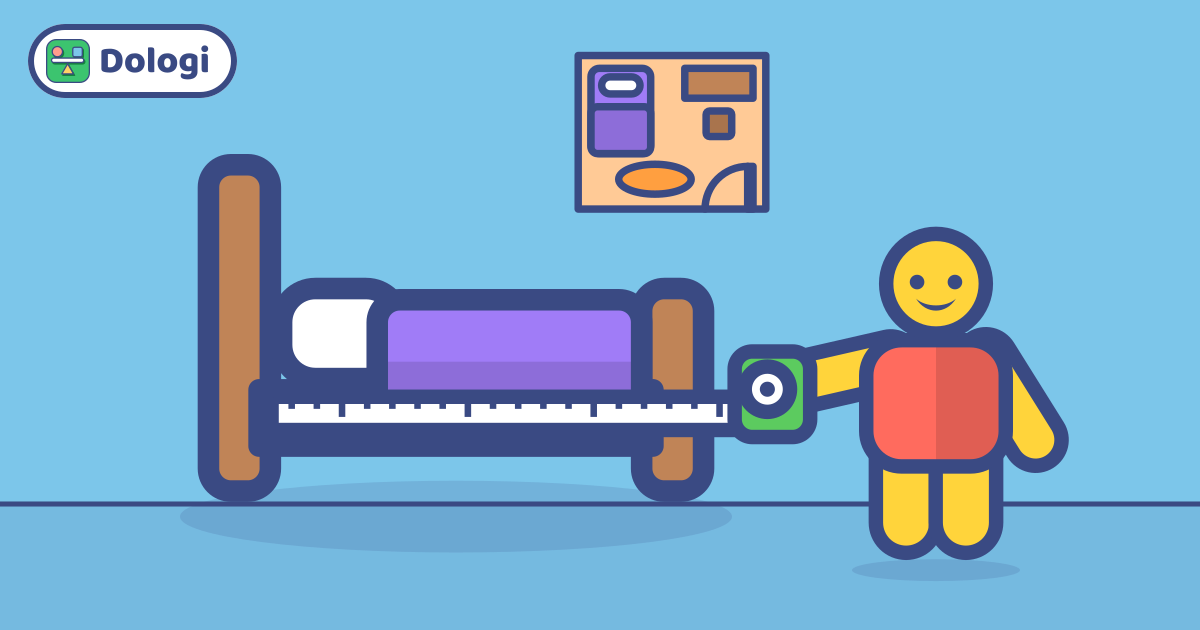
Plan the bedroom. Your child measures the room with a tape measure, say 10 feet by 11 feet. On graph paper, one square stands for 6 inches, so the room is 20 squares by 22. Then they measure the bed, for example about 3½ by 6½ feet with the frame, which is 7 squares by 13. Cut the bed out of paper and slide it around: does it fit along the wall with the window? Will the door still open? Is there room for the desk? That's measuring, multiplying, scale and problem solving, all in one afternoon, for something your child actually cares about.
More ideas, by subject:
| School skill | Real job at home |
|---|---|
| Fractions | A pizza cut into 8 slices for 4 people is 2 slices each. Two more people arrive: how do you cut it so 6 people get the same? (Cut it into 12 slices: 2 each.) |
| Telling time, subtracting | School starts at 8:00, the walk takes 15 minutes, getting ready takes 30. When do we start getting ready? (7:15.) |
| Decimals, unit price (ages 10–12) | A 12-ounce box of cereal costs $3.00 and an 18-ounce box costs $4.14. Which is cheaper per ounce? (25 cents vs. 23 cents: the big box.) |
| Reading | Read the instructions for a new shelf or a board game's rules aloud for the family. |
| Writing | Write a thank-you note or a letter to a grandparent, or the shopping list for the week. |
| Maps | Plan the route for a bike ride or a bus trip, and lead the way. |
For more ideas, see math in the kitchen and math on a road trip.
Tell your child where grown-ups use it
Kids rarely see the math and reading inside adult work. Point it out:
- A carpenter measures every board before cutting it.
- An architect draws rooms seen from above, just like your child's graph-paper plan.
- A baker doubles or halves a recipe for a big order.
- A bus driver keeps to a timetable.
- A store owner counts stock and works out how much to order.
Start with yourself: "Today I compared two phone plans," or "I wrote an email to explain a problem at work." Short, true stories from your own day count more than big speeches. For more on this, see exploring jobs with kids.
One "I spotted it!" a week
Turn the question around: let your child find the answers. Each week, they look for one place where something from school showed up in real life: a fraction on a recipe, a word from science class on the weather report, a map in a museum. Write each one on a sticky note on the fridge, and read them together at the end of the week.
Some weeks they'll find three, some weeks none, and that's fine. What matters is that your child gets used to looking for links. Follow what they enjoy, too: a child who loves soccer can track their team's wins and losses, and a child who loves drawing can try a room plan or a map of the neighborhood. See helping your child find their interests.
If the "why" question comes mostly at home and your child works well at school, the problem may be the homework setup rather than the subject: focused at school, can't get started at home has ideas.
In Dologi's Math topic, puzzles like Equal parts and What time is it? practice the same skills your child uses to share a pizza or check the clock before school. After a session, you can ask: "Where could we use that today?"
In short
- "Why do I have to learn this?" can mean "I'm stuck," "I'm bored" or "I'm curious." Ask which one.
- Swap "it's on the test" for an honest answer and a real place to use the skill this week.
- Give your child real jobs that need school skills: planning a room, sharing food, timing the morning, reading instructions.
- Tell short stories about where adults use it, and let your child spot one use of their own each week.
Read more: Math in the kitchen, Exploring jobs with kids, Helping your child find their interests