Once kids learn the rules of chess, many of them only ever play games. Games are fun, but they're long, and a single game may contain just one or two moments where there's really something to find. A chess puzzle is different: a position already set up, a clear task ("White to move, checkmate in one"), solved in a few minutes. One puzzle a day lets your child meet a new pattern without sitting through a whole game.
This post is for kids roughly 7 to 12 who know how the pieces move and what checkmate is. It covers how to turn chess puzzles into a five-minute daily habit: when to do them, how to choose the difficulty, what the five minutes look like, what to do with a wrong answer, and a calendar your child can mark on their own.
Why short and regular
Five minutes a day isn't a magic number. It's just short enough that nobody has to push, and long enough to solve one puzzle properly. Short and regular has a few things going for it:
- It sticks: five minutes fits into even the busiest day. An hour-long session on Saturday tends to get postponed.
- The same patterns come back: forks, back-rank mates and pinned pieces show up again and again in puzzles. After meeting them many times, kids usually spot them faster. That's something lots of chess learners notice for themselves, not a promise about how quickly your child will improve.
- It doesn't turn into homework: one puzzle and done leaves your child wanting more tomorrow. Five in a row, and the last one usually gets a wild guess.
Attach it to something you already do
A new habit is easier to keep when it hangs on something your child does every day anyway. Pick a fixed moment:
- After breakfast, while your child is awake and not yet rushing.
- Before homework, as a warm-up for the brain.
- Right after school, while dinner is cooking.
The night before, set the position up on a corner of a table so the board is "waiting." No hunting for pieces, no setting up, your child just sits down. If there's nowhere to leave a board overnight, sketch the position on a sticky note instead.
Let your child pick the difficulty
The best puzzle is one your child has to think about for a bit: not instantly obvious, and not five minutes of being stuck. You can offer three levels and let your child choose each day:
| Level | Puzzle type | Good for |
|---|---|---|
| Easy | Win a piece safely; mate in one with the enemy king on the edge | Beginners, or tired days |
| Medium | Mate in one in the middle of the board; forks; pins | Most days |
| Hard | Mate in two; win material in two moves | Days your child wants a challenge |
A gentle way to adjust: if your child solves it within a minute several days in a row, suggest going up a level. If they're stuck several days in a row, drop down without making a big deal of it. Letting your child choose also makes the habit theirs, not an assignment from you.
What the five minutes look like
- Look at the board first (about a minute): where are both kings? Which pieces are under attack? Which ones aren't protected? Don't touch anything yet.
- Find the move and say it (two or three minutes): your child says the move out loud, then asks, "How does the other side answer?" A real checkmate leaves no way out.
- Check and mark it (a minute): play it out on the board, compare with the answer, then mark the calendar.
When your child is stuck, give hints in steps instead of reading the answer: first "take a look at the knight," then "which square stops the king from escaping?", and only then show the move and explain why. Questions to ask when playing chess with kids has more questions like these.
Missed it? Write it down and try again tomorrow
Getting puzzles wrong is a normal part of puzzles. What helps is not letting the missed ones slip away:
- A "tricky puzzles" sheet: quickly sketch the position or note which puzzle it was on a folded piece of paper next to the board.
- Tomorrow, start with yesterday's miss: the next five minutes open with the puzzle your child got wrong. This time it often clicks, and that "couldn't do it yesterday, got it today" feeling is worth a lot.
- Redo the whole sheet on the weekend: cross off the ones that are solved now.
- No scores, no comparing with siblings. Puzzles are practice for seeing the board, not a test.
A calendar your child marks with pictures
A monthly calendar taped near the chessboard shows your child how far they've come:
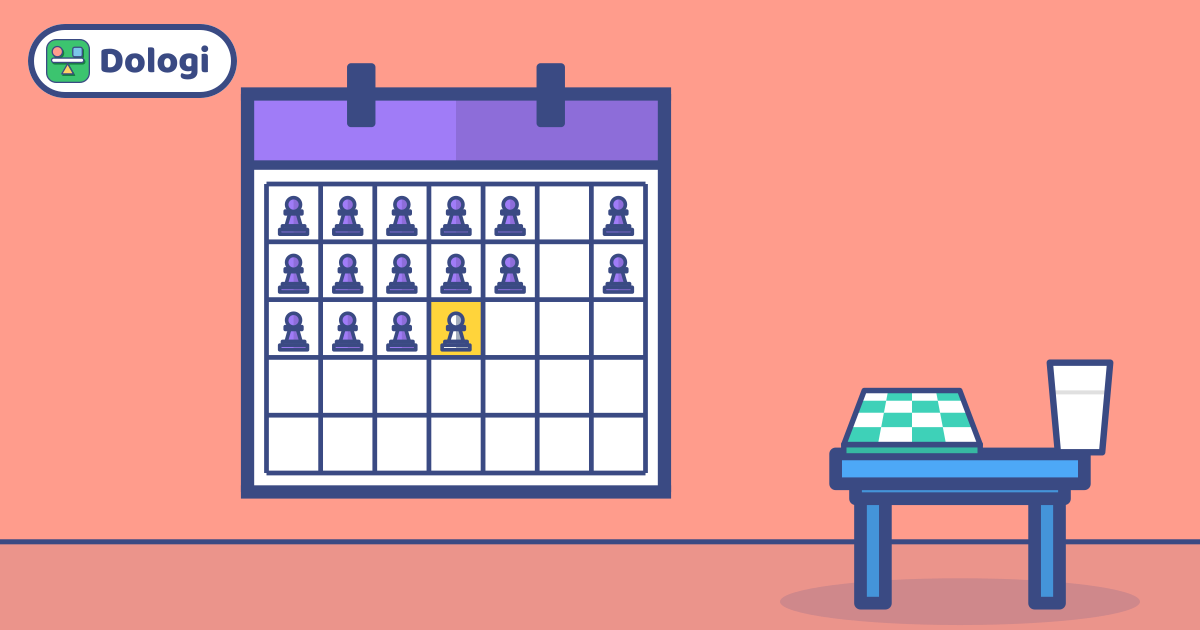
- Each day a puzzle gets solved (hints count), your child draws a little pawn in that day's square.
- A hard puzzle solved without help earns a star next to the pawn.
- Days off stay blank. No red marks, no "broken streak." Sick days, trips and busy days are fine; what matters is coming back the next day.
- At the end of the month, count the pawns together and pick your child's favorite puzzle of the month.
Need puzzles to get started? Try 10 easy chess puzzles for kids, chess capture puzzles for kids 5 to 7 and mate-in-two puzzles for kids. Now and then, switch roles for fun and let your child make a puzzle for you, as in kids make chess puzzles for parents.
In the Chess room in Dologi's Creative corner, Challenges holds around 400 positions from easy to hard, sorted By level (12 levels) or By theme (Safe captures, Save your piece, Check, Mate in one, Double attack, Mate in two). Solved positions get a mark, so each day your child opens it and sees the next one they haven't done, and the Hint button works in steps too: first it points to a piece, then to the move.
In short
- One puzzle a day, about five minutes, is easier to keep up than one long weekend session.
- Attach it to an existing routine and set the position up the night before.
- Let your child pick the level; hint in steps when they're stuck, and save missed puzzles for tomorrow.
- Mark solved days with a little pawn on a calendar, leave days off blank, and don't count streaks.
Read more: Chessboard brain teasers for kids 7–12, The fridge door puzzle: a one-puzzle-a-day habit for the whole family